

Product Releases
and Updates
Building AI agents is exciting—until you need to prove they actually work. When you're iterating on a System Prompt, updating Grounding Data, or wiring up new tools, the only way to know if things still behave correctly has been manual, one-off testing. Change the prompt logic, re-deploy, and hope for the best. That kind of guesswork doesn't scale, and it certainly doesn't inspire the confidence needed to put agents in front of real users.
We saw a clear need for a structured, repeatable way to validate agent behavior during development—something that lets you know, before anything reaches production, whether your changes improved things or broke them.
Introducing Evaluations in Agent Workbench
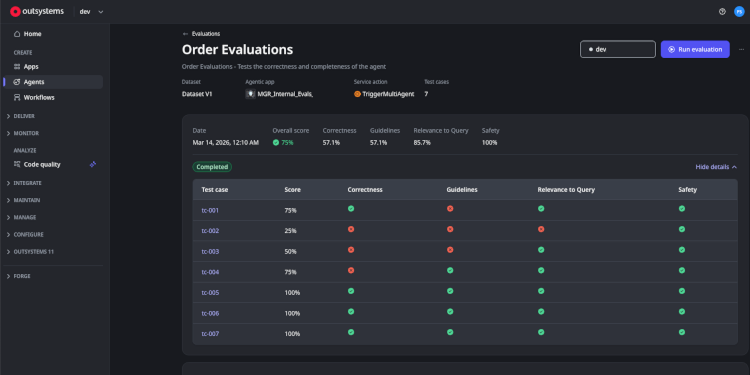
Evaluations let you automatically test your Agent Logic against a Golden Dataset—a collection of test cases with inputs, expected outputs, and expected tool calls that you define. You upload the dataset as JSON, select the Service Action that wraps your agent, and run an evaluation. The platform executes each test case, captures a full execution trace (inputs, tool calls, token usage, and final output), and then automatically scores every result using the built-in platform Judge. No configuration needed—every run gets a quality score and Pass/Fail for each test case out of the box.
This means you can change a prompt, swap a tool, or adjust grounding logic and immediately see how those changes affect accuracy and reliability across dozens of scenarios. The full execution trace gives you the visibility to pinpoint exactly where things went wrong—which tool was called, what arguments were passed, and what the agent actually produced. And because the Judge runs automatically on every evaluation, you get consistent, comparable feedback across runs without any extra setup.
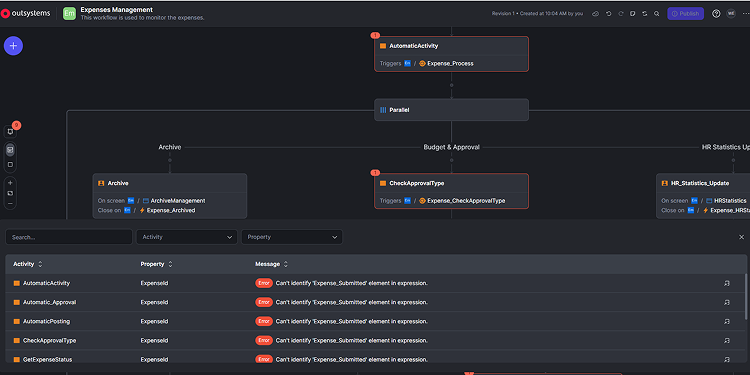
We’re introducing a new widget for error management in OutSystems Developer Cloud (ODC) Workflows: a new, visually intuitive panel that helps you quickly identify and resolve issues while building workflows.
Located at the bottom of the Workflow Editor, the Notification Panel aggregates all workflow errors in one place. Instead of navigating through multiple activities and properties to track down issues, you can now instantly see where problems exist and jump directly to them with a single click.
A notification indicator shows the number of errors detected in your workflow. Clicking it opens the Notification Panel, where you can:
- Identify issues at a glance – View a clear summary of all workflow errors in one place.
- Jump directly to the problem – Click any error to navigate straight to the affected node.
- Resolve issues faster – Reduce debugging time and avoid manually searching across the workflow.
With improved visibility, navigation, and filtering, this feature makes workflow creation smoother and more efficient—so you can spend less time debugging and more time delivering value.
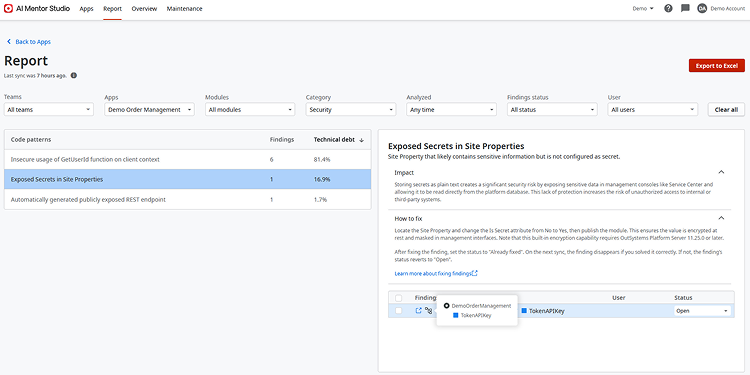
Storing API keys and external service credentials in site properties is a common practice, but leaving them unencrypted creates a significant security vulnerability. Relying on manual reviews to catch these oversights is risky and often leads to overlooked vulnerabilities in O11 apps.
AI Mentor Studio now automatically identifies these risks by matching site property values against typical formats for sensitive credentials and API keys.
By flagging exposed secrets early, teams can prevent accidental data exposure, enforce encryption best practices as well as ensure their applications remain compliant with modern security frameworks.
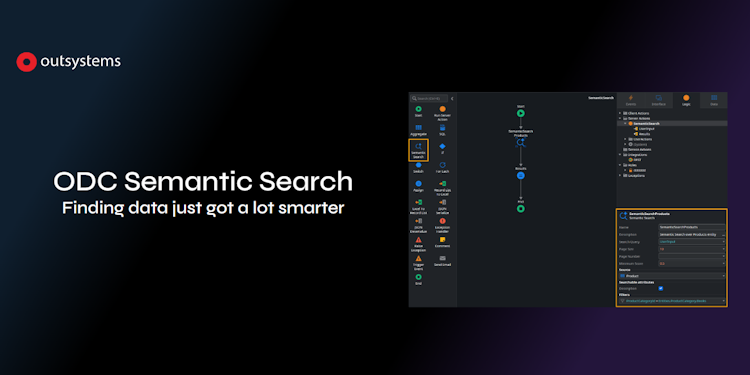
We are thrilled to announce the Beta release of ODC Semantic Search, a powerful new AI capability that helps applications and AI agents find relevant information based on meaning, not just exact keyword matches.
Introducing ODC Semantic Search
Traditional search relies on exact word matches, which can miss what a user is really looking for. Semantic Search uses vector-based retrieval to understand the meaning and context behind a query. This enables your applications to surface the most relevant information based on concepts, even when the search terms don't perfectly match the data in your OutSystems database. By transforming existing text attributes into searchable vectors, you can finally unlock the full potential of your ODC data.
Powering Apps and AI Agents
Semantic Search is more than a search experience; it is a foundational capability for building the next generation of AI-powered applications and experiences.
- Enhanced user experiences - Deliver more natural, human-like search experiences in web and mobile apps, helping users find relevant information faster and with less effort.
- Grounded AI agents and RAG - Support Retrieval-Augmented Generation (RAG) patterns by supplying AI agents with the most relevant context from your ODC data. This helps improve response quality by making AI outputs more relevant, more trustworthy, and better grounded in your business information.
Regional Support & Data Handling
For ODC environments residing in unsupported AWS regions, search requests will be automatically and securely redirected to a supported region to ensure full functionality. Learn more about it in the documentation.
Get started today
Semantic Search is currently available in Beta - we’re excited for you to try it and share feedback with us. Contact your account team and learn how to enable this powerful AI capability.
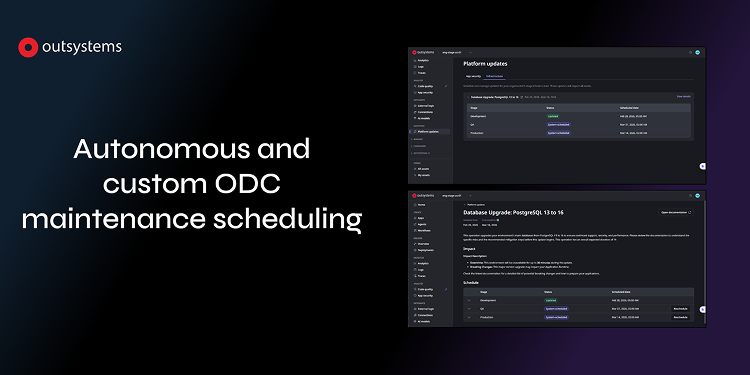
We’re pleased to announce that you can now autonomously schedule the database upgrades, security patching, and other maintenance tasks directly in the ODC Portal. The custom maintenance scheduling empowers teams to align infrastructure updates with their specific business needs, ensuring that system reliability and compliance never come at the cost of operational agility.
With this update, you get a unified maintenance dashboard with real-time progress tracking, allowing administrators to flexibly reschedule pending operations to a specific date and time within available maintenance periods. To ensure you never miss a critical update, the system sends proactive email alerts for required actions. It includes an automated fallback mechanism that securely executes necessary updates before their deadlines if no rescheduling is performed.
You can find upcoming updates and patches for app vulnerabilities under Maintain > Platform updates (formerly under App security).
使用しているエージェントの数がわずかであれば、ビルトインの安全性チェックなしでよい場合もあるかもしれません。では、Agent Workbenchを活用していくうちにエージェント型アプリのリリースが増えた場合はどうでしょう。不適切な言葉のブロックや、個人情報のフィルタリング、プロンプトインジェクションの防止、AIの利用に関する社内ポリシーの遵守をどう行っているかといった、基本的な情報さえも把握するのが難しくなっていきます。
今回のリリースでは、Agent WorkbenchがエージェントのLLM呼び出しの入力と出力をビルトイン検証できるようになりました。これにより、ガードレールを後付けするのではなく、プラットフォーム内で直接適用できるようになっています。
また、ガバナンスとコンプライアンスを大規模にサポートできるよう、組織側で有効化した事前定義済みの安全ルールを、開発者側で個別のエージェントに適用できる仕組みを用意しました。これは、現時点で制御性と信頼性を確保するとともに、今後さらに高度な必須のガバナンスを築いていくうえでの基盤となります。
Agent Guardrailsの紹介
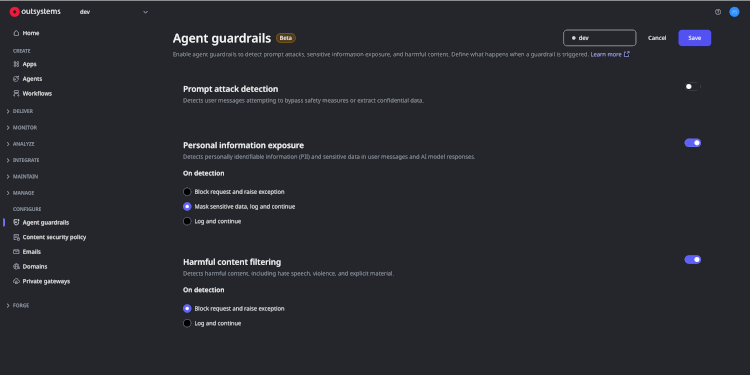
Agent Guardrailsは、安全性・コンプライアンス制御機能です。AIエージェントが受け取れるもの(入力)と生成できるもの(出力)を検証することで、リスクを抑制しながらエージェントの利用を拡大できます。システム管理者が構成できる事前定義済みのガードレールには以下のようなものがあります。
- コンテンツ安全性チェック: プロンプトや回答に含まれる有害なコンテンツ、安全でないコンテンツ、ポリシーに違反するコンテンツを検出してブロックします。
- PIIフィルタリング: 機密データ(個人情報など)を識別し、マスキングまたはブロックして漏えいを防ぎます。
- プロンプトインジェクション対策: 指示の上書き、データの抜き取り、エージェントの挙動の操作といった試みを検出します。
エージェントの実行中、Guardrailsは入出力を有効なルールと照合して自動的に検証します。ルール違反があった場合、システムは以下のような対策を実行します。
- 回答のブロック
- 機密性の高いコンテンツのマスキング
- イベントのロギング(構成に基づく)
適用されたルール、事象、チェック結果などを示した診断も提供されるため、ポリシーに照らし合わせてすばやくエージェントの挙動のトラブルシューティングや検証を行うことができます。
Agent Guardrailsは現在、ベータ版として公開されています。ぜひお試しのうえ、フィードバックをお寄せください。近いうちにさらに改良を加えたものをリリースする予定です。
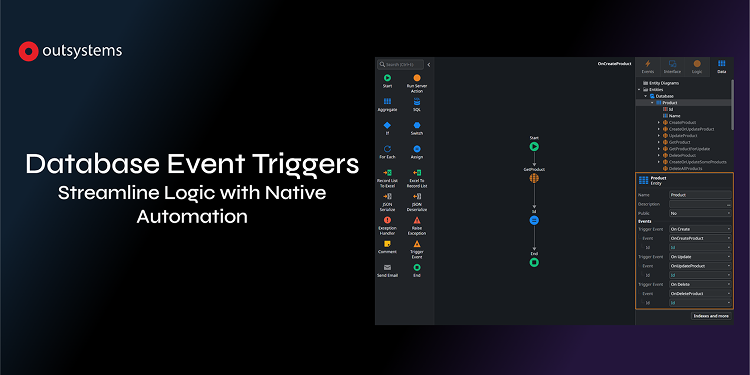
Event-Driven Architecture(EDA)の成功を受け、このたびOutSystems Developer Cloud(ODC)専用の新機能としてDatabase Eventsをツールキットに加えました。アプリケーションのオーケストレーションを大まかに行うEDAとは異なり、今回のアップデートではデータベースの状態遷移からロジックを直接トリガーできるようにすることで、高度に疎結合されたリアクティブアプリケーションの構築が可能になります。これにより、手動でのラッパー作成や複雑なプロセスモデリングを行う必要がなくなります。
このリリースにより、OnCreate、OnUpdate、OnDeleteといったネイティブエンティティイベントを受けてイベントをトリガーできるようになります。アプリケーションのアーキテクチャにデータベースをアクティブな要素として取り込むイメージです。
主な機能
- ネイティブエンティティトリガー: ソースでのデータ変更を直接サブスクライブします。レコードの作成、修正、削除が発生するたびに、ロジックが自動的に呼び出されます。
- 非同期実行: データベースによりトリガーされたロジックは、すべてバックグラウンドで実行されます。これにより、システムが副次的なロジックの完了を待たなくて済むため、メインのユーザートランザクションの迅速さと応答性を確保できます。
- レコードID経由でのアクセス: 影響を受けるレコードの一意の識別子に各イベントからアクセスできます。これにより、最新の状態を取得して監査を行ったり、キャッシュ無効化の処理をしたり、外部システムにリアルタイムでデータをストリーミングしたりしやすくなります。
- 信頼性の向上: レコードが変更されるたびに、その変更箇所にかかわらず、監査ロギングや外部データ同期といった重要な処理を副次的に行うようにします。
- シームレスなStudio連携と可用性: トリガーは、ODC StudioのEntityプロパティで直接構成できます。この機能は現在、すべてのODCテナントにロールアウトされています。データベースエンティティのプロパティに新たに設けられたEventsセクションをご確認ください。
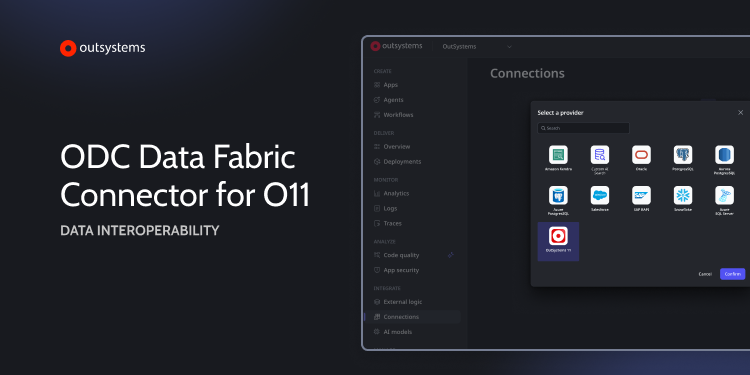
先月リリースされたODC Data Fabric Connector for O11 に改良を加え、パイプラインが複数あるO11のインフラ(同じインフラに複数の本番環境が存在)に対応できるようにしました。
今回のアップデートは、事業部門や地域別にパイプラインを分けて開発やデリバリーを行っているエンタープライズユーザー向けのものとなります。
主な変更点:
- パイプライン間の相互運用性: 複数のO11パイプラインから1つのODCテナントにエンティティを公開できるようになりました。
- アーキテクチャ面での一貫性: デプロイや分離に関するO11の既存ルールを維持しながら、ODCにデータを受け渡すことができます。
今回のアップデートにより、複雑なデリバリーアーキテクチャを持つ組織がこのコネクタを使用し、ODCベースのAIエージェントやアプリケーションを、O11に保存されているコアビジネスデータにグラウンディングさせることも可能になります。
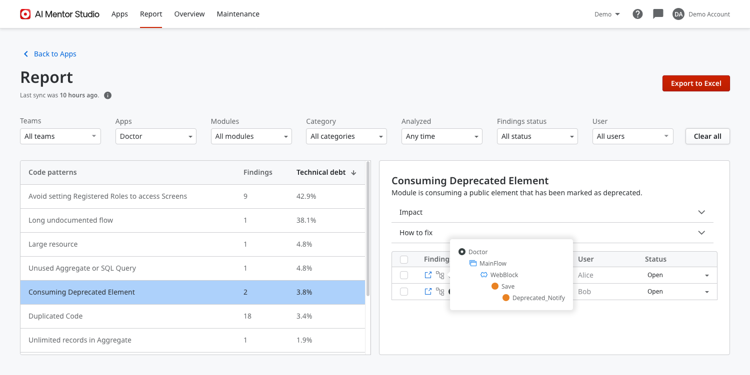
古くなったコンポーネントを自動的に特定して、技術的負債やセキュリティリスクを減らせるようになりました。
アプリケーションに非推奨の要素がないかどうかを手作業で調べるプロセスは面倒なうえ、技術的負債の見逃しにつながることも多いものです。このたび、AI Mentor Studioでは、推奨されなくなった要素を利用しているモジュールにプロアクティブにフラグを立て、よりセキュアな要素や、より効率的な要素への置き換えを促すようになりました。
リスクを早い段階で把握することで、アプリケーションの健全性を高め、脆弱性を最小化しつつ、将来的なアップグレードを簡素化することができます。
このたびOutSystemsがFedRAMP準拠となりました。これにより、米国連邦機関とその請負業者が、認可済みのフルスタックカスタムアプリケーション開発プラットフォームを使用して、政府のデータセキュリティ要件に沿ったミッションクリティカルなアプリケーションをデプロイし、管理できるようになります。
このマイルストーンを達成したことで、政府機関が連邦政府のセキュリティ要件であるFedRAMP Moderateを遵守しながら、段階的にレガシーモダナイゼーションを進め、クラウドネイティブアプリケーションをデプロイできるようになります。
米国政府の厳格で排他的なプログラムであるFedRAMPは、連邦機関による政府レベルのクラウドソリューションの導入を加速させるべく、クラウドサービス製品のセキュリティ評価と認可を標準化するために設計されたものです。今回のFedRAMP認証の取得にあたっては、最大かつ最長の歴史を誇る連邦系マネージドクラウドベンダー、Knoxをパートナーに迎えました。