
Legacy application modernization: Revitalizing business infrastructure
Legacy system modernization transforms outdated systems into agile assets for the future. This process redefines how IT professionals and business leaders transform their technological past into a path that unlocks new business potential and competitive advantage.

What is a legacy system?
A legacy system is an older application, platform, or infrastructure that remains in use despite being built on outdated technology.
These systems often support core business processes, but they were designed for earlier technical environments, making them difficult to update, integrate, or scale. While legacy systems may still function reliably, they typically limit agility, increase operational risk, and slow down innovation as business and technology demands evolve.
What is legacy modernization?
Legacy modernization is the process of updating and transforming outdated systems, applications, or infrastructure so they can meet modern business and technology requirements. As IT environments evolve, legacy systems that remain unchanged can slow delivery, increase operational risk, and constrain growth.
Legacy application modernization often involves migrating older platforms to more flexible architectures, modern infrastructure, or cloud environments. This can improve performance, security, scalability, and integration with newer applications and services. It also enables organizations to adopt modern capabilities such as cloud computing, artificial intelligence, and data-driven automation without replacing every system at once.
The importance of legacy application modernization
In the latest State of App Development report, 73% of the organizations surveyed consider legacy modernization significant or central to their app development strategies. Legacy system modernization is crucial for businesses that want to stay competitive in today's digital age. Outdated systems often lack the agility required to support new business models. They can also suffer from compatibility issues with newer software or hardware components. Legacy modernization ensures that organizations can keep up with evolving customer expectations, regulatory compliance standards, and industry best practices.
Modernizing legacy applications is a strategic initiative that enables organizations to transform their outdated IT infrastructure into a more robust, flexible, and future-proof environment. By upgrading their technology stack, businesses can unlock numerous benefits such as improved operational efficiency, enhanced customer experiences, reduced maintenance costs, and increased innovation opportunities.
Legacy systems risks
Legacy applications and systems can pose significant challenges for businesses. One of the primary concerns is the high maintenance costs associated with these outdated systems. As technology continues to evolve, maintaining and supporting legacy systems becomes increasingly costly and time-consuming.
Cost
Estimating and managing the ongoing expenses of outdated systems is another hurdle for organizations. It can be challenging to accurately forecast the financial implications of keeping these systems running smoothly, leading to unexpected costs that strain budgets and resources.
The hidden costs of technical debt are also an issue. Technical debt refers to the accumulated consequences of suboptimal design or implementation choices made in the past. These choices can hinder system performance, increase maintenance efforts, and impede future development.
Integration
Integration issues further compound the challenges created by legacy systems. As newer software and technology emerge, legacy applications often struggle to communicate effectively with them. This lack of compatibility can result in data inconsistency, inefficient workflows, and limited functionality.
Legacy frameworks can also hinder scalability and adaptability because most were designed for specific purposes or environments that are out of touch with modern business needs. As a result, their existing infrastructure can hold back organizations that want to scale operations or adapt to changing market demands.
Agility
A lack of agility is a common drawback associated with legacy systems. Technology evolves so fast now that businesses need to be able to adjust operations and decision-making processes just as quickly. However, legacy systems are not designed to respond quickly to market changes or implement new features efficiently. Most have monolithic architectures that don’t allow for easy scaling or flexibility. Plus, most are designed to run on-premises on servers with a mainframe, which makes it difficult and slow to make updates or changes.
See how Mazda migrated 500 legacy systems
Security vulnerabilities
Legacy systems introduce security risks because they rely on outdated technologies that no longer receive regular patches or updates. Unsupported operating systems, legacy frameworks, and aging dependencies create exploitable gaps that modern threat detection tools may not fully cover. As security standards and compliance requirements evolve, these systems become harder to protect, increasing the risk of breaches, data exposure, and audit failures.
Lack of vendor support
Over time, vendors phase out support for older platforms, frameworks, and software versions. Once vendor support ends, organizations lose access to security updates, bug fixes, and technical assistance. This forces internal teams to maintain systems on their own, often without the expertise or tooling required. As a result, outages last longer, risks increase, and modernization becomes more urgent and complex.
Benefits of modernizing legacy applications
Modernizing legacy systems offers businesses a multitude of benefits, including efficiency, scalability, and competitive advantage. This transformation not only future-proofs your business but also positions it for success in an increasingly digital world.
Improved efficiency
One of the key advantages of legacy modernization is improved efficiency. By streamlining operations with single, integrated platforms, businesses can eliminate redundant processes, reduce manual errors, and automate tasks. This not only saves time but also enhances productivity by allowing employees to focus on more strategy and high-value work.
Scalability
Scalability is another significant benefit of modernizing legacy systems. As businesses evolve and grow, their workloads increase as well. Legacy systems can struggle to handle these evolving workloads, resulting in performance bottlenecks and limitations. By migrating to the cloud or adopting modern, cloud-native technology, organizations can easily scale their operations to meet growing demands without compromising performance or customer experience.
Competitive advantage
Furthermore, modernizing legacy systems provides competitive advantage in today's digital landscape. Outdated technology hinders innovation and makes it difficult to address changes in the market. By committing to modernization, businesses can leverage cutting-edge tools and technology that enable them to stay ahead of the competition. New products or services get into market faster and organizations can respond swiftly to customer needs.
Legacy modernization strategy
A clear legacy modernization strategy helps organizations decide how to modernize systems while minimizing disruption and risk. Common approaches include full replacement, incremental upgrades, replatforming, refactoring, and legacy application migration to the cloud.
Big bang vs incremental modernization
One of the most important decisions in a legacy system migration strategy is whether to modernize incrementally or replace systems all at once.
An incremental approach updates components gradually while keeping systems operational. This reduces disruption, allows teams to address high-impact areas first, and spreads cost and risk over time.
A big bang approach replaces the legacy system in a single initiative. While this can deliver faster results and eliminate technical debt quickly, it carries higher risk, requires significant upfront investment, and often demands rapid user retraining. Some organizations run old and new systems in parallel to reduce risk, which increases short-term cost and complexity.
Choosing how to modernize a legacy system depends on system complexity, business urgency, budget, risk tolerance, and integration requirements. Many organizations combine approaches—for example, refactoring core components while migrating workloads to modern infrastructure or the cloud.
Best practices in legacy modernization
A successful modernization journey follows best practices that can streamline the process and maximize the benefits. The following key best practices in legacy modernization can be helpful in navigating the process more effectively while maximizing value.
Develop a roadmap
Establishing a clear roadmap for a legacy modernization project is a must. Identify the desired outcomes and define the steps needed to achieve them. Set goals and milestones to track progress and ensure that everyone is on board with a common vision.
Create a timeline and budget
A clear understanding of the time and resources required for each phase of a legacy modernization project is critical. Without this understanding, managing expectations is difficult and can create unnecessary delays or cost overruns. Create a workback schedule and budget milestones to stay on track.
Plan for involvement and alignment
Engage departments and personnel in the decision-making process to ensure that their needs are considered, fostering buy-in throughout the organization. This collaborative approach helps people and teams understand how modernization efforts address their objectives and overcome their challenges, ensuring the buy-in that leads to overall business success.
Ensure compliance and security
It’s critical to ensure that all regulatory requirements are met during the transition process. Additionally, consider how to implement robust security measures that can safeguard sensitive data throughout the digital transformation journey.
Legacy modernization examples
Legacy modernization looks different across industries, but the goal is the same: extend the value of critical systems while enabling faster innovation.
- Banking and financial services: Organizations modernize legacy banking systems to support digital onboarding, real-time services, and regulatory compliance without disrupting core transaction platforms.
- Insurance: Insurance legacy system transformation focuses on replacing manual workflows and rigid policy systems with flexible, digital-first applications.
- Transportation and logistics: Companies modernize legacy ERP systems to improve visibility, integration, and scalability across operations.
Organizations across industries have used OutSystems to modernize legacy systems at scale:
- Santander needed to modernize customer-facing experiences without destabilizing core banking systems. It used OutSystems to support a major transformation program while keeping critical operations running, replacing 70% of its core systems by the beginning of 2020.
- Tysers was dealing with paper-heavy workflows in the Lloyd’s of London market that slowed response times and made work harder to standardize. It built and rolled out its Tconnect platform with OutSystems to digitize end-to-end insurance processes, delivering it in 4 months, saving 400 hours per week, and resolving customer queries 60% faster.
- Green Cargo wanted to move off legacy applications and migrate to the cloud without a disruptive rip-and-replace. Using OutSystems with Microsoft Azure, it took an incremental modernization approach that helped it deliver digital innovation up to 10x faster.
- Gen Re needed to retire legacy applications at scale across a complex enterprise environment, including a large Lotus Notes footprint. By adopting OutSystems to standardize delivery and build a repeatable approach, it delivered 30 applications in the first 9 months.
Modernizing legacy systems with an AI development platform
Modernizing legacy applications requires more than replacing technology; it requires a platform that supports speed, scale, and governance. An AI development platform built on low-code principles enables organizations to modernize systems incrementally, integrate with existing architecture, and extend legacy processes with automation and intelligence.
With OutSystems, teams can refactor and rebuild legacy applications, migrate workloads to the cloud, and introduce AI-driven capabilities without increasing technical debt. The platform supports scalable development, lifecycle governance, and phased delivery, helping organizations modernize safely while keeping critical systems running.
See how industry leaders are modernizing legacy systems with OutSystems
OutSystems accelerates legacy application modernization
OutSystems helps you modernize legacy applications faster, with less disruption. As an AI development platform built on high-performance low-code, it supports everything from incremental modernization to full replacement—so you can rebuild what’s holding you back, integrate with the systems you still need, and deliver new experiences without adding more complexity.
As technology expectations keep rising, modernization has to be repeatable and scalable, not a one-off project. With OutSystems, teams can modernize and extend legacy systems, deliver production-ready applications quickly, and manage governance across the lifecycle—helping you keep improving what you’ve built as the business evolves.
Useful resources
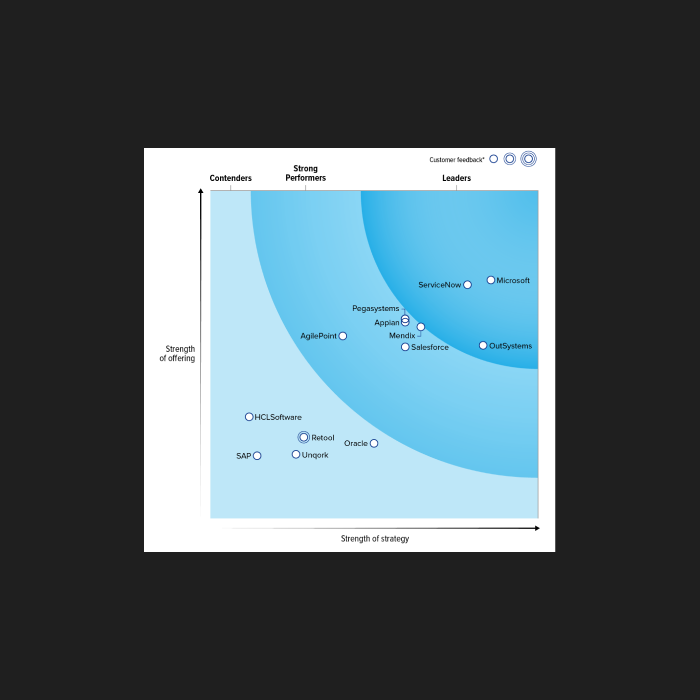
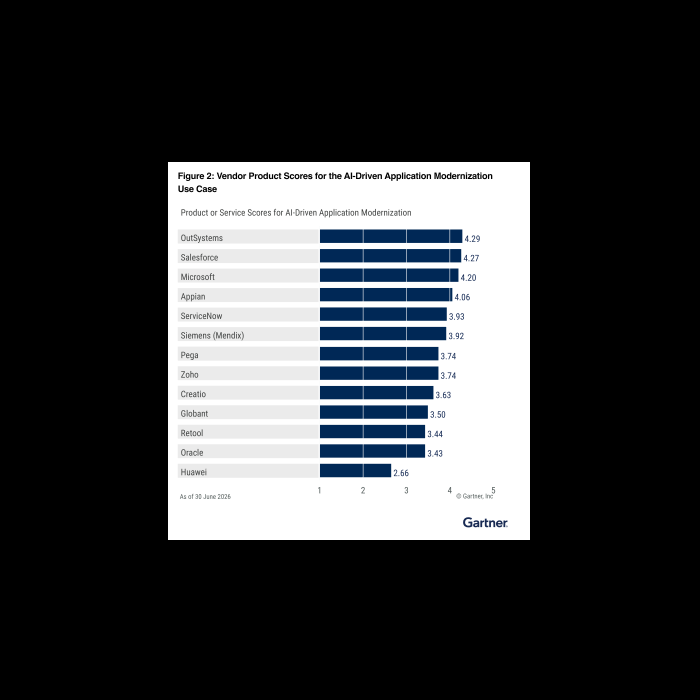
Legacy modernization helpful resources

Learn the fundamentals of modern development


Frequently asked questions
A key characteristic of a legacy system is its reliance on outdated technology that is difficult to modify or integrate with modern applications. These systems often support essential business functions but lack flexibility, scalability, and compatibility with current platforms, making updates slow and costly.
Common challenges in legacy system modernization include technical debt, integration complexity, security risks, limited vendor support, and the risk of business disruption. Organizations must also balance modernization efforts with ongoing operations, budget constraints, and regulatory requirements.
Automation can accelerate legacy modernization by using AI-assisted development, reusable components, and automated testing and deployment pipelines. Modern platforms enable teams to wrap, extend, and modernize legacy applications incrementally while reducing manual effort and operational risk.
A legacy application is an older software application built on outdated technology or architecture that is still used to support business operations. While often stable, legacy applications are typically difficult to scale, integrate, or update, which limits innovation and agility.