
Data virtualization: Unleashing efficiency and strategic insights
Data virtualization is adding significant value for IT professionals, acting as a conduit for enterprises to access, integrate, and manage data across diverse systems and locales with ease. It provides a unified data view that abstracts away the hassle of physical data movement or replication. This article delves into the numerous advantages of data virtualization and its critical role in contemporary, data-centric enterprises and applications while also casting a gaze toward its future trajectory.

What is data virtualization?
Data virtualization is a transformative technology that enables businesses to manage and access data from countless sources without physical relocation or duplication without technical details about the data. It crafts a unified data view, irrespective of the data's original location or format. The result is streamlined organizational decision-making processes based on real-time information.
A notable advantage of this technology is its proficiency in simplifying data integration. By sidestepping time-intensive and resource-heavy traditional ETL (Extract, Transform, Load) processes, organizations can embrace a modern, agile data architecture.
Adopting data virtualization not only trims down IT infrastructure complexity but also enhances overall efficiency. It eliminates the need for expensive storage solutions and diminishes risks tied to data duplication.
Moreover, it empowers organizations to swiftly adapt to evolving business demands by offering real-time access to accurate, updated information. This facilitation of timely insights fuels innovation, enriches customer experiences, and secures a competitive advantage.
Data virtualization vs traditional data integration approaches
While both data virtualization and traditional data integration can unify data from various sources for analytical and decision-making purposes, their methods and outcomes diverge significantly.
Data virtualization
Here’s a brief summary of data virtualization:
- Methodology: Offers a unified, abstracted data perspective from multiple sources without moving or replication, ensuring real-time or near-real-time data access.
- Performance and flexibility: High flexibility and agility, allowing swift adaptation to changes with real-time data reflecting the current information state.
- Cost and complexity: Minimizes extensive ETL processes, storage costs, and data replication, thus reducing infrastructure complexity and expenditure.
- Use case suitability: Ideal for scenarios that require real-time data integration like business intelligence, customer experience management, and agile data environments.
Traditional data integration (ETL)
Here’s a brief summary of ETL:
- Methodology: Involves physical data extraction from various sources, transformation into a consistent format, and loading into a central repository.
- Performance and flexibility: Ensures data quality and consistency but is less adaptable to changes, often lagging in providing the latest data snapshot.
- Cost and complexity: Uses significant resources for data movement, storage, and maintenance, escalating with the diversity and volume of data sources.
- Use case suitability: Best suited for in-depth historical data analysis where data immediacy is secondary. Ideal for environments that have data quality and consistency.
Data virtualization emerges as a more agile and cost-effective solution for real-time data integration, whereas traditional methods remain robust for deep historical analyses and high-quality data consistency.
The benefits of data virtualization
There are several benefits that empower organizations to unlock the full potential of their data assets:
Enhanced business agility
Data virtualization eliminates the need to replicate data and significantly boosts business agility. It enables enterprises to swiftly meet new business requirements with real-time data support for critical decision-making.
Improved data governance and security
Centralizing data access through a governance layer allows for enhanced control, effective data management, and adherence to regulatory compliance, ensuring data security.
Cost and resource savings
By eliminating the necessity for physical data copies, data virtualization cuts down on storage expenses and reduces the hardware and energy resources required for data management, translating to notable cost savings.
Scalability and performance
Our scalable architecture ensures that even as data volumes grow, your applications maintain optimal performance. We prioritize high availability and redundancy, ensuring continuous access without compromising speed. By abstracting the complexity of implementation, we not only offload this concern from you, allowing the focus to remain on delivering highly-performant apps, but also remove any concerns related to issues generated by poor implementations.
Support for self-service data
Facilitating self-service business intelligence and analytics, data virtualization empowers users across the organization to access needed data, reducing IT dependency and expediting insight discovery and decision-making.
Common use cases for data virtualization
Organizations use data virtualization for several types of use cases. Common uses include:
- Business intelligence and reporting: Streamlines data access for analytics, offering a comprehensive view of operations by integrating data from varied sources like databases, data warehouses, and data lakes.
- Application development and testing: Eases developer access to diverse data sources, facilitating application building, testing, and maintenance.
- Master data management (MDM): Ensures consistent, reliable data across business functions by providing a virtual, centralized master data view.
- Real-time data integration: Critical for industries like finance and telecommunications that depend on real-time data for operations and customer services.
Implementing data virtualization: Best practices
An effective implementation involves following best practices to ensure successful deployment, adoption, and ongoing management. Here are some key best practices to consider:
- Understand your data ecosystem: A deep dive into existing data sources, formats, and access types is essential before implementation.
- Establish clear governance policies: Crucial for maintaining data quality, accessibility, and security within the virtualization framework.
- Monitor and optimize performance: Regular performance checks and optimizations ensure the virtualization layer meets business demands.
- Train and educate users: Encouraging adoption and maximizing technology benefits require comprehensive user training on data virtualization's capabilities and limitations.
The future of data virtualization
With the exponential growth in data volume, velocity, and variety, data virtualization is likely to surge. Future advancements may include deeper cloud-native technology integrations, enhanced edge computing support, and increased automation for efficiency.
Data privacy and security will likely see the integration of advanced encryption and stricter access controls, addressing growing data protection concerns.
Data virtualization with low-code development: Embracing the integration
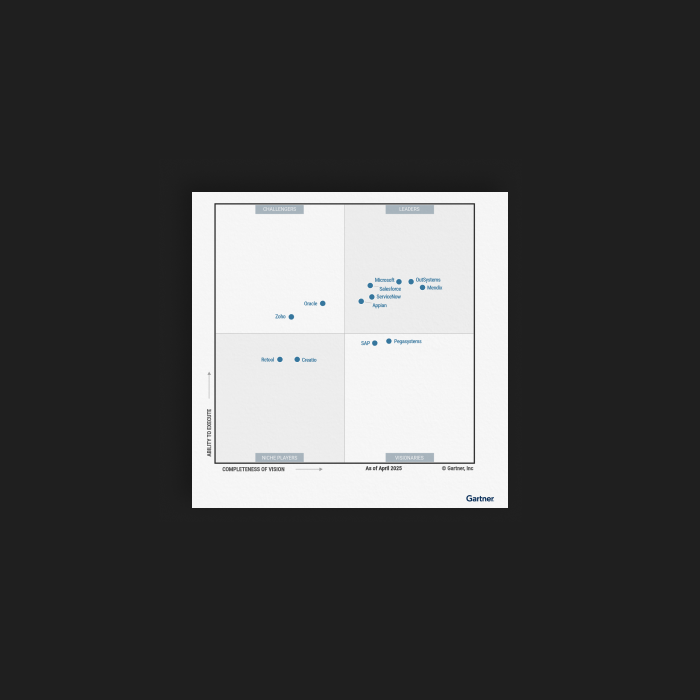
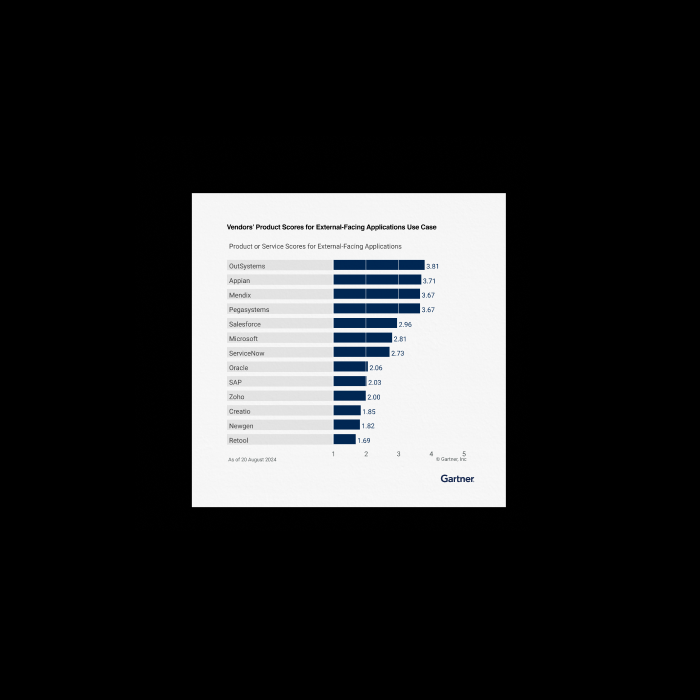
Integrating data virtualization with the OutSystems low-code development platform offers a host of benefits. Such innovation is delivered through a recently launched OutSystems capability - Data Fabric. Data Fabric simplifies connecting to diverse data sources, fosters real-time, up-to-date information access for decision-making, and enhances application development agility. By leveraging data virtualization, you’ll ensure scalability and cost-efficiency, supporting organizational growth with minimal disruption.
Transformative opportunity: Data virtualization and OutSystems
Data virtualization along with low-code development, can be transformative. It offers businesses the opportunity to capitalize on real-time data access, streamline decision-making processes, and enhance agility and scalability in application development. By using the data virtualization capability provided by OutSystems, you can propel your organization towards greater efficiency, strategic insight, and competitive edge in the dynamic business landscape.
This lets you unlock the potential of your enterprise data, source systems, and business users, fostering a culture of innovation and informed decision-making by.
Useful Resources
Related Resources

Learn the fundamentals of modern development


Data virtualization frequently asked questions
ETL involves physically moving data to centralize and transform it, which can be time-consuming and inflexible. Data virtualization, however, provides a real-time, unified view of data from multiple sources without physical data movement, offering agility and efficiency.
Data virtualization in AWS refers to using Amazon Web Services to create a virtualized data layer that allows access to data across various AWS data stores and external sources without moving or copying the data, enabling agile data management and integration in the cloud.
Data visualization is the graphical representation of data to help users understand trends, patterns, and insights. Data virtualization, by contrast, is technology that abstracts the technical aspects of how and where data is stored, providing a unified view of data across multiple sources for easier access and integration.
Data center virtualization is a process that allows for the creation of a virtual version of physical data center resources, including servers, storage devices, networks, and other data center infrastructure components. This approach uses software to simulate hardware functionality, enabling multiple virtual machines (VMs) to run on a single physical machine. The primary aim of data center virtualization is to improve IT efficiency, flexibility, and scalability while reducing costs.