

Product Releases
and Updates
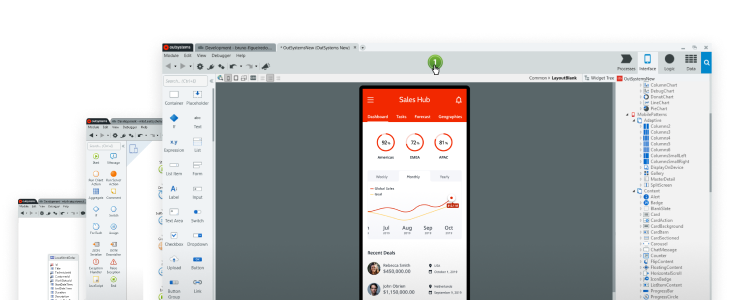
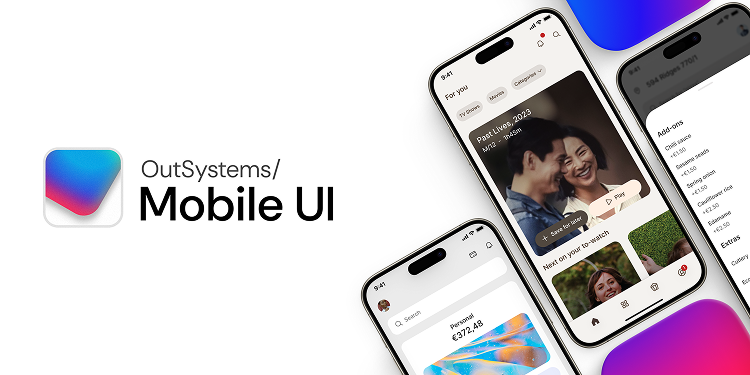
Available on ODC, Mobile UI is a beautiful mobile-focused UI framework designed to build mobile apps with a long-term app strategy, where excellent user experience, modern design, and fast development are top priorities. It brings new mobile-specific widgets built on a modern architecture, new icons, updated patterns and gestures, a mobile-first theme, and an improved developer experience.
Update to the latest ODC Studio version and start using the Mobile UI framework.
The latest version of Mobile Apps Build Service (MABS) is now GA!
For ODC, MABS 12 now supports Capacitor, a modern native runtime that allows developers to build native-like experiences on iOS and Android. Capacitor is a modern, forward-looking mobile foundation, offering a simple plugin system and an active developer community. Additionally, for O11 and ODC, MABS 12 is required to continue submitting your mobile apps to the Apple App Store and Google Play Store throughout 2026.
Before updating MABS, all supported plugins must be updated to their latest versions. For more details, check the MABS 12 release notes.

When you only have a few agents, managing them one by one works. But as teams ship more agentic apps with Agent Workbench, it becomes hard to answer basic questions at scale: Which agents are using which models? What actions are they allowed to run? Where do we need to tighten governance or troubleshoot? That information was scattered across individual agentic applications, not available in one place.
To better support governance, management, and operational efficiency at scale, we saw a clear need for a new console that provides this portfolio-wide visibility, making it much simpler to manage a growing ecosystem of AI Agents.
Introducing the Agents Console
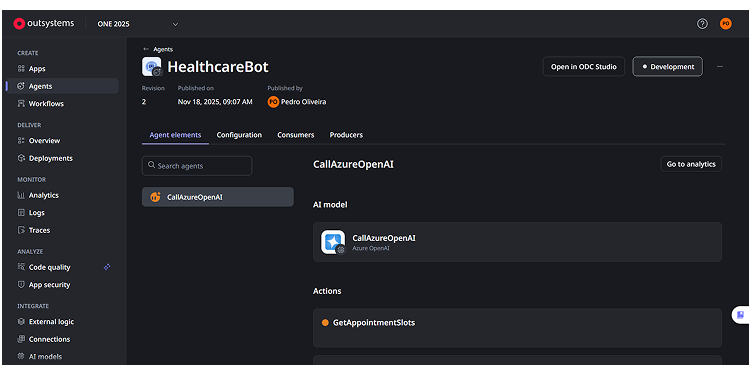
The new Agents Console is a centralized hub for your AI Agents. In a single view, you get a complete list of agents across your environments and can immediately inspect each agent’s core configuration, including the specific AI Model it utilizes and the complete list of Actions it is authorized to execute. This new view streamlines governance, simplifies debugging, and provides the essential oversight needed to confidently manage and scale your AI applications.
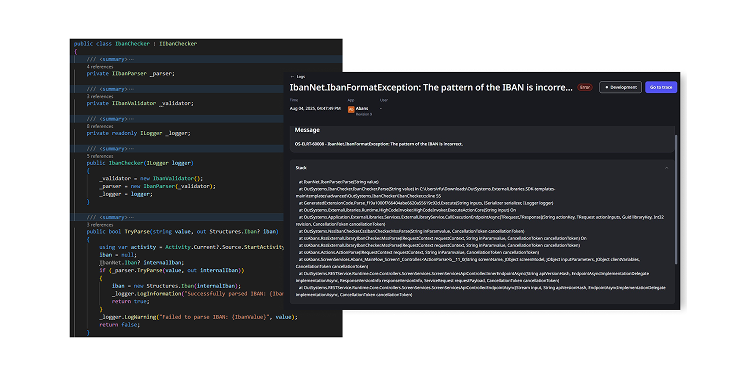
To empower you with greater transparency and control over your external logic, we're announcing the ability to log and monitor your custom code.
This update introduces:
- Exposed Stack Traces: Whenever an error occurs within your custom code, you will now have access to the full stack trace. This provides details on where and why an error happened, accelerating diagnostics.
- Comprehensive Logging and Tracing Capabilities: You can now create detailed logs and traces for your External Library actions. These logs and traces will capture critical information, helping you monitor execution, track data flow, and identify potential issues proactively.
These new capabilities will streamline your development and maintenance work, making your experience with custom code better and more productive.
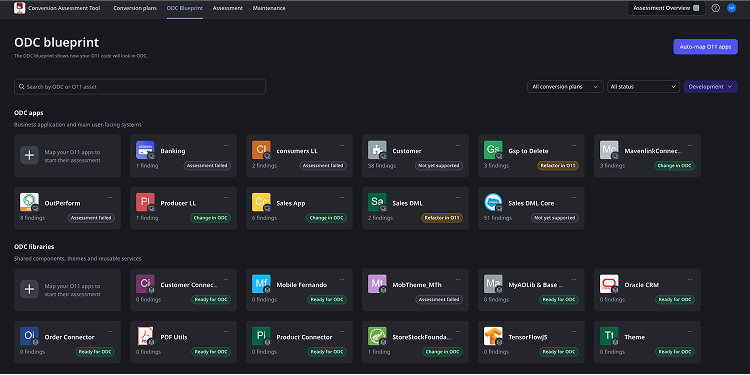
We are excited to announce the General Availability of the O11 to ODC Conversion Assessment Tool, the first component of the new O11 to ODC App Conversion Kit. This launch is a direct reflection of our commitment to supporting your modernization journey and empowering the transition to ODC at your own pace. This tool puts you in the driver's seat to decide if, when, and at what pace to convert your individual applications from O11 to ODC. It provides a clear, automated analysis of your entire O11 application portfolio, empowering you to properly plan your conversion journey accurately and build a predictable roadmap.
The Conversion Assessment Tool, installed from Forge onto your O11 infrastructure, analyzes your application portfolio to deliver crucial guidance for efficient ODC conversion planning. The tool assesses your O11 applications for conversion readiness by identifying incompatible code, data, and infrastructure patterns that need to be addressed for a successful transition to ODC.
It then delivers a detailed report with actionable insights, including:
- A breakdown of code, data, and infrastructure patterns found.
- Clear guidance on how and where to fix incompatibilities.
We are pleased to announce the release of MABS 11.2. This release delivers important improvements in scalability, stability, and containerization for the mobile build infrastructure, along with updates to several supported plugins.
If your production applications use any of the affected plugins, we recommend updating to MABS 11.2 as soon as possible to take advantage of the latest enhancements and ensure ongoing compatibility.
In accordance with the MABS versions and lifecycle guidelines, MABS 11.1 is now deprecated and will be made obsolete later this year.
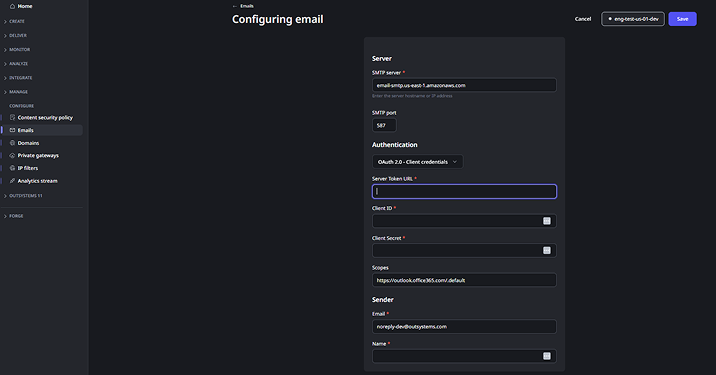
We’re excited to announce that ODC allows configuring SMTP OAuth (Simple Mail Transfer Protocol Authentication). The new type of authentication helps ensure that only authorized users or applications can send messages, protecting systems from unauthorized use, spam, and spoofing.
SMTP OAuth on ODC enables seamless integration with modern email infrastructures, eliminates the need to store or transmit passwords, and strengthens the overall security posture of outbound communications.
We’re excited to introduce a major evolution in OutSystems Workflows — Internal Reusability.
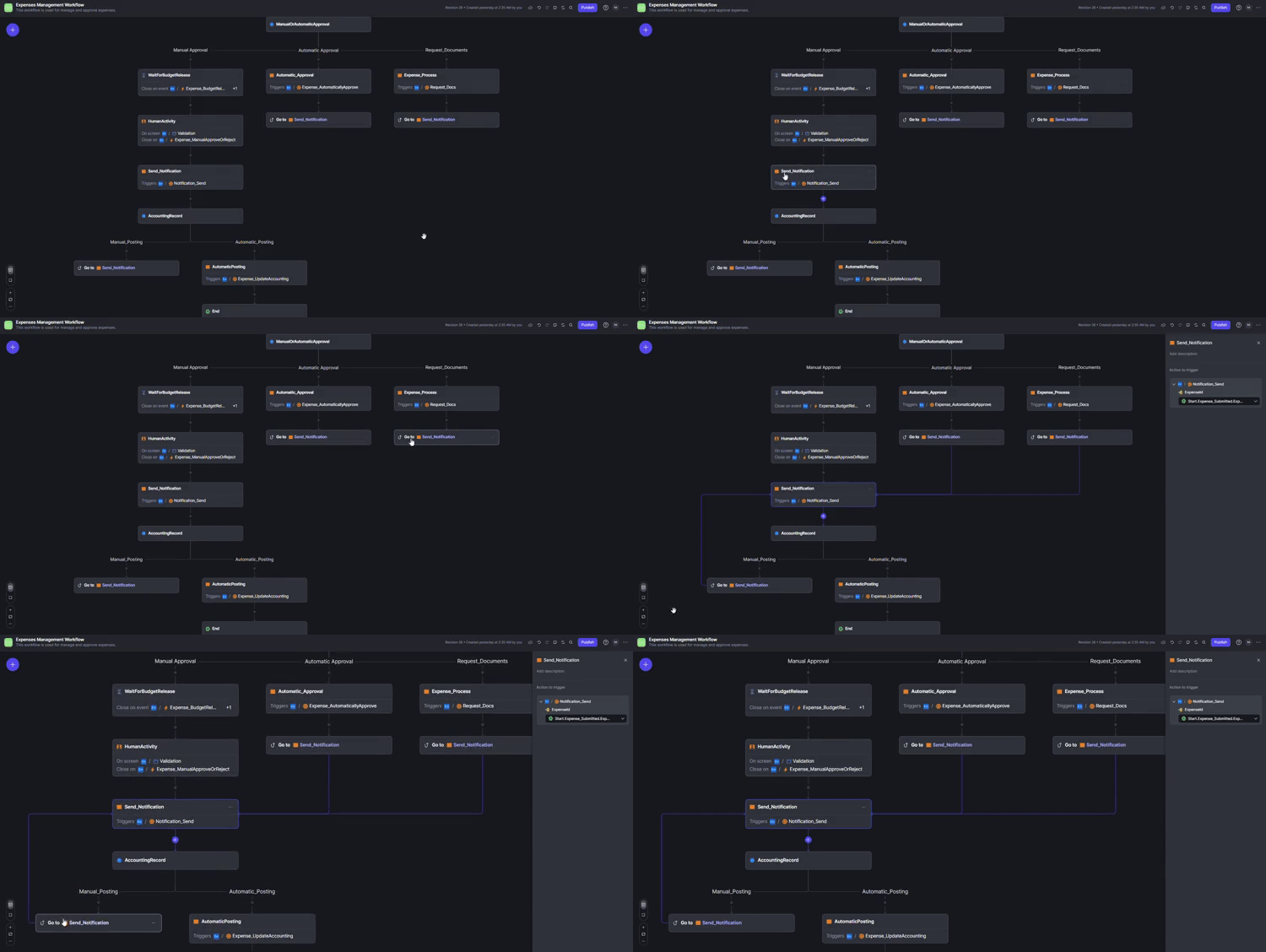
This enhancement makes it easier and faster to design, maintain, and scale your process workflows. You can now reuse an activity (or set of activities) within the same workflow, reducing duplication and simplifying maintenance.
From a business perspective, this means teams can move faster and deliver more value — reusing existing workflow logic across processes instead of duplication of activities for the same operation. The result? Greater agility, simplicity, faster time-to-market, and more consistent process execution.
On the technical side, this update introduces a sideways ‘Go to flow step’ expanding beyond the previous limitation, which only allowed connections to previous nodes. Now, a ‘Go to flow step’ can target a wider range of activities within the same workflow, enabling the creation of reusable node patterns and more flexible, efficient process designs — all while maintaining flow integrity.