

Product Releases
and Updates
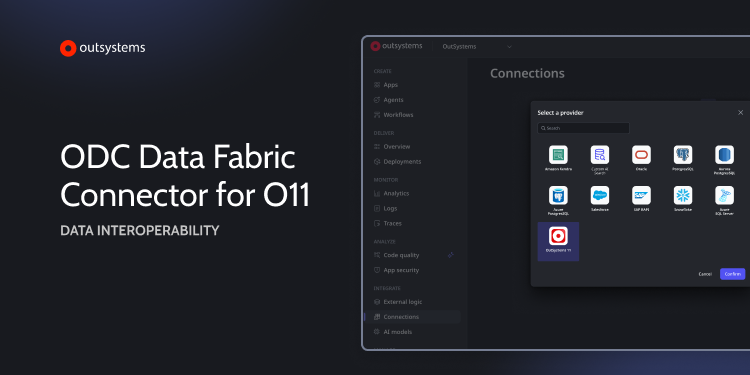
ODC Data Fabric Connector for O11 now supports multi-database catalogs on O11 self-managed infrastructures. This update is specifically for enterprise customers who enforce database-level data separation - whether for storage management, regulatory compliance, or performance isolation.
What has changed:
- Data Segregation Consistency: The connector routes automatically to the correct database catalog, preserving your existing O11 data segregation rules as you bridge data to ODC.
- Operational Flexibility: Your O11 database configuration and access policies remain unchanged — the connector adapts to your existing setup.
- AO-neutral usage: Consuming O11 entities in ODC remains AO-neutral, regardless of your database catalog configuration.
This update enables organizations with complex delivery architectures to ground ODC-based AI agents in business data stored across isolated catalogs — without collapsing your existing data boundaries.
We’re excited to share that OutSystems is now fully compliant with the UK government-backed Cyber Essentials Plus framework across both the OutSystems 11 and OutSystems Developer Cloud platforms. By adopting these stringent, independently verified security controls, OutSystems ensures that its infrastructure is fortified against a wide range of cyber threats, providing organizations with a highly secure environment for their digital transformation initiatives.
This certification directly accelerates procurement and simplifies governance for highly regulated organizations, including the UK public sector, healthcare, financial services, and more. By building on a foundation that meets these rigorous standards, your development teams can focus on delivering agentic systems rather than navigating complex compliance barriers.
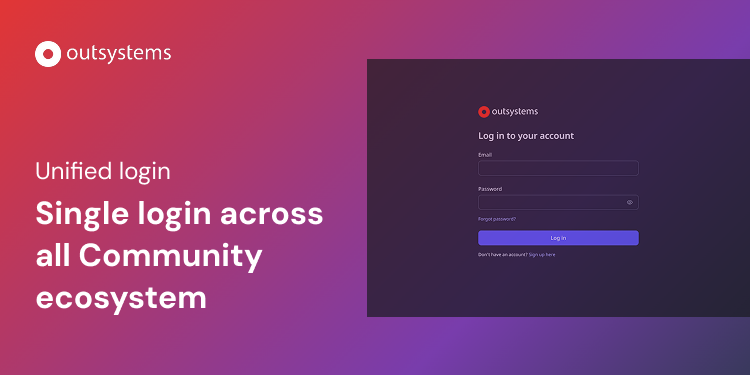
Community, O11 Personal Environment, and ODC Personal Edition now share a single login, replacing the fragmented authentication experience that required separate sign-ins across products.
Your identity is now stable and persistent: it follows you across the ecosystem, even through email address changes, and is no longer dependent on password replication across systems.
With this update, you can:
- Sign in once and move freely between Community, O11 Personal Environment, and ODC Personal Edition without being re-prompted to authenticate.
- Keep your existing credentials, no migration or new account required.
- Maintain a consistent identity across the OutSystems Community ecosystem, even when your email address changes.
- Benefit from a more secure authentication foundation, with passwords no longer stored or replicated across systems.
- Activate your account with a verification code, a more reliable and secure alternative to link-only activation.
Ready to build?

Unused dependencies accumulate over time and can disrupt deployments or cause unexpected runtime errors - even if your application never actively calls them. Because these dependencies are still part of your deployment plan, they make your app more vulnerable to breaking changes from modules you’re no longer using.
O11 now alerts you to unused producer references - such as an OutSystems UI reference where no widgets or patterns are used, or a producer module kept after a refactor with none of its actions or entities called - directly in LifeTime while creating your deployment plan. Before staging, you will see a list of flagged producers, allowing you to decide whether to clean them up, recalculate the plan, or proceed with full visibility.
Minimum versions: Platform Server 11.41.1, LifeTime 11.32.0
The i3X Connector is now available on the OutSystems Forge, expanding the OutSystems Agentic Industry Solutions portfolio for manufacturing. It brings CESMII's i3X™ standard - the open, vendor-agnostic API for industrial data - to the OutSystems platform as ready-to-use ODC Server Actions, so manufacturers can connect apps and agents to shop-floor data without one-off, per-vendor integrations.
i3X, developed by CESMII (the Smart Manufacturing Institute), replaces brittle point-to-point integrations with one common API across multi-vendor IT and OT systems. With the connector, OutSystems apps and agents read the same contextualized production data regardless of which platform serves it - historians, asset models, or telemetry stores - with no vendor lock-in and no server details baked into your apps.
What you get:
- The i3X read surface as Server Actions. Browse namespaces, object types, and objects; read current and historical values; and subscribe to value updates through a sync poll loop - 17 of the 20 i3X v1 endpoints, with no HTTP plumbing or custom integration code.
- Point it at any i3X v1 server. The server URL and authentication travel with each call, so one app can talk to many servers, and no-auth, bearer-token, and API-key servers all work without code changes. Try it against the public i3X demo server first, then bring your own server and credentials.
- Failures are data, not crashes. Every action returns a Success flag and a normalized error you can branch on, and calls appear in ODC monitoring with distributed tracing - while server credentials are never logged or traced.
Inside the connector:
- Discovery and explore: actions for server info and capabilities, namespaces, object types, and relationship types.
- Objects and values: actions to list and query objects and their related objects, and to read current and historical values to a chosen depth.
- Subscriptions: actions to create subscriptions, register monitored items, poll for updates with sequence tracking, and clean up when done.
The i3X Connector ships as a clone-and-own integration accelerator - an External Logic (C#) library with no community dependencies, licensed under BSD-3-Clause.
.png)
Mentor accelerates development by generating application code, but developers remain in control of what gets implemented. New visual review capabilities allow developers to inspect Mentor’s proposed development plan in detail, understand its impact on the application, and approve only the changes that align with their architecture, requirements, and quality standards
Key capabilities include:
- Visual Plan Comparison: See a clear side-by-side view of your current codebase state versus Mentor's proposed plan.
- Impact Analysis: See exactly which ODC Assets (Entities, Server Actions, Screens) will be created, modified, or removed by the proposed changes before implementation begins.
- Selective Implementation: Choose which suggestions to apply instead of accepting the entire plan. Developers can include the changes they want and exclude those they don’t.
By bringing review and approval into the workflow before implementation, Mentor gives developers the transparency and control to move faster with AI while ensuring every change reflects their intent and meets their standards.
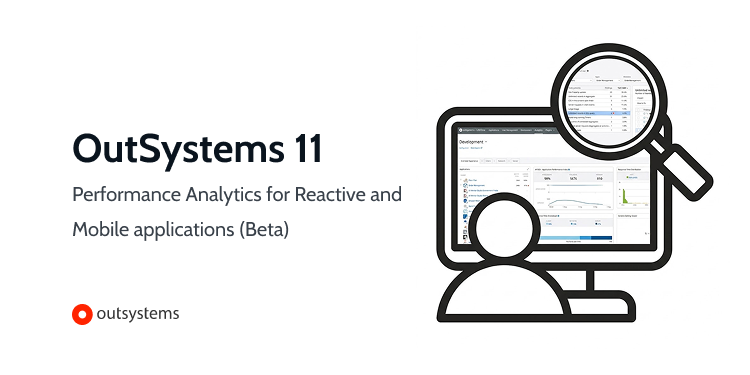
We have reinforced LifeTime Analytics - our built-in monitoring tool - to deliver out of the box performance insights for Reactive Web and Mobile applications.
You can now leverage deep client, network, and server execution breakdowns alongside APDEX scoring across your entire application portfolio. Paired with Code Quality (formerly AI Mentor Studio), live performance data connects directly with codebase insights—allowing you to trace a degraded screen in LifeTime Analytics straight to the underlying code findings for rapid troubleshooting within O11.
This capability is currently available in Beta and requires manual activation.
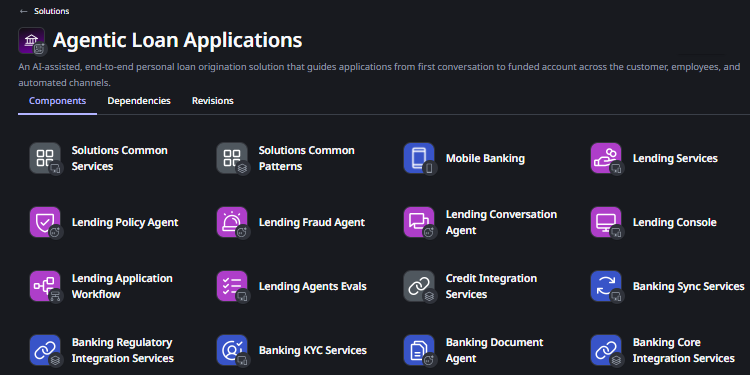
Agentic Loan Applications is now available, expanding the OutSystems Agentic Industry Solutions portfolio for banking. It brings customer-facing applications, governed agents, and deterministic workflows together into a single pre-built system for consumer lending that banks adapt to their own products, policies, and existing banking systems.
The solution layers over your existing banking systems and grounds its agents in your operational context - your policies, systems, and dependencies - so agents operate more efficiently and accurately while every lending decision stays under the bank's control.
What you get:
- A guided, agent-assisted application journey. A conversational agent walks applicants through a personal unsecured loan application: it captures intent, collects and validates documents, runs identity and sanctions screening, and compiles a complete application that passes to your existing loan origination system.
- Agents evaluated before they reach production. Every banking agent is tested against dozens of agent evaluations covering criteria such as relevance, accuracy, and PII protection, and re-tested after any model, prompt, or tool change so agents stay within guardrails.
- Model selection tested for cost and accuracy. OutSystems evaluated multiple models through Amazon Bedrock and pre-selected models that perform optimally at up to 82% lower cost. Banks configure the system around their own products, policies, and existing banking systems while retaining control over their data.
Inside the solution:
- Apps: Mobile Banking, the customer channel for starting and tracking loan applications, and Lending Console, the back-office workspace where lending staff review, intervene in, and progress applications with AI assistance.
- Agents: Lending Conversation Agent guides applicants from intent to submission; Lending Policy Agent answers product, fee, rate, and eligibility questions strictly from approved documentation; Banking Document Agent validates loan evidence and flags only concrete, traceable discrepancies; Lending Fraud Agent surfaces evidence-anchored fraud, KYC/AML, and credit-risk indicators to inform human decisions.
- Workflow and services: Lending Application Workflow orchestrates the full lifecycle - submission, regulatory screening, risk and fraud assessment, credit checks, loan-officer validation, final offer, and either account creation or an adverse-action notice - with durable loan state, status history, and audit centralized in the lending services layer.
- Integration gateways: Stable contracts isolate credit bureau, regulatory and compliance (OFAC, FinCEN/BSA, SSA eCBSV, DMDC MLA/SCRA, and fair-lending checks), and core-banking integrations from the origination flow.
The Banking Agents Kit is also available on the OutSystems Forge, with building blocks for creating banking apps and agents on the OutSystems platform.
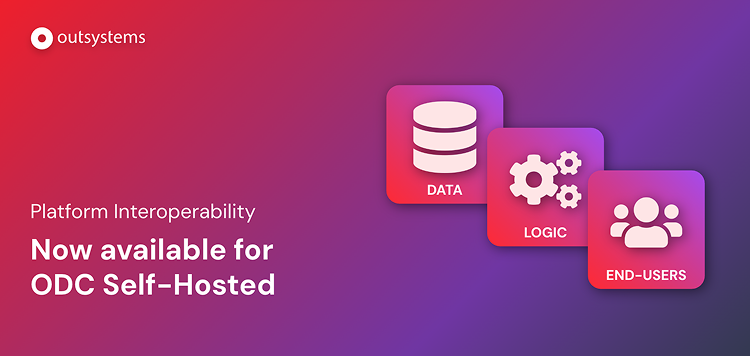
ODC Self-Hosted now supports the complete interoperability suite—enabling organizations running Self-Managed OutSystems 11 deployments to adopt ODC Self-Hosted while retaining full control within their own customer-managed infrastructure. Connect seamlessly with your existing O11 environments with zero migration required.
What’s Included:
- Data Interoperability: ODC Self-Hosted includes the Data Fabric Connector for O11, allowing developers to read and write (create, read, update, delete) O11 data directly through a secure connection. Ground your new ODC AI agents and apps in live O11 core data without building custom pipelines or copying databases.
- Logic Interoperability: ODC Self-Hosted apps can invoke O11 REST APIs through a dedicated private tunnel, eliminating public internet exposure. Reuse existing O11 business logic in your ODC applications without rebuilding from scratch.
- User Interoperability: Enables End-User Single Sign-On (SSO) for seamless navigation between O11 and ODC Self-Hosted apps. Users authenticate once for a frictionless experience across both estates.
Why it matters: This update enables any O11 customer to deploy ODC Self-Hosted on their own infrastructure and leverage the full power of O11/ODC interoperability—keeping O11 as their operational foundation while unlocking AI-driven, cloud-native innovation.
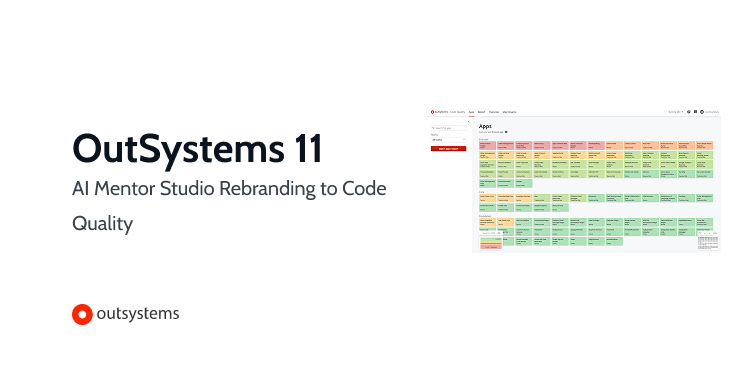
AI Mentor Studio in O11 is now called Code Quality, matching ODC's naming for the same underlying engine. The categories, findings, and status model you already know haven't changed, only the name.