What is vibe coding?
Vibe coding is a software development approach that uses natural language prompts and generative AI. Instead of writing every line of code, developers describe what they want in plain language, and an AI system generates apps, prototypes, or features.
But what exactly is vibe coding, how is it different from traditional development, and what are the best practices?

Vibe coding explained
Vibe coding is about expressing intent. A developer gives an AI assistant a description of what they want to achieve. Generative AI translates that intent into working code, which the developer can refine and scale as needed.
For example:
- “Create a mobile expense reporting app that integrates with my company’s ERP system and includes role-based access.”
- “Generate a customer service chatbot that connects to our knowledge base and escalates complex issues to a live agent.”
The concept of “vibe coding” gained momentum between 2024 and 2025 during discussions between Andrej Karpathy and Simon Willison, who highlighted the shift toward prompt-first programming.
Why is vibe coding trending now:
- Faster prototyping and visual UI generation
- Lower barrier to entry for newcomers and line-of-business
- Compliance and governance are built into platforms
- Intuitive developer experience
The rise of AI in software development
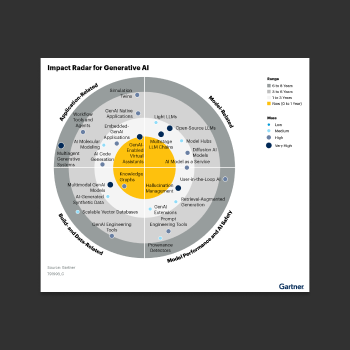
Vibe coding is part of a broader transformation in software development fueled by generative AI, copilots, and large language models (LLMs).
Traditionally, building applications required months of work and specialized expertise. Today, with the growing capabilities of AI, copilots can autocomplete code, generate full-stack prototypes, and orchestrate AI agents that perform multi-step workflows, which dramatically reduces time-to-market for applications.
This evolution lowers the barrier to entry, enabling developers to move faster while giving business leaders a role in shaping digital solutions.
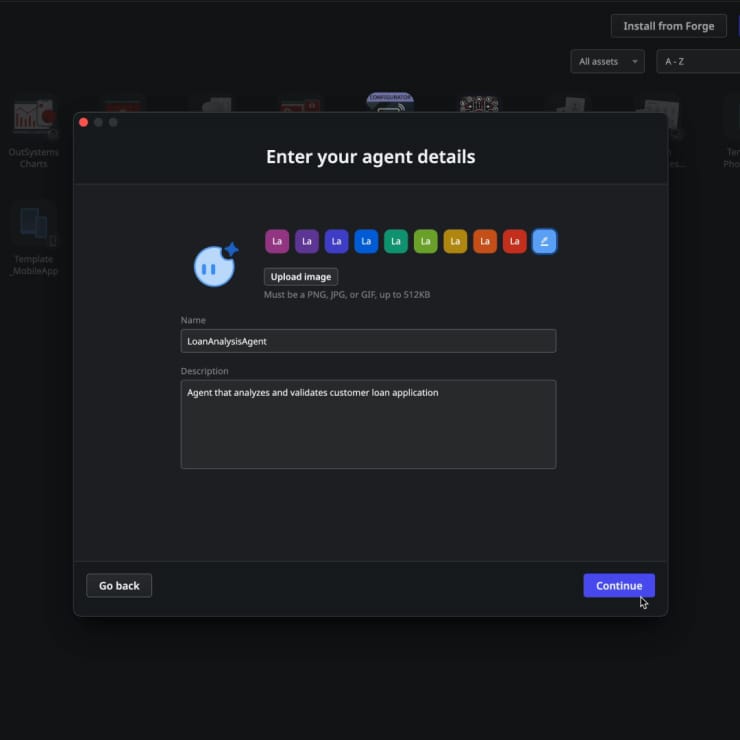
OutSystems Mentor is a real-world example of this shift; it helps developers generate, optimize, and validate apps with AI guidance, while maintaining security and compliance.
Learn how Mentor AI accelerates app development
Read more on Mentor AI in practice
Traditional coding vs. vibe coding
Traditional development is the process of building software by manually writing and maintaining code across multiple layers, using programming languages such as Java or C#. Repetitive tasks such as debugging, compiling, testing, and deploying slow down delivery times and increase complexity.
With vibe coding, developers provide intent, and AI copilots generate the foundation, which can then be refined, extended, and governed in the platform.
How to start vibe coding
Getting started with vibe coding doesn’t require mastering a new programming language or learning complex frameworks. Instead, it’s about shaping the AI’s understanding of your intent and iterating quickly on its outputs.
By embracing a mindset where you are collaborating with AI, you can focus on problem-solving and user experience.
- Choose the right vibe coding tool: Options include Replit, Cursor, or OutSystems Mentor and Agent Workbench for enterprise use. Open-source projects like LangChain are also popular for experimentation.
- Pick a project you want to build: Start with a manageable project. For example, a mobile app for field service reporting, or an internal dashboard for sales performance.
- Prompt the AI with clear instructions: Describe what you need in natural language. Example: “Design a web app for employee onboarding with a document upload feature and HR approvals.”
- Refine and validate: Test the output, ensure it meets requirements, and validate for compliance.
- Deploy or prototype and iterate: Publish the first version, gather feedback, and refine.
The key is to treat the process as a cycle of guidance, validation, and refinement, allowing you to move from concept to functional application in a fraction of the traditional development timeline.
Examples of vibe coding: Projects and use cases
Vibe coding can be used in a variety of practical scenarios. While it’s ideal for prototyping, internal tools, and rapid app creation, highly complex or legacy-dependent projects may require considering different development solutions.
Vibe coding use cases
Vibe coding supports low-code and generative AI workflows by letting you guide AI copilots and agents to handle specific tasks, freeing developers to focus on problem-solving. Typical users include:
- Solo developers and small teams: Quickly prototype and test ideas.
- IT teams: Automate internal tools, speed up workflows, and reduce repetitive tasks.
- Line-of-business leaders: Build business apps and prototypes without needing deep coding expertise.
With Vibe coding, clearly defined prompts and iterative refinement let users maintain control while accelerating delivery.
Vibe coding projects
Along with prototyping, some practical projects include:
- Rapidly building MVPs for new apps
- Creating demos for clients or stakeholder presentations
- Developing small personal or internal apps
- Designing landing pages or simple web applications
- Automating repetitive workflows or processes
Learn how AI can become a development advantage by watching the webinar How to Make AI Your App Development Advantage.
Vibe coding best practices
Following best practices helps teams get the most out of AI-guided workflows while avoiding common pitfalls.
- Prompts and guidance: Clear, detailed prompts produce better results. Think of the AI as an assistant: the more context and constraints you provide, the closer the output will be to your vision.
- Tools and platform choice: Use tools suited to your needs, whether it’s enterprise-grade capabilities like OutSystems Agent Workbench or open-source agentic AI frameworks for experimentation. Each tool has strengths and limitations; understanding them avoids frustration and maximizes productivity.
- Security and compliance: AI-generated code should be reviewed for security vulnerabilities, sensitive data handling, and compliance requirements.
- Managing hallucinations: Regular validation, testing, verifying output accuracy, and refinement ensure your app meets requirements and aligns with user expectations.
- Development governance: Integrate Vibe Coding into your existing development processes. Use it alongside traditional coding for complex, performance-critical, or highly customized projects to maintain control and quality.
By keeping these key steps in mind, teams can leverage the advantages of vibe coding while understanding its limitations. Used strategically, it complements rather than replaces traditional development, enabling faster delivery without sacrificing reliability.
Popular vibe coding tools in 2026
Vibe coding tools have evolved quickly, but they’re not all built for the same use cases. Some focus on speed and experimentation, while others are better suited for enterprise-grade development.
Here are some of the most popular vibe coding tools in 2026:
Cursor
One of the best vibe coding tools for developers who want AI embedded directly into their coding environment. It enhances traditional coding workflows with prompt-based generation, editing, and refactoring.
Replit (Ghostwriter)
A browser-based development environment that makes vibe coding accessible. It’s widely used for rapid prototyping, learning, and building lightweight applications with AI assistance.
Lovable
Designed for fast UI and product prototyping, Lovable turns prompts into working frontends. It’s especially popular for startups and product teams testing ideas quickly.
LangChain (open-source)
A flexible framework for building AI-powered applications and agents. While not a traditional vibe coding UI, it’s widely used for experimentation and building custom AI workflows.
GitHub Copilot Workspace
Expands on Copilot by enabling more structured, prompt-driven development across entire projects, not just individual code suggestions.
Is vibe coding the future?
Vibe coding is a clear signal of where development is heading, but on its own, it’s not enough.
The short answer to “is vibe coding the future?” is: it’s part of the future, not the whole solution.
Vibe coding dramatically improves speed and accessibility. It allows teams to move from idea to prototype faster than ever, and it lowers the barrier for both developers and business users to contribute to building applications.
But there are real limitations and risks:
- Lack of enterprise context
Most tools don’t understand your architecture, data models, or business rules, which can lead to disconnected or incomplete outputs. - Vibe coding security risks
AI-generated code can introduce vulnerabilities, mishandle sensitive data, or fail compliance requirements if not properly reviewed and governed. - Scalability challenges
What works as a prototype doesn’t always translate to production-ready systems, especially in complex environments. - AI sprawl and technical debt
Using multiple standalone tools can create fragmented systems that are hard to maintain over time.
This is why vibe coding alone isn’t a replacement for modern development platforms. It needs to be grounded in a system that provides governance, integration, and lifecycle management.
That’s where an AI development platform like OutSystems changes the equation.
Instead of treating vibe coding as a standalone activity, OutSystems embeds it into the full development lifecycle:
- Generate applications and agents from natural language
- Connect directly to enterprise systems and data
- Apply built-in security, governance, and compliance
- Manage and evolve apps and agents in one unified platform
You still get the speed and flexibility of vibe coding, but with the structure and reliability required for real-world, mission-critical applications.
In other words, vibe coding is not bad; rather, it’s incomplete on its own. The future isn’t just prompting AI to generate code. It’s building, running, and governing applications and agents on a single AI development platform like OutSystems.
How does OutSystems support vibe coding with AI
OutSystems combines vibe coding's speed with production-ready reliability and full control, bridging rapid prototyping and enterprise deployment.
OutSystems brings vibe coding to enterprise development through AI capabilities like Mentor. From a prompt or requirements brief, Mentor generates complete applications with data models, screens, and logic. It integrates existing systems via Data Fabric and accepts natural language refinements for iterative development. Automated reviews and security checks ensure enterprise-grade quality.
Explore OutSystems AI capabilities and see what’s possible to achieve with OutSystems Mentor.