
Predictive modeling: Definition, types, examples & applications
Predictive modeling has been a foundational tool in data-driven decision-making for decades, turning raw historical data into practical foresight. By combining statistical methods with machine learning, predictive models help organizations anticipate what’s likely to happen next, quantify uncertainty, and act earlier. The result: smarter decisions, fewer surprises, reduced risk, and a faster path from insight to measurable business outcomes.

What is predictive modeling?
Predictive modeling is a data-mining and statistical discipline that analyzes historical and current data and uses algorithms to surface trends that could affect future outcomes. It involves collecting data, formulating a statistical model, predicting, and validating (or revising) that model.
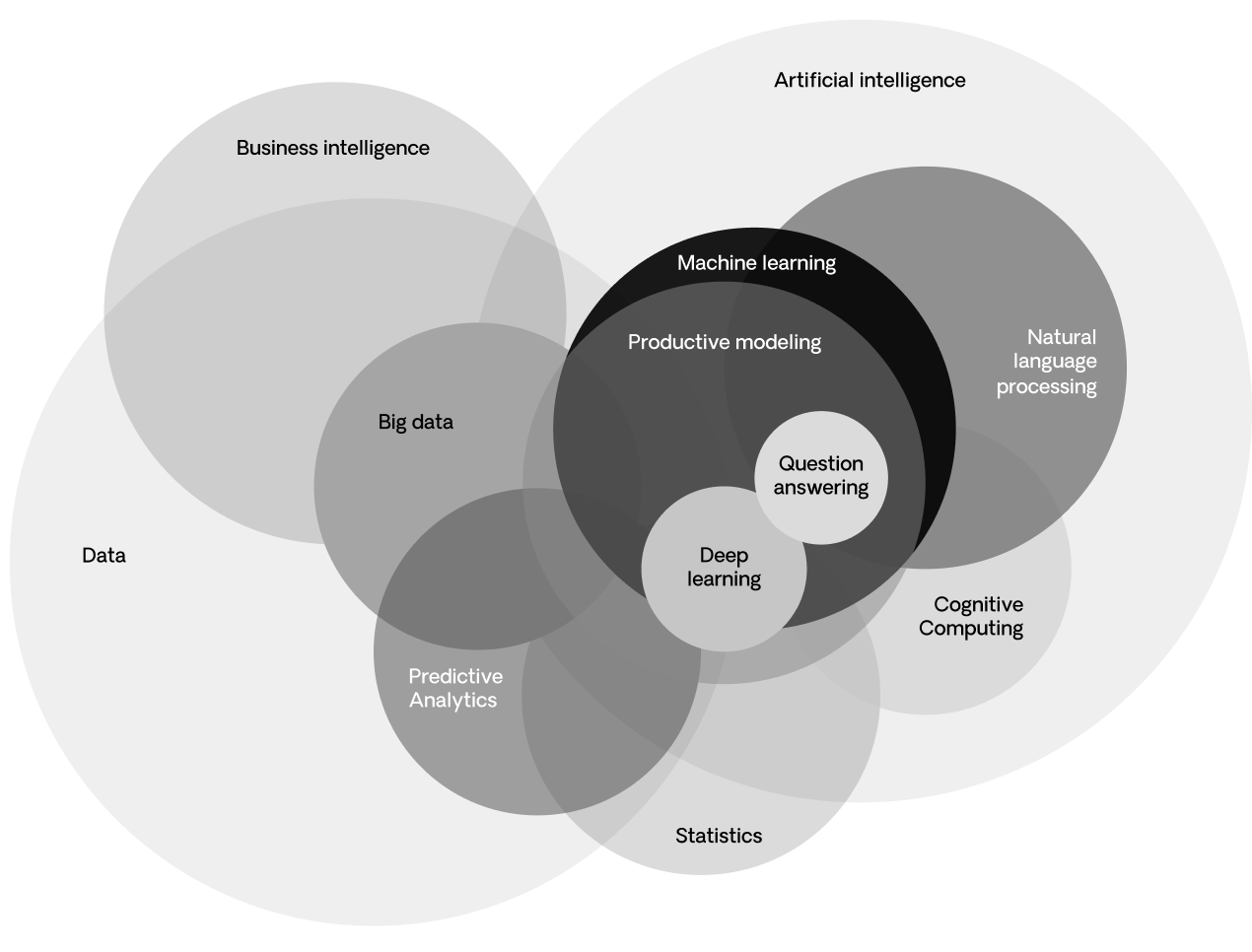
Definition of predictive modeling
Predictive modeling has been used for decades, but it’s now commonly discussed as part of artificial intelligence (AI), especially when models are built using machine learning. Fundamentally, predictive modeling estimates the likelihood of a specific outcome by learning patterns from historical and current data.
For example, predictive modeling can calculate the probability that a customer will churn (unsubscribe or stop buying in favor of a competitor). The model is trained on data from customers who churned and customers who stayed, then identifies the signals that tend to appear before churn so it can forecast risk for current customers.
Predictive modeling isn’t limited to forecasting future events; it can also be used to classify and route work more effectively. For instance, you can predict the priority level of a support ticket based on the description text. After training on past tickets and outcomes, the model can automatically prioritize new tickets, and accuracy typically improves as more labeled data becomes available and the model is refined.
Benefits of predictive modeling
Predictive modeling is used across industries, but AI predictive modeling has expanded what’s possible. This allows for a more practical way to make decisions sooner, automate routine judgments, and improve outcomes across cost, risk, and customer experience.
- Predict better outcomes, faster: Predictive models strengthen decision-making by using patterns from historical and real-time data to recommend the most likely outcomes. This helps teams move from reactive decision-making to proactive action—whether that’s choosing the next best offer, allocating resources, or prioritizing what to fix first.
- Identify hidden trends and risk signals: When you’re dealing with high volumes of data (support tickets, banking transactions, claims, or images), it’s hard to spot meaningful patterns manually. AI predictive modeling can surface trends and anomalies automatically, helping organizations detect emerging issues earlier and mitigate risk.
- Improve customer experience through personalization and prevention: Predictive modeling can anticipate customer needs and pain points, like churn risk, likelihood to convert, or expected wait times—so teams can intervene earlier with more relevant, timely experiences. That translates into higher retention, stronger satisfaction, and more consistent service.
- Increase operational efficiency through automation: Predictive models can automate classifications and decisions that typically require manual review—such as ticket prioritization, document categorization, sentiment detection, or routing requests to the right team. That reduces cycle time and frees experts to focus on higher-value work.
- Drive revenue growth and cost optimization: By improving targeting, reducing churn, preventing fraud, and streamlining operations, predictive modeling often supports measurable business outcomes—increased revenue, lower servicing costs, and better use of budgets and capacity.
- Continuously improve over time: With the right tools and governance, models can be monitored and retrained so performance stays relevant as behaviors, market conditions, and data inputs change, which reduces model drift and keeps predictions trustworthy.
Predictive modeling challenges
There’s a lot of hype around AI and predictive modeling, with a few real risks not getting enough airtime. The biggest trap is assuming that more data automatically means better predictions. It doesn’t. If your data is incomplete, irrelevant, biased, or outdated, your model can be confidently wrong—and scale that wrongness fast.
Predictive modeling also has hard limits. Past patterns don’t always repeat, and correlation doesn’t equal causation. A model may detect strong relationships in historical data that don’t hold up when conditions shift (new markets, new products, new policies, new customer behavior). That’s how teams end up making “data-driven” decisions that fail in the real world.
There are also ethical and governance concerns that matter just as much as accuracy. Data handling and privacy, biased inputs, opaque algorithms, and intellectual property rights can all create compliance risk and reputational damage—even when the model performs well.
The fix is discipline, not avoidance
- Monitor model outputs and validate them against real outcomes (not just offline test results).
- Refresh training data and retrain models as performance degrades or conditions change (model drift is normal).
- Audit for bias and fairness where decisions affect people, access, or opportunity.
- Maintain transparency and accountability, including clear ownership, documented assumptions, and guardrails for how predictions are used.
Making predictions is easy, but making reliable predictions (and using them responsibly) requires ongoing effort.
And you’re not alone if this feels daunting. Gartner has repeatedly pointed to a lack of understanding of AI as a major obstacle to adoption. With that in mind, let’s walk through some of the most common scenarios where predictive modeling is used, and how businesses typically apply it.
Types of predictive models
The right predictive model depends on the kind of data you have and the question you’re trying to answer. That said, most predictive modeling work falls into a few common categories:
- Regression models: These models predict continuous numerical outcomes based on one or more predictor variables. They’re used for forecasting, time-series modeling for independent and random data, and understanding relationships between variables. Examples include linear regression, polynomial regression, and ridge regression.
- Classification models: Classification models predict outcomes by assigning observations to predefined classes or categories. They’re commonly used for decisions like yes/no outcomes, risk levels, or intent-based routing. Examples include logistic regression, decision trees, and support vector machines.
- Time-series models: These models analyze data collected in a specific order over time and forecast future values based on past observations. They’re often used in financial forecasting, demand forecasting, capacity planning, and other sequential-data scenarios.
- Clustering models: Clustering models group similar observations into clusters or segments based on shared characteristics. They’re often used for customer segmentation, anomaly detection, and pattern recognition, especially when you don’t already have labeled categories.
- Machine learning algorithms: ML algorithms such as random forests, gradient boosting machines, neural networks, and deep learning models can support predictive modeling tasks. They’re well-suited for complex relationships and large datasets, making them flexible tools for both regression and classification problems.
- AI predictive modeling: AI predictive modeling uses machine learning to build, refine, and operationalize predictive models at scale. Beyond improving accuracy, it helps teams automate decisions and continuously update predictions as new data comes in. This supports use cases like real-time fraud detection, churn prediction, demand forecasting, and personalized recommendations.
Examples of predictive modeling
From startups to global enterprises, predictive modeling is used across nearly every type of business where decisions depend on patterns in customer behavior, operational performance, risk, or demand. Retailers use it to personalize offers, banks use it to reduce fraud, manufacturers use it to prevent downtime, and healthcare organizations use it to identify at-risk patients sooner. Here are some of the most common ways predictive modeling shows up in practice:
Customer relationship
Predictive modeling helps forecast customer behavior at key points in the product journey. This can include estimating the likelihood of churn, renewal, or the success of an upsell or cross-sell offer. It can also strengthen customer relationship workflows by supporting AI-driven capabilities like spam detection in public communication channels. Ultimately, these use cases tie back to the same goal: building stronger customer relationships through more timely, relevant action.
Predictive modeling in marketing
To offer the right products and messages, companies need to understand customer habits and behaviors. However, clickstream data, web and mobile usage signals, and behavioral analytics can be difficult to process at scale. In marketing, predictive models help by enabling customer classification and segmentation, grouping people into cohorts so teams can identify new revenue opportunities and plan campaigns more effectively. Predictive modeling can also help determine the likely success of display advertising and predict click-through rates.
Process automation
By learning patterns in how decisions are made, predictive models can infer outcomes with high confidence and support automated categorization. This is especially useful for triage and case/ticket prioritization, as well as workforce scheduling and optimization. Faster, more consistent processes free teams to focus on higher-value work that requires human judgment.
Automation can be further enhanced with the Internet of Things (IoT), where connected devices transfer data over a network without human interaction. For example, Ricoh improved operational and cost efficiency by up to 10% by automatically scheduling repairs to minimize downtime, based on predictions about when a machine was likely to fail.
Predictive modeling in finance
RRisk assessment is essential for any company, especially when making significant investments. Predictive modeling helps anticipate the risk of payment default or fraud, reducing exposure to costly scenarios. In the case of BBVA, it reduced false positives related to fraudulent credit card transactions by 54% by predicting risk more accurately.
Predictive modeling in insurance
Predictive models help insurers understand customers more precisely by improving risk profiling and segmentation. With clearer insights into risk, insurers can streamline decision-making, improve underwriting consistency, and reduce operational costs—while delivering faster, more responsive customer experiences.
Predictive modeling in healthcare
When trained on historical patient data, predictive models can forecast outcomes, identify at-risk individuals, and anticipate disease progression. This supports proactive care, allowing providers to intervene earlier, potentially preventing adverse events and improving patient outcomes.
These are some of the most common examples of how AI-based predictive modeling is already creating real impact. It’s not limited to a single sector either; it can be applied across financial services, government, retail, healthcare, manufacturing, and beyond. AI isn’t just “the future.” It’s already in use today, helping organizations make better decisions, reduce risk, and move faster.
Take the lead with artificial intelligence
If you’re looking for a competitive advantage, machine learning and AI-based predictive modeling is the way to go. It’s more than just marketing hype, there’s real value out there, and it’s far easier to access than it was ever before.
Take a look at how OutSystems supports AI for application development
Useful Resources

Related Resources

Learn the fundamentals of modern development


Predictive modeling frequently asked questions
The main steps for building an effective predictive model are:
- Collect data and clean it, including selecting features, dealing with missing data, and transforming data.
- Select the appropriate model and train it using the data.
- Evaluate the model and determine its accuracy.
Predictive modeling and machine learning are similar concepts for making predictions from data, but they differ in approach and scope.
- Predictive modeling uses statistical techniques to create models that make predictions based on historical data. Analysts typically define the problem, select features, and select a model.
- Machine learning is a subset of predictive modeling that focuses on creating algorithms that can learn patterns and relationships from data without being explicitly programmed.
The main difference between artificial intelligence and predictive analytics is that predictive analytics uses relational and historical data to generate output. AI, on the other hand, uses algorithms and techniques to develop systems that can learn from data independently and provide human-like intelligence.
Get up to speed on the fundamentals of artificial intelligence