

Product Releases
and Updates
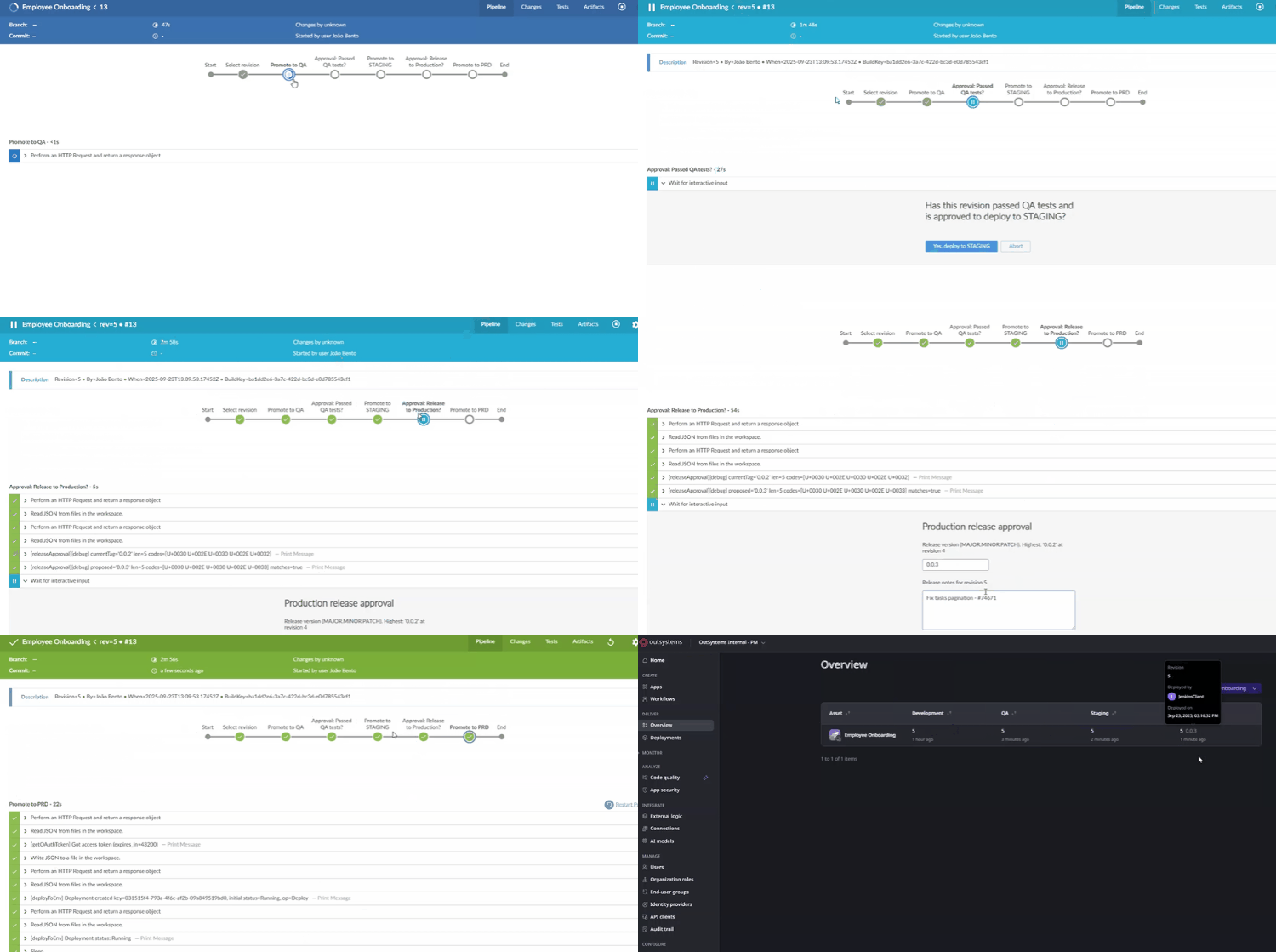
Your CI/CD pipeline, your rules. We're thrilled to announce a powerful leap forward in how you can build with OutSystems. We're opening up ODC with a new set of APIs that give you full control to integrate your entire CI/CD pipeline with the tools you already love.
This isn't just an update; it's about giving you more freedom. Connect OutSystems with third-party CI/CD tools like Jenkins or Azure DevOps to automate every step from code to production. You can improve your processes, enforce quality gates, and deliver reliable apps faster than ever.

OutSystems Mentor continues to accelerate application development by integrating new generative AI capabilities. This update brings significant enhancements to Mentor's App Generator and App Editor, empowering your team to create enterprise-grade apps with richer and more tailored user experiences.
What's New:
Dashboard Composition: Mentor now generates dashboards that are use-case tailored, contextually relevant, and aligned with OutSystems UX standards. By interpreting the user’s intent from prompts or requirement documents, Mentor automatically applies the most suitable UI patterns and chart types to surface information effectively. Supported components include counters, horizontal/vertical bar charts, donut and pie charts, and list views. These patterns can be explicitly referenced in a prompt or embedded within requirement documents, ensuring generated dashboards are both functionally precise and visually consistent.
List Composition: Mentor now generates diverse, use-case–specific list screens optimized for easy data exploration and interaction. Depending on the underlying data model, lists can be composed with table views (with context-aware columns, filtering, and sorting), or alternative patterns such as gallery views, card layouts, and map-based views. Supported components include: table card list, gallery, gallery with detail (on sidebar), table, table with detail (on sidebar), master detail, card list with detail (on sidebar), card list with map. These patterns can be explicitly defined in prompts or embedded within requirement documents, ensuring generated applications deliver list UIs that are functionally accurate, navigable, and aligned with OutSystems UX guidelines.
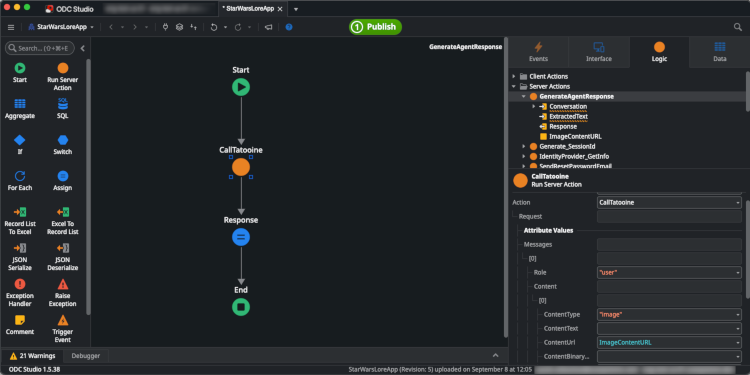
To address this need, the CallAIModel action has been updated to support sending images to AI models. This new functionality introduces a breaking change to the structure of the Content input parameter. Previously, this parameter was a simple Text field. It has now been replaced with a new Content structure that can hold either a ContentURL (Text) or ContentBinary (Binary Data) field. This new structure provides the flexibility to send image data in various formats, ensuring that your applications can interact with a wide range of multimodal AI models. This change enables developers to build more advanced AI applications that can see and interpret the world, empowering new and exciting user experiences.
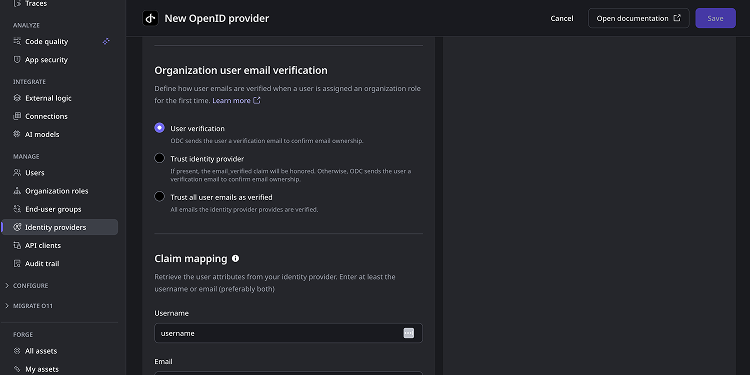
This update streamlines user identity and email verification processes while improving security and user experience.
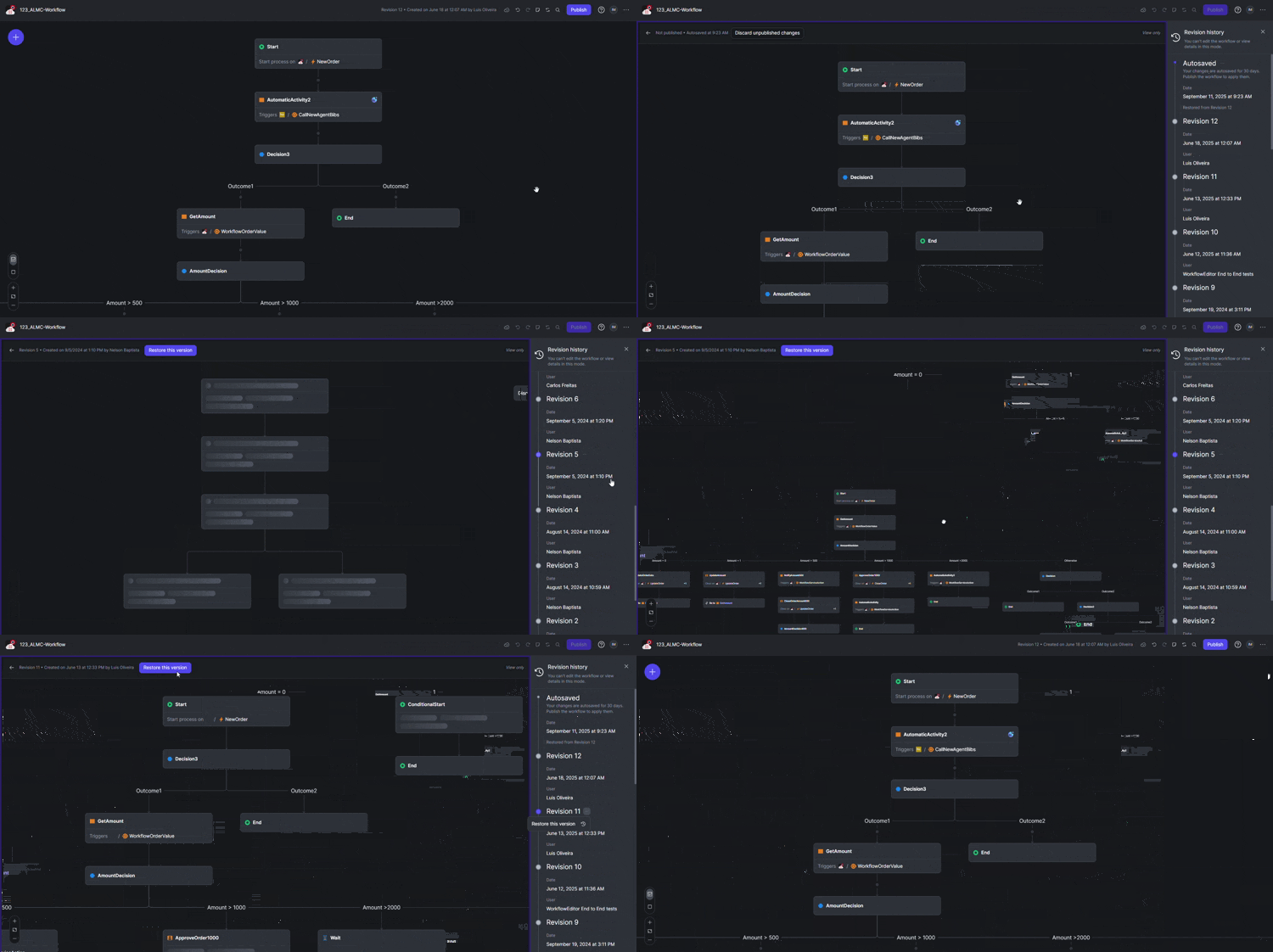
You can now track and manage all published revisions of your workflows directly from the Workflow Editor. This new revision history feature allows you to:
- View a timeline of all published workflow revisions.
- Access and visualize any previously published version.
- Revert to a previous revision if needed.
This capability, also accessible from the ODC Portal, provides a complete overview and control over your workflow versions, making it simpler to manage changes and restore past states. We've also added the ability to discard auto-saved changes. If you've made edits to a workflow and want to revert to the last published version, you can now do so with a single action inside the Workflow Editor. This ensures you can easily return to a stable, published state without manually undoing your changes.
These new functionalities are designed to give you more control and flexibility as you build and iterate on your ODC workflows.
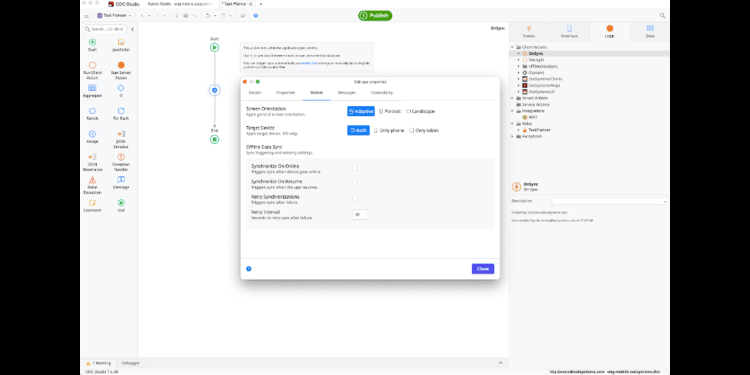
We’re excited to announce that ODC Studio now lets you sync database entities with local storage entities using built-in offline data sync feature, removing the need to consume OutSystems UI to implement offline capabilities.
It is designed to streamline the application development process, reduce your dependencies, and ensure continuity with both OutSystems UI and Mobile UI. With a refined development experience and elevation to a system-level event, built-in offline data sync simplifies the complex development process of synchronizing data in your applications.
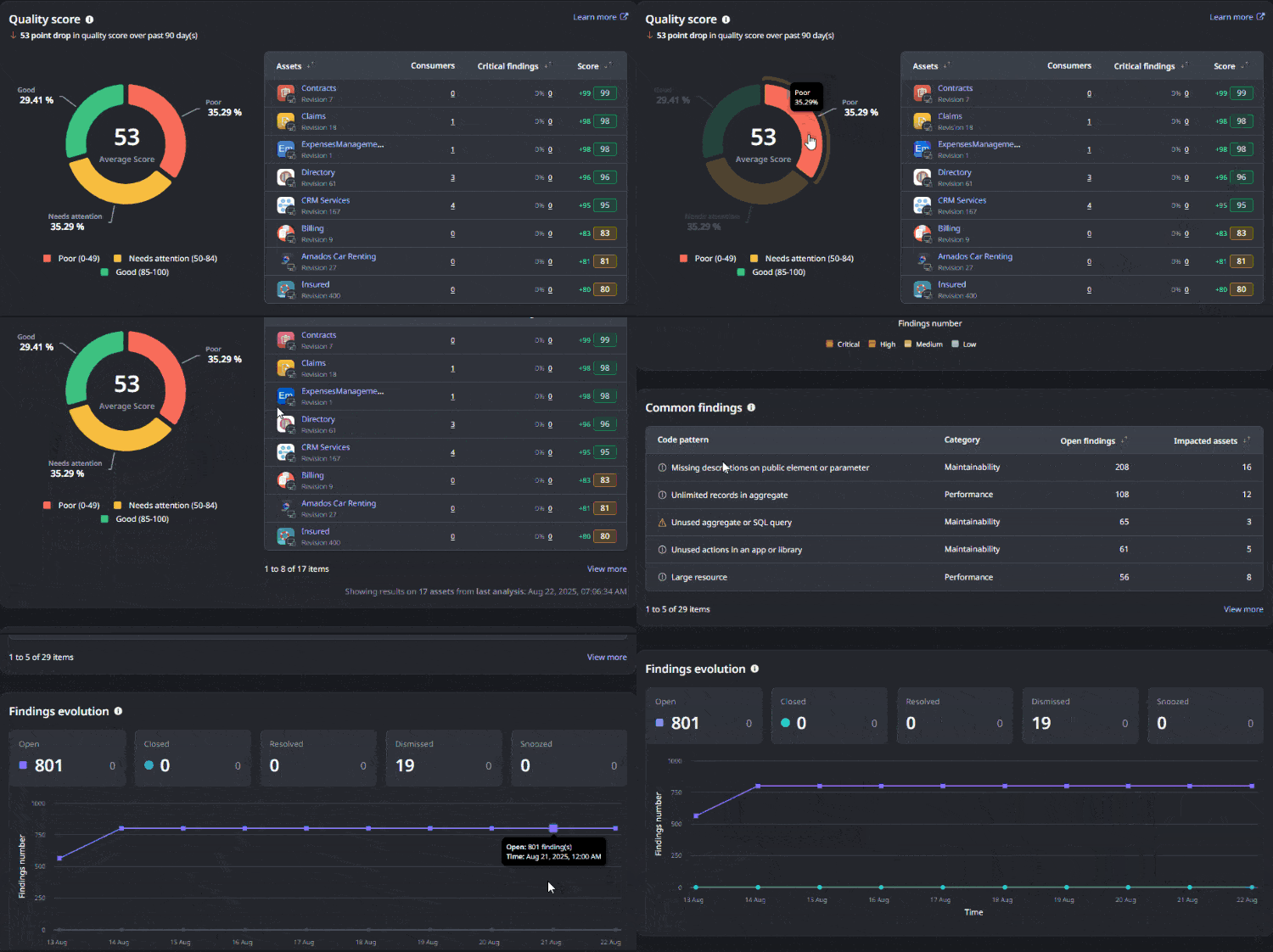
We’re excited to announce the Mentor Code Quality dashboard with portfolio-level insights. This capability gives tech leads and architects a bird’s-eye view of their code quality and technical debt across their whole portfolio, making it easier to guide teams, instantly spot risks, and track progress.
The dashboard allows you to see at a glance how each app or library scores in terms of code quality, helping you make informed decisions about where to focus first. With the Code Quality dashboard, it’s easier to keep your app portfolio agile and prepared for changing business demands.
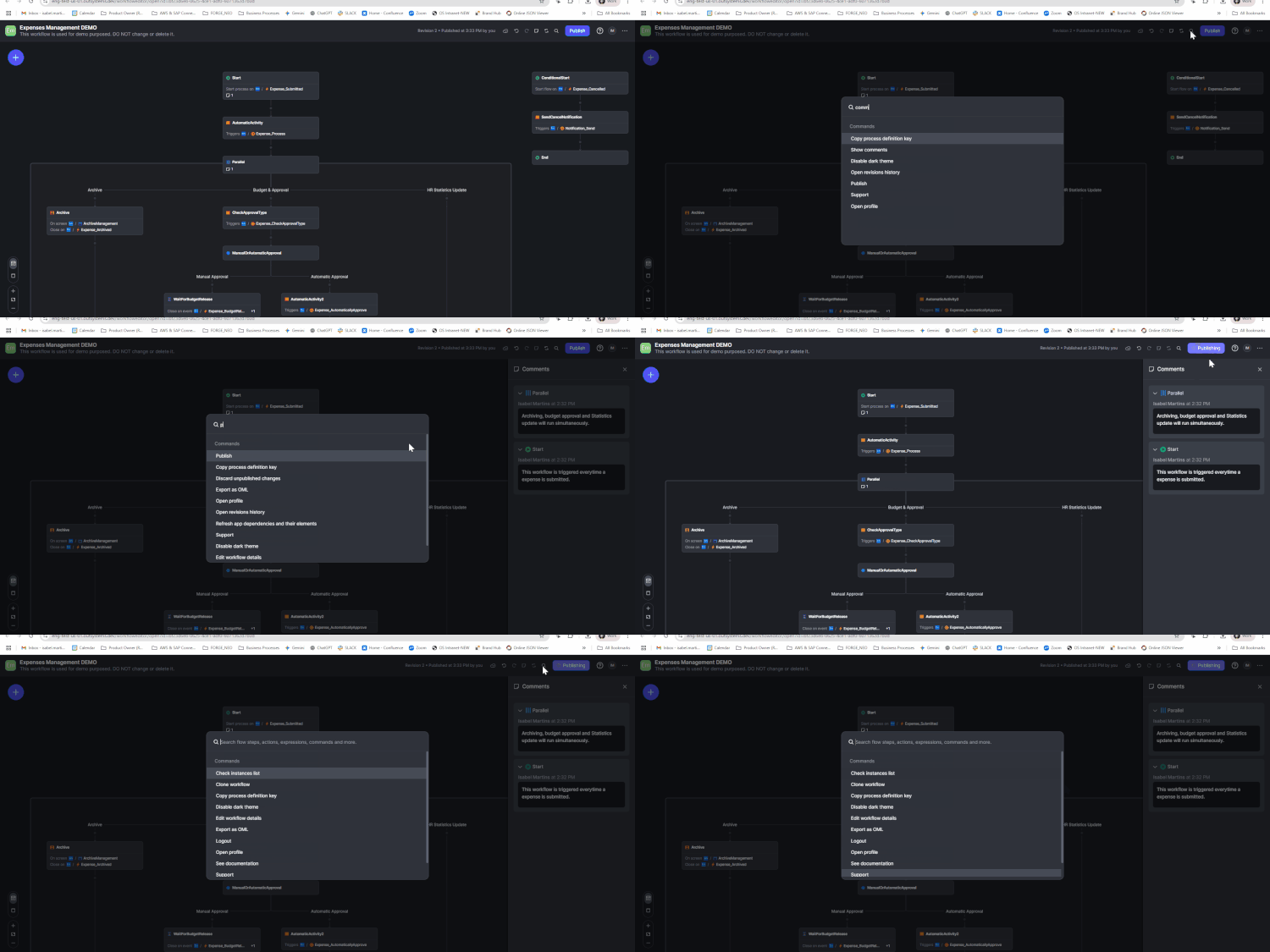
We're thrilled to announce a significant enhancement to ODC Workflows search capabilities. This enhancement is designed to streamline the workflow modeling process by simplifying discoverability, edition, and navigation.
Users can now quickly find various elements across their workflows through a unified search entry point. The search prompt is specifically designed to search flow steps, actions, expressions, and commands, ensuring that almost any operation within your ODC Workflow can be found instantly.
This enhancement is designed to provide a more efficient and intuitive way to interact with your ODC Workflows, putting the power of precise discovery directly at the user's fingertips.