Product Releases
and Updates

Thank you! Your submission has been received!
Oops! Something went wrong while submitting the form.
Because time is money, you can now use the Payments plugin to configure Apple Pay and Google Pay for a frictionless checkout experience in your in-app purchases. This new supported plugin also includes a configurator so you can easily set up a mobile payment back-end service. A great plugin is worth a lot, but this one is priceless.
You can now integrate your apps with Azure PostgreSQL databases using Integration Builder. Following up on the PostgreSQL and Aurora PostgreSQL connectors, the new one also allows you to create, read, update, and delete data, this time on PostgreSQL databases in Azure. Find more about it in our documentation.
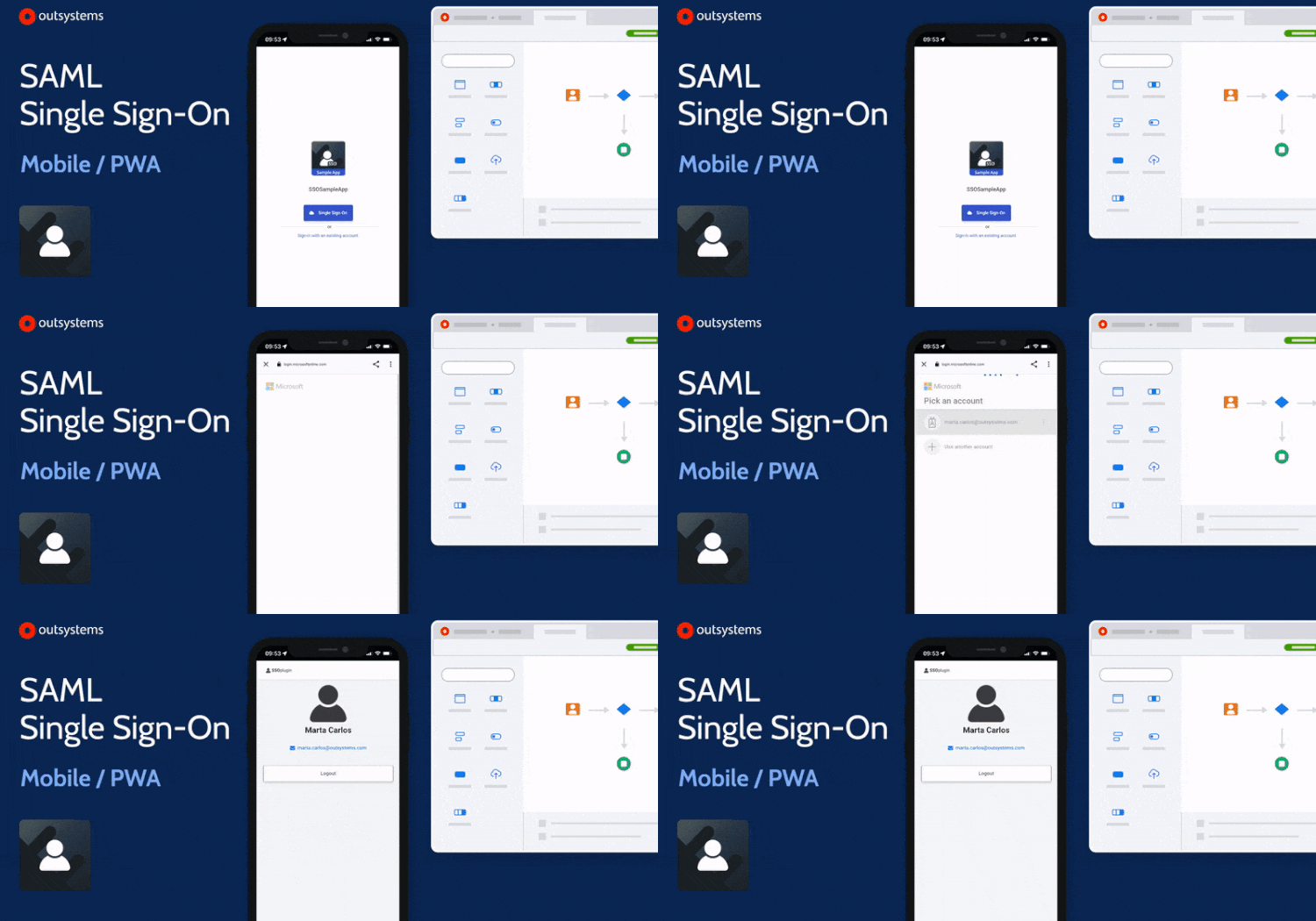
You can now use single sign-on (SSO) to log in to Service Studio, Service Center, LifeTime, and other OutSystems consoles. Developers, Architects, and Operations can use federated authentication like AzureAD, Okta, or any other OpenID Connect Discovery supporting provider (OIDC). Besides the improved login experience, the federated authentication mechanism allows customers to enforce security with specific login flows across all company digital assets, such as Multi-Factor Authentication (MFA) and password policies (rotation, expiration and complexity).
Our Firebase plugins family just got bigger! You can now use the Firebase Cloud Messaging mobile plugin to configure an array of advanced notification features and send notifications of different types to your mobile app end-users. Be the bearer of good news to your end-users and deliver them using the Cloud Messaging plugin.
Configure site properties in the target environment when defining your deployment plan in LifeTime is now generally available (previously in technical preview). With all the application settings configured, you'll avoid any misbehavior during runtime.
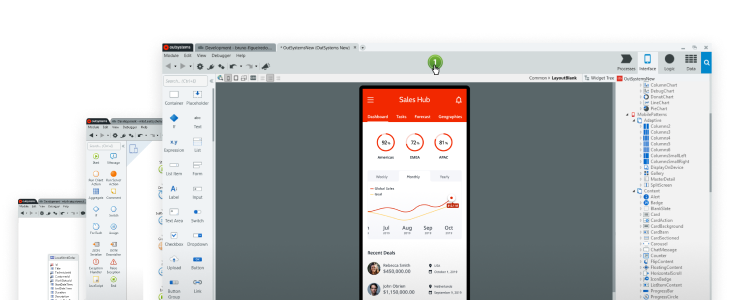
A new Service Studio is available to all Windows users. Check out the beautiful and redesigned development environment, improved interactions, themes, and the most desired feature: the Dark Mode. You can also count on new CSS, JS, SQL, and Expression editors to help with syntax highlighting, autocomplete, find and replace, line numbering, and support for ES6.
Quickly integrate your OutSystems apps with the AWS services you need with the new fully supported Forge components. These connectors will work as APIs to cover the complexity usually tied up with directly integrating an AWS web service. As of today, you can pick the one that fits better your use case from a set of 11 connectors plus cloud accelerators that bridge gaps between the OutSystems platform and precise customer requirements.
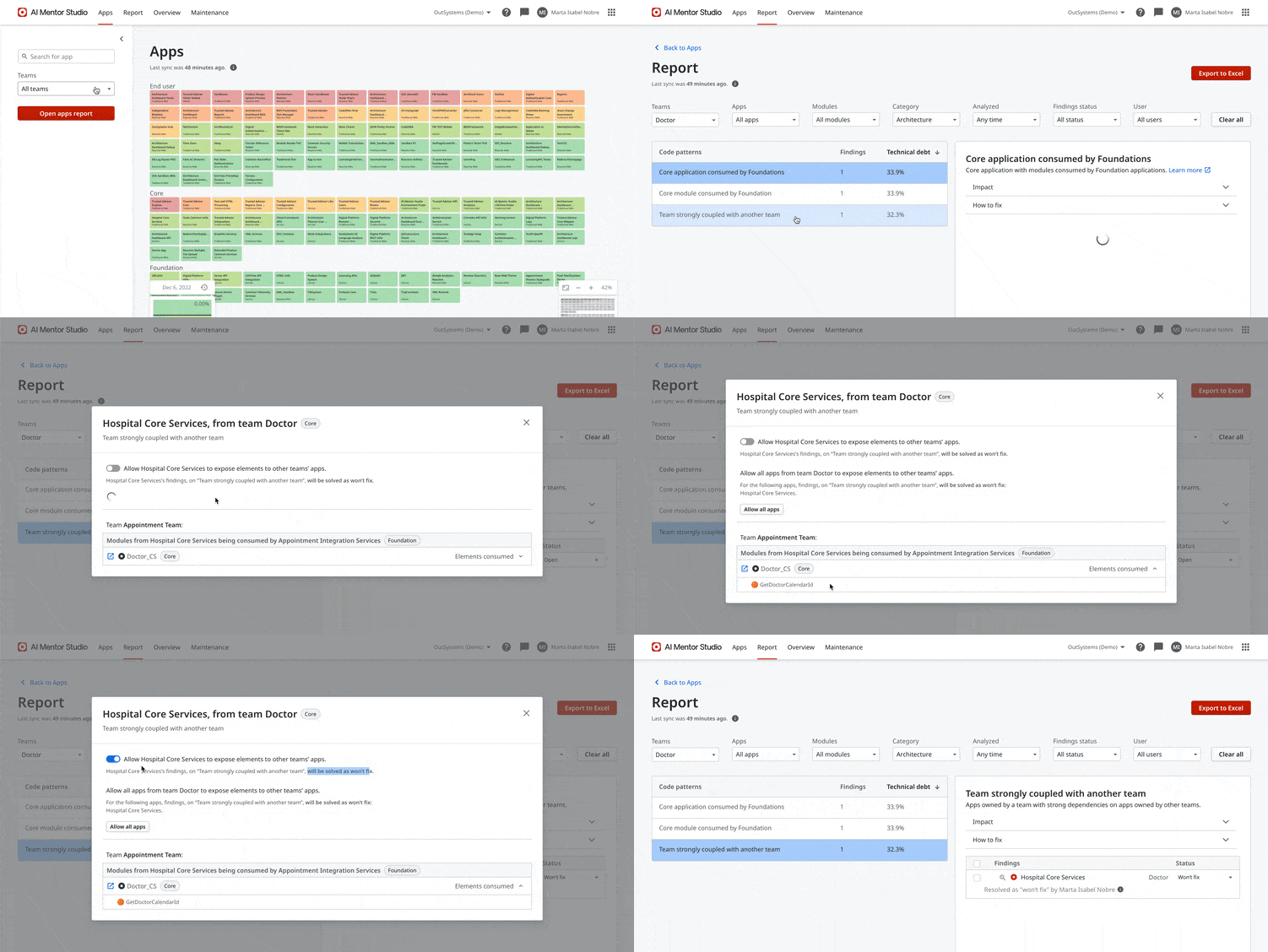
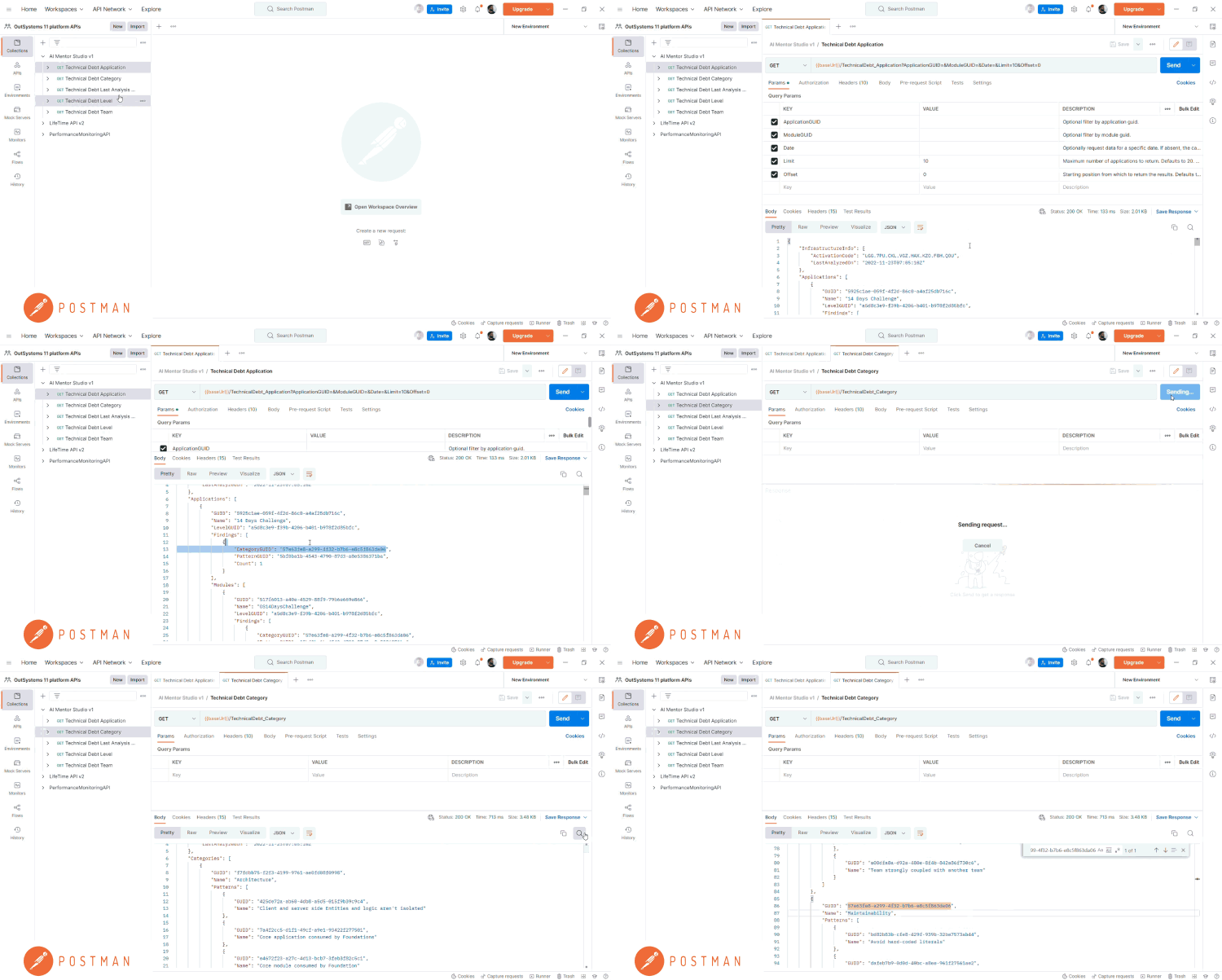
A new release of duplicated code pattern is out in Architecture Dashboard, powered by several additions to the underlying Automated Reasoning engine. This pattern increases findings' accuracy, automatically detecting more duplicated code while reducing alerts for scenarios that are not refactorable. Duplicated code is a top root cause of high technical debt and lost agility in software enterprises. This new release is in progressive rollout and will be fully available in the next few weeks. Interested in the engine and research powering this pattern? Check our engineering blog post for details.
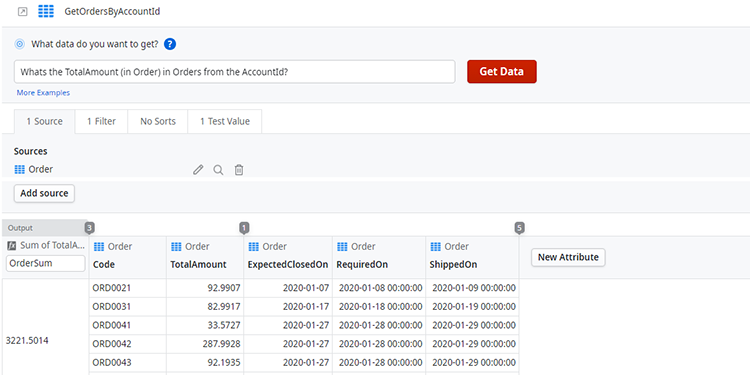
MongoDB connector is now generally available and with new capabilities. With this new version, you can represent MongoDB collections in a structure format, as Integration Builder inspects the collection schema and generates the according structures. And this only adds to the JSON output format, which is still available. Generally available MongoDB integrations are exclusive to Integration Builder.
You can now request a trusted badge directly on your component's profile page on Forge, used to reward high-quality components built based on best practices. You can access this option by expanding the Manage dropdown on your component and choosing Request trusted badge. And because we want to encourage everyone that provides content of excellence for our community, we're giving +30 points instead of the usual +10 for each trusted component you get.