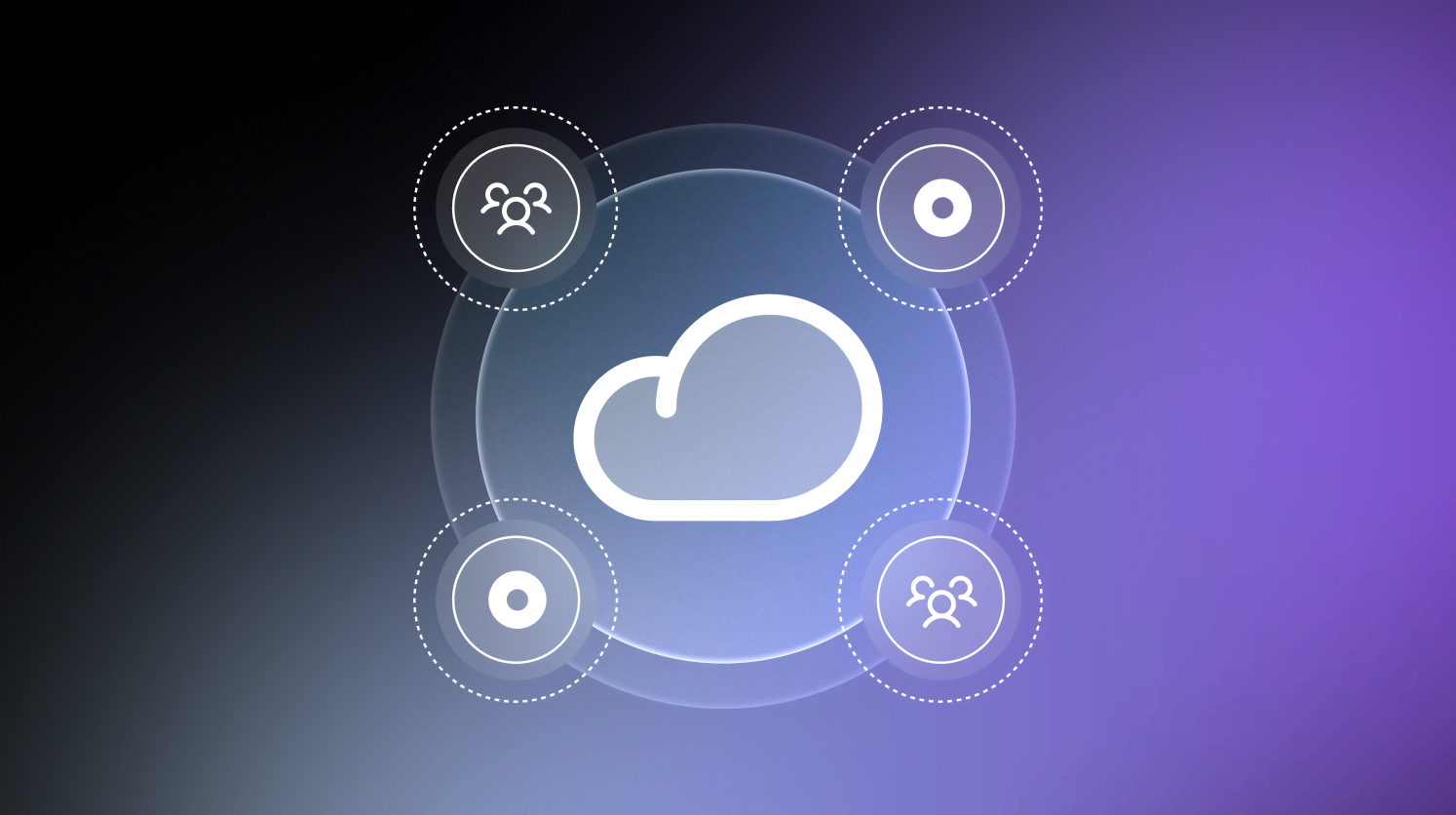
If you have a software development factory, this picture is most likely familiar to you. Your customer-facing team ships weekly. Their apps run on a public domain with a third-party identity provider, and they need rate limits and bot protection nobody else in the business wants.
Your employee apps team ships monthly using a different approval workflow, behind corporate SSO on an internal domain.
When everything is managed the same way, teams end up working around the platform. When they create separate environments or organizations for every different requirement, the platform becomes fragmented, its operation resource-intensive, and its governance chaotic, especially when agents are in the mix.
When customers asked us to address this issue, we created Asset Portfolios, available with OutSystems Developer Cloud, which uses an approach that’s similar to Spotify. There’s one organization, one bill, one place to administer, and as many separate portfolios underneath as your teams actually need. Now different teams and groups can apply.
One delivery model stopped fitting every workload
As software landscapes grow, so does their diversity.
An AI agent has different needs than a regulated business application. An internal workflow does not use the release process of a customer-facing app. A shared library should not be managed like a business application at all. Security, compliance, scalability, data isolation, and release management differ for each.
Pushing all of it through one delivery model creates unnecessary friction:
- Release processes become more complex because unrelated workloads have to coordinate.
- Teams inherit security and operational requirements that may not be relevant to their applications.
- Platform teams create additional environments or organizations to provide the separation different workloads require.
- AI experimentation becomes harder to separate from production systems and sensitive data.
- Shared components get duplicated simply because applications are managed in different organizational boundaries.
The common workaround is to create a separate platform for every business need. However, it buys isolation at the cost of duplicated administration, fragmented governance, and increased operational overhead.
A portfolio for each business need
Asset Portfolios introduce an additional organizational boundary in a single ODC organization. Every asset the organization builds belongs to one portfolio, whether that asset is an app, a workflow, an agent, or a library.
Organizations can group assets according to what makes sense for their business, including by business unit, product line, customer segment, risk profile, and workload type.
Each portfolio then carries its own delivery process and its own operational settings:
- CI/CD pipeline and stages
- Runtime configuration
- Identity provider
- Security and operational policies
- Roles and permissions
- Dedicated databases per stage
A customer-facing portfolio can have a different delivery and security setup from one that’s internal, without requiring another ODC organization. Governance stays central through it all. Administration, cost management, and organization-wide policy live in one place and reach every portfolio.
Every ODC subscription includes one portfolio to start with. Additional portfolios can be added as the organization's delivery needs grow.
What this means for software teams
For developers, the experience remains in the same ODC environment. They work in the portfolio that owns their assets, and those assets follow its delivery process through to production.
The difference is that the delivery process can now be designed around the workload.
A customer application can follow a weekly release cadence without being tied to that of an internal one. An AI initiative can have its own policies and runtime configuration while remaining separated from production workloads. A regulated application can have the security and data boundaries required by its business context.
It's all about giving each type of workload the delivery process and configuration it needs, without losing the benefits of a shared platform.
Reuse without creating silos
Portfolios isolate assets without walling teams off from each other. Libraries are the primary mechanism for reuse across portfolios. A library belongs to the portfolio where it is developed, but it can be consumed by applications in other portfolios within the same organization. This allows teams to share common UI components, business logic, integration connectors, and other stateless building blocks without maintaining multiple copies. Other resources remain portfolio-specific by design. Connections and AI models, for example, are configured in each.
Data also remains isolated. Each portfolio’s stages have dedicated databases, so applications in different portfolios don't share or compete for the same resources. When portfolios need to exchange data, they can do so through REST APIs rather than sharing databases directly. Share what should be shared, isolate what should be isolated.
A practical example: A company delivers for diverse stakeholders
Let’s take a look at an insurance company managing three distinct areas of its software landscape.
Customer applications
The customer portal portfolio contains customer-facing applications using a third-party identity provider and public domains. It has its own custom domains, release cadence, stages, and dedicated data.
Employee applications
The employee applications portfolio contains HR and operations apps using corporate SSO. They follow a monthly release process with formal approvals and have their own runtime and data boundaries.
Platform building blocks
A third portfolio is managed by a Center of Excellence or platform engineering team. Its purpose is different: it maintains reusable UI components, integration connectors, validation logic, and other common building blocks that application teams can consume.
This is an important pattern for organizations scaling their software factory. With these governed building blocks, product teams retain fit-for-purpose delivery processes in their own portfolios, while the platform team establishes standards and reusable capabilities that can be used across the organization. It creates a useful separation between where software is delivered and what capabilities can be shared across the software factory.
What Asset Portfolios change for the business
Asset Portfolios help organizations manage a growing and increasingly diverse software landscape without multiplying their platforms. For CIOs, this means supporting different business and risk requirements while keeping governance and administration centralized.
Platform and application development leaders are provided with delivery processes that fit different workloads, and they don’t have to create and maintain separate environments or organizations. Enterprise architects can introduce clear boundaries for applications, workloads, and data without fragmenting the overall architecture.
As for the business, it can manage complexity at scale with support for different delivery requirements in one governed platform instead of creating platform sprawl. Delivery efficiency is improved because Asset Portfolios give workloads the pipeline and operational setup that fits their purposes, while continuing to reuse shared capabilities. The business can apply portfolio-specific security, policies, and data boundaries when requirements differ, which can simplify compliance and risk management. And as the software landscape grows, administration, visibility, and governance are centralized, which reduces operational overhead.
When should you consider Asset Portfolios?
Asset Portfolios are especially useful when you see one or more of these patterns:
- Teams are creating separate environments or organizations simply to achieve isolation.
- Different business units need different delivery or security requirements.
- B2B, B2C, internal, or regulated applications need different operational models.
- AI agents and new workloads need to be introduced without affecting existing production workloads.
- A Center of Excellence or platform engineering team maintains reusable components for multiple development teams.
- Different applications require different release cadences, approval processes, or runtime configurations.
- Data and workloads need to remain separated for security, compliance, or performance reasons.
The common thread is the organization has outgrown a single way of delivering software but doesn’t want to grow its platform footprint at the same time. If your teams have been asking for different pipelines, different release cadences, or different security profiles, and the only answer available was another platform, Asset Portfolios give you a better one.
Available with ODC now
Asset Portfolios are available with OutSystems Developer Cloud now, and every subscription includes one to start from. Additional portfolios can be added as your delivery model grows. Talk to your account management team about best portfolio management strategies for your organization.