
Develop applications that drive revenue, reduce costs, and control risk—at internet scale
Significantly ramp up developer productivity with the agentic systems platform re-imagined for a cloud-native world.





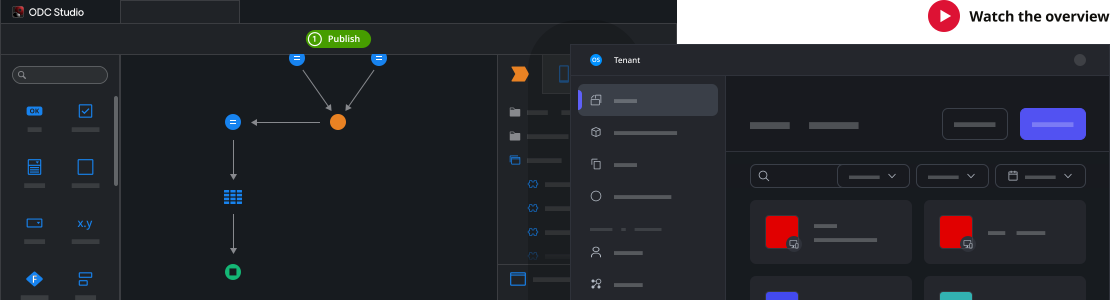
What is OutSystems Developer Cloud?
OutSystems Developer Cloud (ODC) is a cloud-native, agentic systems platform. It supports Kubernetes, Linux containers, microservices, all on a foundation of Amazon Web Services (AWS) native cloud services.
How does OutSystems Developer Cloud benefit you?
Building a cloud-native application platform can cost, on average, $2 million. And it usually takes 12-18 months. With ODC, OutSystems has done all the hard work for you. You can architect with all the scale, security, and availability of cloud-native and none of the hassle.
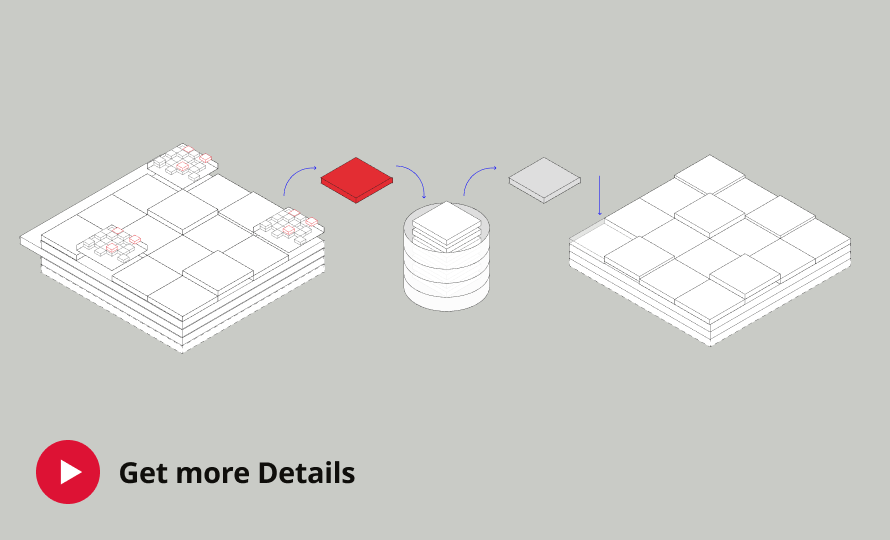
Unleash the developer creativity and productivity needed to build apps that change the course of your business with agentic systems re-factored for cloud native architectures.
Eliminate the cost and effort of understanding Kubernetes with an implementation that auto-scales cloud-native application development elements so you don't have to.
Create high-performing teams with a single cloud-native platform that uses visual modeling, AI, automation, and more to unify development, deployment, and change.
Deliver apps at the same speed and cadence as elite DevOps practitioners using behind-the-scenes CI/CD pipelines and processes.
Take advantage of a platform that evolves without impacting apps and an architecture that enables app portfolios to traverse technology shifts.
Gain the extensibility needed for management, monitoring, DevOps, authentication, and governance—without the hassle—on a cloud-native platform built to be API-first.
Developer Cloud FAQ
OutSystems Developer Cloud runs on AWS using Kubernetes for container orchestration and .NET Core on Linux containers. Each application runs in its own isolated container, improving scalability, resilience, deployment speed, and operational isolation.
ODC is available as a fully managed PaaS in the OutSystems cloud. Self-hosted deployment is designed to support customers that need more infrastructure control, including customer-managed Kubernetes environments. Self-hosted models are designed with platform services managed by OutSystems and runtime applications running in customer infrastructure.
ODC uses Amazon Aurora Serverless with PostgreSQL compatibility, a fully managed relational database service on AWS. It provides automatic scaling, high availability, automated backups, and PostgreSQL compatibility, allowing ODC to deliver a reliable and scalable database solution with minimal operational overhead.
ODC supports automatic scaling across multiple AWS availability zones using Kubernetes. Each application runs in an isolated container and can scale independently. This architecture helps improve high availability, reduce noisy-neighbor issues, support automatic failover, and provide resilience for applications with variable or high-volume demand.
ODC connects to on-premises systems through a secure private gateway. A cloud connector runs behind your firewall, and ODC connects over HTTPS. This helps avoid IP conflicts while allowing secure access to on-premises databases, APIs, and enterprise systems without moving your data.
Many commonly used Forge components have been migrated to ODC. During migration planning, assessment tools can identify which Forge components your applications use and whether ODC equivalents exist. Some third-party components may need to be rebuilt, replaced, or re-architected.
ODC uses container-based deployment, enabling faster releases and independent application updates. It provides a unified portal and supports modern DevOps practices through CI/CD APIs, built-in monitoring, tracing, and logging. Dependency updates can be handled per application without forcing broad portfolio-level changes.
OutSystems platforms comply with HIPAA, PCI DSS, and FedRAMP requirements and hold certifications including SOC 2 Type II and multiple ISO standards. Built-in security and governance controls help customers build compliant applications out of the box. OutSystems also complies with privacy laws such as GDPR. See the OutSystems Trust Center for current details.


Build high-quality, mission-critical apps
Meet all the criteria for mission-critical software with easy integrations, AI validation, cloud-native scalability, security, resilience, and performance.

Integrate with your current stack and beyond
Develop complex integration fast or use pre-built connections to 400+ systems and existing tech investments to deliver high-performance, low-latency data access.

Get cloud-native scale, security, and availability
Turn your team into elite, cloud-native developers. Scale from pilot to internet-wide deployment. Protect your apps and never worry about data loss again.

The Power of Low-Code on Kubernetes
Access this technical whitepaper to learn the benefits of using low-code Kubernetes for cloud-native development.

Cloud Native Development Report
The Cloud Native Development Report provides an in-depth look at how businesses develop cloud-native applications and how low-code platforms, like OutSystems, can help.

Cloud Development Made Easy
Embrace cost-effective cloud development. Save time with us.
