

Product Releases
and Updates
.gif)
Mentor Code Quality already helps teams improve application quality with continuous built-in code analysis. Now, with Code Quality APIs, teams can integrate those results into their existing CI/CD and DevSecOps practices, allowing checks to run automatically in the tools your teams already use.
By integrating with CI/CD tooling, such as Jenkins or Azure DevOps, you can analyze each new app revision and enforce a quality gate before promotion. Your pipeline can trigger a new analysis, retrieve the quality score and findings, and make it easy to apply consistent standards across teams.
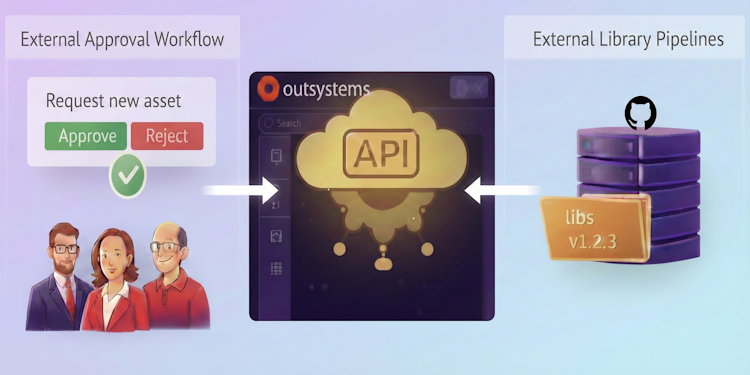
Streamline your asset governance and eliminate manual overhead by connecting ODC with your existing approval workflows and build pipelines.
These new DevOps APIs enable you to integrate asset creation directly into your portfolio approval process, whether in OutSystems or a third-party tool, ensuring that every new project instantly adheres to your organization's governance rules.
Additionally, you can now fully automate the lifecycle of external libraries by syncing ODC with your third-party CI/CD pipelines, removing error-prone manual work and increasing developer productivity.
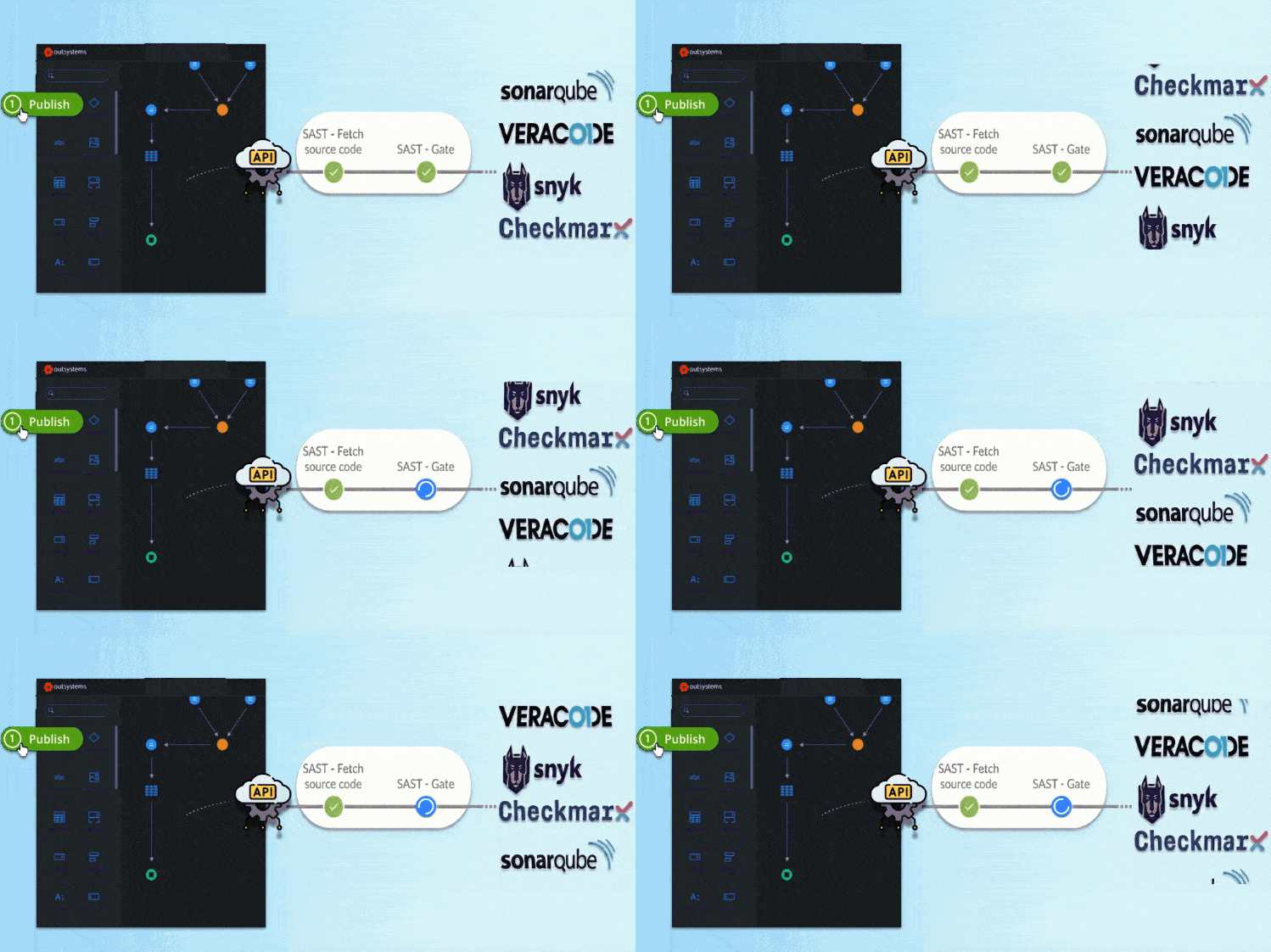
We’re pleased to announce that you can now retrieve the generated application source code through ODC DevOps APIs and scan it using your SAST tool of choice, such as Checkmarx, Snyk, SonarQube, or Veracode.
This enhancement enables you to extend ODC’s built-in security checks to meet your organization’s security and compliance requirements, making it easy to integrate SAST as an automated quality gate within third-party CI/CD pipelines without disrupting existing DevSecOps practices.
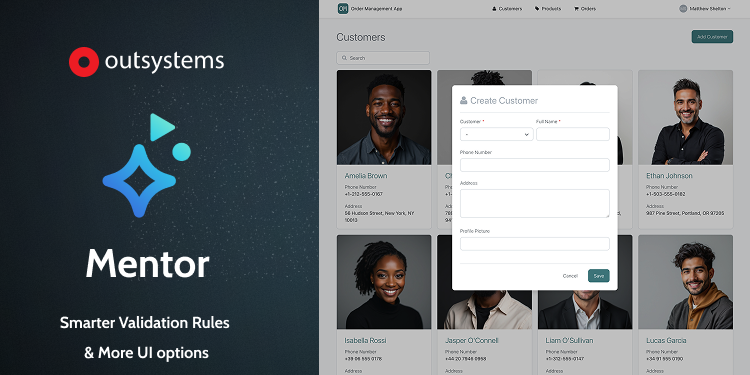
We’re rolling out a set of App Generator (AppGen) enhancements designed to help Mentor generate better apps faster, with built-in field validation, modern UI patterns , and expanded dashboard aggregations.
What's New:
- Field-Level Validation Rules: AppGen now generates field-level validation rules for common scenarios based on your app context or requirements, including: mandatory fields, date checks (past/future), value range enforcement (Numeric, Text, Phone Number), and email validation.
- Pop-up and Tab Patterns: Mentor can now generate apps that include Pop-up and Tab patterns, providing more flexible and modern UI designs.
- Enhanced Dashboard Aggregations: Dashboard now supports additional aggregations, including Minimum, Maximum, Average, and Sum, providing richer data visualization options out of the box.
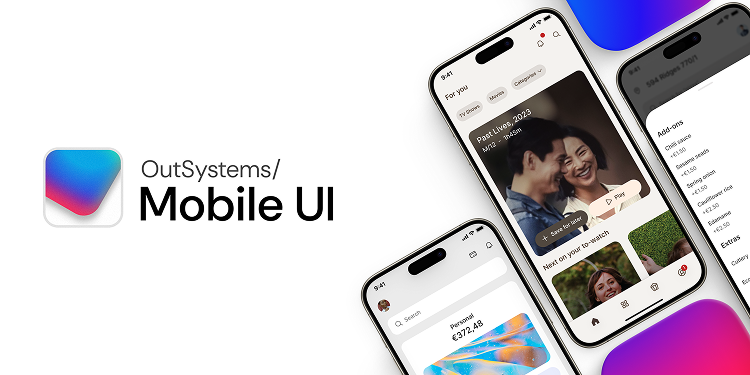
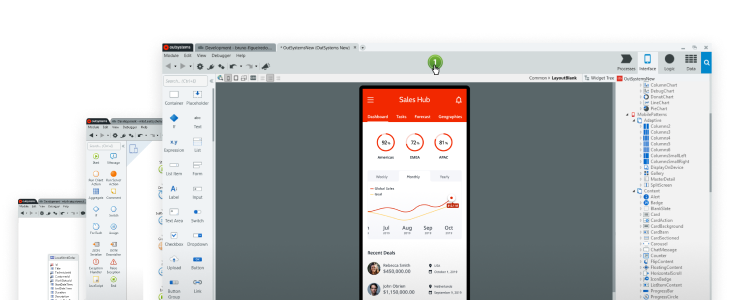
Available on ODC, Mobile UI is a beautiful mobile-focused UI framework designed to build mobile apps with a long-term app strategy, where excellent user experience, modern design, and fast development are top priorities. It brings new mobile-specific widgets built on a modern architecture, new icons, updated patterns and gestures, a mobile-first theme, and an improved developer experience.
Update to the latest ODC Studio version and start using the Mobile UI framework.
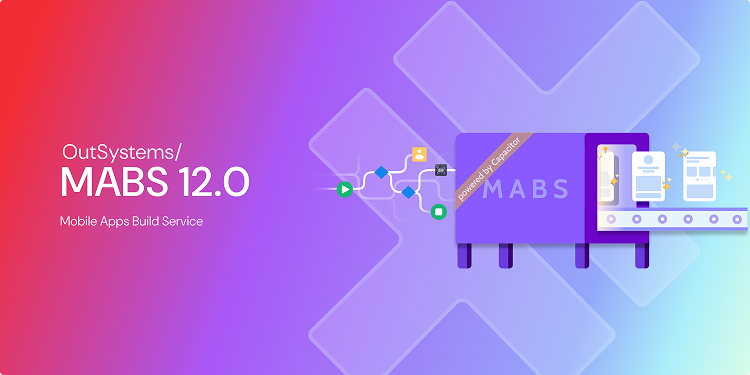
The latest version of Mobile Apps Build Service (MABS) is now GA!
For ODC, MABS 12 now supports Capacitor, a modern native runtime that allows developers to build native-like experiences on iOS and Android. Capacitor is a modern, forward-looking mobile foundation, offering a simple plugin system and an active developer community. Additionally, for O11 and ODC, MABS 12 is required to continue submitting your mobile apps to the Apple App Store and Google Play Store throughout 2026.
Before updating MABS, all supported plugins must be updated to their latest versions. For more details, check the MABS 12 release notes.

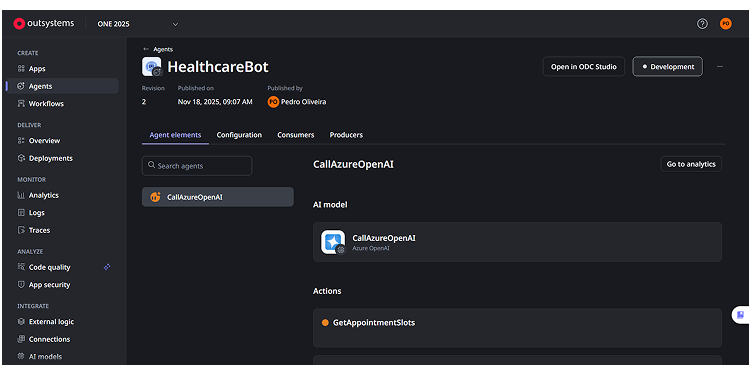
When you only have a few agents, managing them one by one works. But as teams ship more agentic apps with Agent Workbench, it becomes hard to answer basic questions at scale: Which agents are using which models? What actions are they allowed to run? Where do we need to tighten governance or troubleshoot? That information was scattered across individual agentic applications, not available in one place.
To better support governance, management, and operational efficiency at scale, we saw a clear need for a new console that provides this portfolio-wide visibility, making it much simpler to manage a growing ecosystem of AI Agents.
Introducing the Agents Console
The new Agents Console is a centralized hub for your AI Agents. In a single view, you get a complete list of agents across your environments and can immediately inspect each agent’s core configuration, including the specific AI Model it utilizes and the complete list of Actions it is authorized to execute. This new view streamlines governance, simplifies debugging, and provides the essential oversight needed to confidently manage and scale your AI applications.
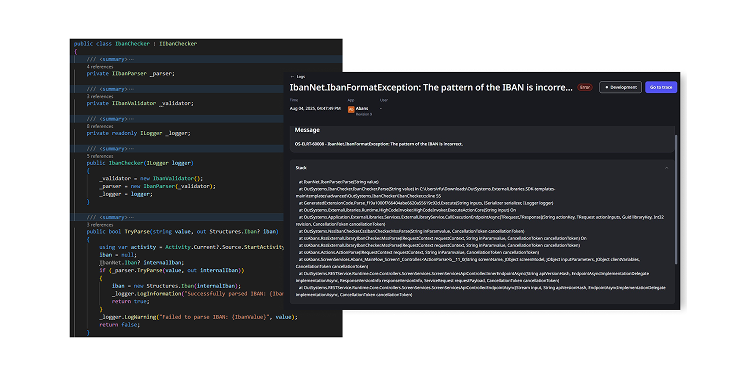
To empower you with greater transparency and control over your external logic, we're announcing the ability to log and monitor your custom code.
This update introduces:
- Exposed Stack Traces: Whenever an error occurs within your custom code, you will now have access to the full stack trace. This provides details on where and why an error happened, accelerating diagnostics.
- Comprehensive Logging and Tracing Capabilities: You can now create detailed logs and traces for your External Library actions. These logs and traces will capture critical information, helping you monitor execution, track data flow, and identify potential issues proactively.
These new capabilities will streamline your development and maintenance work, making your experience with custom code better and more productive.