
Agentic AI Goes Mainstream in the Enterprise, but 94% Raise Concern About Sprawl, OutSystems Research Finds

New State of AI Development 2026 report shows how enterprises are exploring agentic AI, while navigating governance and security concerns
OutSystems, a leading AI development platform, today released its global 2026 State of AI Development report, revealing that enterprises have moved decisively from AI experimentation to execution. Nearly every organization surveyed, 96%, is already using AI agents in some capacity, and 97% are exploring system-wide agentic AI strategies. The findings signal a clear shift from pilots to production as businesses embed AI into mission-critical operations.
However, as adoption accelerates, governance is struggling to keep pace. According to the report, 94% of organizations report concern that AI sprawl is increasing complexity, technical debt, and security risk. Still, only a small fraction of enterprises have established a centralized approach to agentic AI governance, meaning most are scaling agents across fragmented environments.
"Our approach to working with OutSystems for an agentic solution was to start with a small, well-defined project that we felt like we could get into production, and that would actually have an impact on the business," said Scott Finkle, VP of Technology, McConkey Auction Group. "Our main goal of the project was to build some muscle for building AI projects moving forward. OutSystems and Agent Workbench will pay great dividends to us as we iterate on our AI implementation."
Agentic AI represents a significant evolution from earlier applications of AI, capable of autonomously executing workflows, making decisions, and adapting in real time. Gartner predicts that 40% of enterprise applications will include task-specific AI agents by the end of 2026, highlighting the speed at which autonomous systems are becoming embedded in enterprise software. According to the OutSystems report, which surveyed 1,900 global IT leaders, 49% describe their agentic AI capabilities as advanced or expert.
Adoption maturity varies by region, with many organizations in Australia, Brazil, Germany, the Netherlands, the UK, and the US reporting intermediate progress, while France remains earlier in its journey. Financial services and technology organizations report the highest levels of production deployment.
The impact of agentic AI is most apparent within IT and software development, where time-to-value is easily measurable. Thirty-one percent of respondents say AI is already integral to their development practices, and another 42% have embedded AI into specific phases of the software development lifecycle. As agents prove value in development environments, 52% of organizations now rely on a human-on-the-loop model, allowing systems to operate with reduced direct oversight while maintaining supervisory control.
“Enterprises are moving quickly from experimentation to operationalizing agentic AI,” said Gonçalo Borrêga, VP of AI and Application Development at OutSystems. “As teams scale agentic systems to core business functions, governance and observability are paramount. Human-on-the-loop models are no longer sufficient: they run the risk of amplifying complexities and vulnerabilities systemwide. A unified, agent-first approach is critical to accelerate delivery while maintaining enterprise-grade control.”
Despite momentum, architectural fragmentation remains a challenge. Thirty-eight percent of organizations report mixing custom-built and pre-built agents, creating AI stacks that are difficult to standardize and secure. While 12% have implemented a centralized platform to manage sprawl, most enterprises are still experimenting with governance approaches that vary by team and region.
To help enterprises close the control gap, OutSystems recently introduced OutSystems Agentic Systems Engineering, a new approach that enables organizations to build and run agentic systems with confidence. Combining the next generation of OutSystems Mentor with core platform capabilities, it delivers agentic first development grounded in an enterprise context with built-in observability, security, and traceability.
Content, den Sie nicht verpassen sollten
The State of AI Development in 2026
Discover how IT leaders are navigating the shift to agentic AI in 2026.
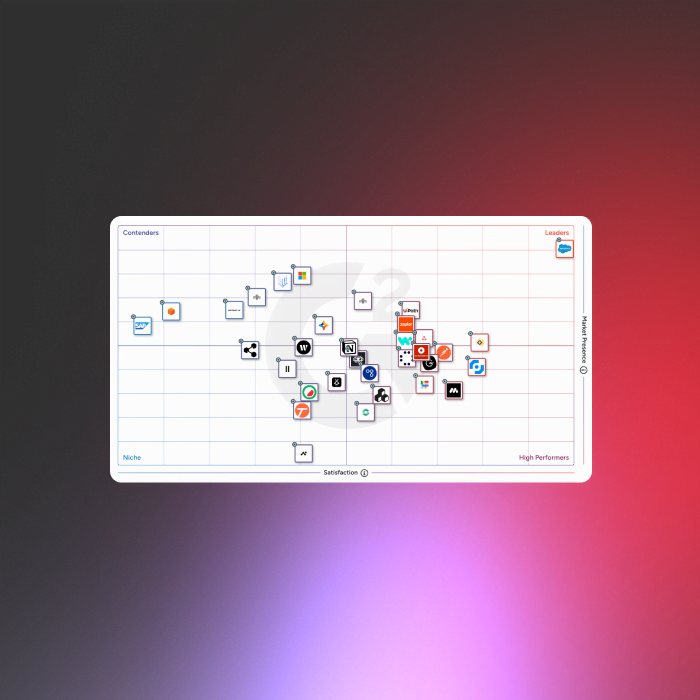
G2 2026 AI Agent Builder Grid: OutSystems Named a Leader
Learn why OutSystems achieved Leader status with a 95 NPS.

Try OutSystems for free
Create powerful AI agents today. Get started with OutSystems for free.