Table of contents
Yes. Organizations get great layout and styling features, conditional display and incremental disclosure constructs, and form validations that enable them to develop complex forms. Customers have used these features to develop:
Elaborate validation and display rules that are based on complex business logic.
Separating a complex form into multiple sections with consistent input sizes and perfect alignment is never an easy task. OutSystems simplifies it all with:
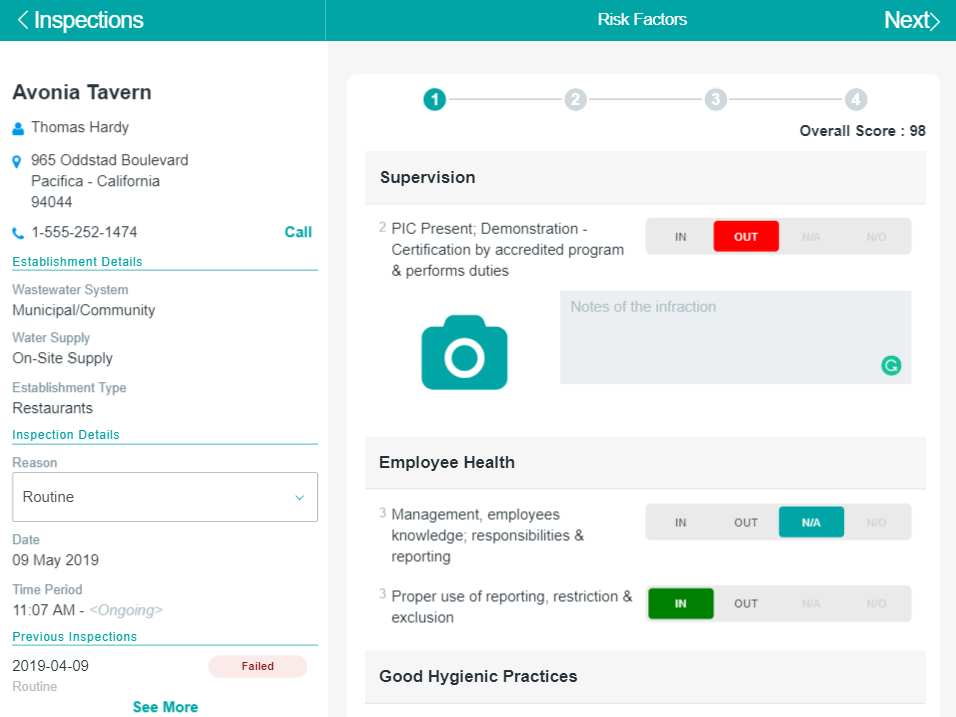
This graphic shows an example of a complex form:
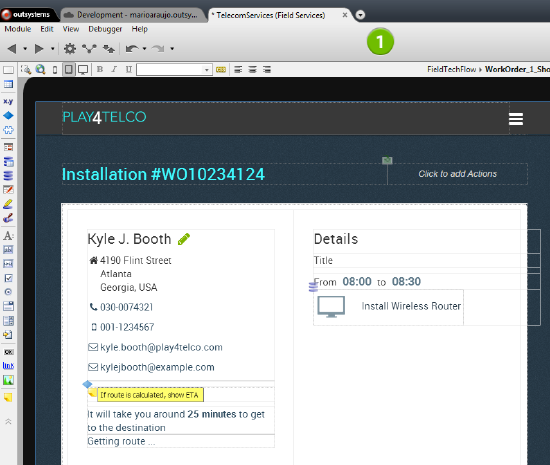
In some complex forms, new sections are displayed as a user provides input. Other complex forms only show certain sections or fields to specific types of user roles. OutSystems eliminates the challenges of building these forms with:
This is an example of how a part of the page is rendered, depending on a condition:
OutSystems enables client-side and server-side validations of form data.
On the client side, mandatory field and data type mismatch validations can be enabled without any coding.
More complex client-side validations such as a password complexity widget or social security number (SSN) validation can be achieved with simple JavaScript snippets. These snippets can be easily woven into and integrated with UI controls using the JavaScript editor.
Modern browsers allow tampering with a page's HTML and JavaScript very easily. Server-side validation is key to ensuring forms data is clean and sound—before it hits any back-end systems.
OutSystems constructs can validate, manipulate, or save data. Queries, web service calls, text manipulation functions, mathematical functions, data formatting, and conversion are just a few of the most commonly used constructs to validate forms data.
Controls have a built-in error message property that can be used to automatically display the validation messages on the screen.
This example shows an error message displayed on the screen:

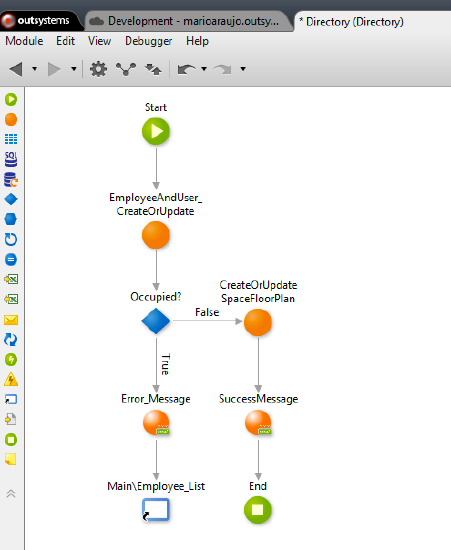
This example shows form validation logic: