1. AI for the sake of AI
First and foremost, business stakeholders often want AI for the sake of AI. That’s why whenever I hear “I want AI” my first question is always: what does that actually mean for this product? What problem are we solving? How do you want it to change what your team does?
Sometimes people agree on the answer and sometimes they don’t. Getting alignment on what AI should do, not just the fact that you want it, is genuinely hard, but without it, initiatives stall before the first line of code is written.
2. Experiments and one-offs
Second, most enterprises still look at agentic AI as experiments or one-off projects.
Developing and deploying a single agentic solution can take 6 to 12 months. By the time you’re ready to go live, the business and compliance requirements have changed and the agent is no longer as effective as initially planned. So you have to go back to the drawing board, build another agent on top of the first one, creating a patchwork that nobody fully owns or understands.
A modular system breaks the cycle and delivers speed
At Worldpay, we broke that cycle by stopping treating each agent as a one-off project and starting to look at them as a modular system. We began asking: “Can this be reused? Can another team pull this into their workflow?”
We took the needs from the business and identified repeatable patterns. After the first agent, the second got built faster, and the third even faster, because we were never starting from scratch. This kind of speed was both impressive and critical. With OutSystems, we could develop systems in a fraction of the time it normally takes.
This modular design allows us to plug and play agents into our workflows as needed, and switch them off just as quickly. That saves a lot of time, energy, and most importantly, money, because we’re not wasting resources building the same things over and over again.
Why you need an agentic systems platform
As we started looking at agents as a system, another factor that was critical for us was governance. At Worldpay, we handle so many different policies and procedures that without centralized oversight of our agents, we risk losing the trust of our clients and regulators.
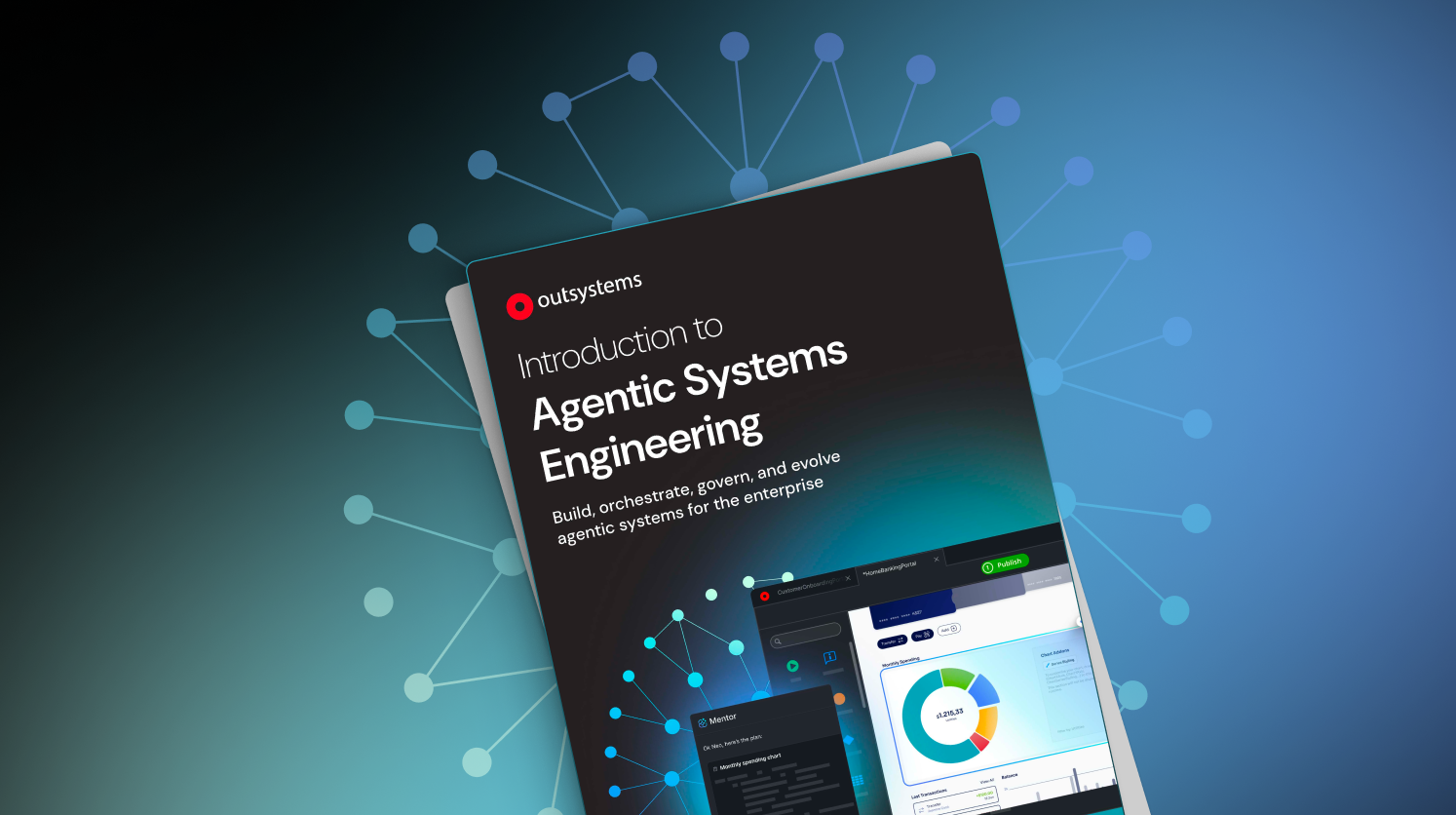
Having a unified agentic systems platform is critical for us. OutSystems gives us the governance, explainability, and real-time biases detection to scale agentic systems with confidence.
I discussed this in a webinar hosted by OutSystems, alongside other practitioners navigating the same challenges. To hear the full conversation, check out Expectation vs. Execution: Insights from the state of AI development 2026 on demand.
The opportunities of agentic AI are real. With the right foundations, we can move from experimentation to a governed and scalable agentic future that delivers real business impact. By providing one unified agentic systems platform for development, orchestration, and governance, OutSystems provides the audit trails and real-time bias detection we need to scale AI with confidence.
I’d love to hear how you’re thinking about this. What’s your wish list for AI? Look for me at OutSystems ONE World Tour in Las Vegas and be sure to attend my session.