The Right Prescription for Healthy Software: Promedico Thrives with Innovative Healthcare Apps
ZettaHealth improves data exchange with OutSystems low-code
Rachel Sobieck April 01, 2025 • 6 min read
Subscribe to the blog
By providing my email address, I agree to receive alerts and news about the OutSystems blog and new blog posts. What does this mean to you?
Your information will not be shared with any third parties and will be used in accordance with OutSystems privacy policy. You may manage your subscriptions or opt out at any time.
Get the latest low-code content right in your inbox.
Subscription Sucessful
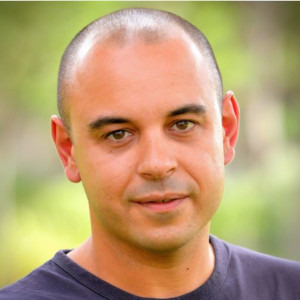
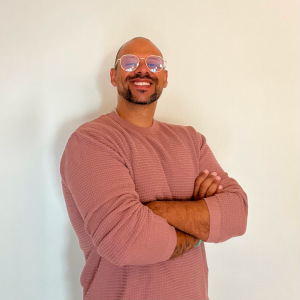
Joseph Funaro, CEO of ZettaHealth Solutions, LLC, is helping the healthcare sector eliminate data silos and relieve administrative bottlenecks—with solutions built on OutSystems. We sat down with him to learn more about his tech background, how his business is making targeted improvements in the industry, and what it’s like to be an entrepreneur. This blog is the result of that interview.
How ZettaHealth Solutions improves efficiency in healthcare
We started by asking for more information about ZettaHealth and how it helps healthcare companies.
What does ZettaHealth Solutions do?
ZettaHealth Solutions was founded to solve critical inefficiencies in the healthcare sector, particularly in radiology and fee-for-service medical billing. We saw a gap where outdated systems, manual processes, and interoperability challenges were creating administrative bottlenecks and financial losses. Our suite of products, EZ-Fee, RADAware, RADAlliance, RADStats, and CareNET-360, addresses these challenges head-on by providing automation, transparency, and seamless data exchange across healthcare organizations.
What do you find most rewarding about this business?
My favorite part of what I do is seeing the tangible impact of our solutions, such as helping healthcare providers streamline operations, reduce administrative burdens, and ultimately improve patient care through better data-driven decision-making.
If you could magically solve one major healthcare IT challenge overnight, what would you choose and why?
I’d solve interoperability. Despite advances, healthcare systems still struggle to share timely, relevant data securely and seamlessly. This leads to duplication of exams and unnecessary treatments. It can delay patient care and create more financial burden in healthcare insurance resource pools. I have always believed we need a deconstructed application approach that centralizes patient records apart from workflow and organizational logic. Defining a new interoperability framework could eliminate silos for patient data, improve patient outcomes, and drastically reduce administrative burdens.
“Healthcare systems still struggle to share timely, relevant data securely and seamlessly. A new interoperability framework could eliminate silos for patient data, improve patient outcomes, and drastically reduce administrative burdens.”
Using OutSystems to deliver greater interoperability
Funaro was delighted to talk about the benefits of using OutSystems.
Why was OutSystems the right choice for ZettaHealth Solutions?
With OutSystems we can go to market faster without sacrificing scalability, security, customization, or compliance. Healthcare IT is complex, but OutSystems lets us streamline development of complex workflows that seamlessly integrate with various applications in the healthcare ecosystem.
How do you use OutSystems to enhance integration and interoperability?
We designed CareNET-360 to create instant, secure connections between healthcare providers without the need for VPNs. The OutSystems platform’s robust integration framework helped us rapidly build and integrate REST APIs and HL7-compatible connectors, enabling seamless data exchange between major EHRs, RIS, PACS, and HL7-DICOM routers like UltraRad. This capability has been critical for our apps, allowing healthcare providers to share patient records securely and in real time without the need for legacy methods that expose interfaces.
How are the solutions you’ve developed with OutSystems making an impact in healthcare?
They’re improving operational efficiency and helping save time and money. With solutions like EZ-Fee, we’ve automated complex billing processes, which has reduced errors and the time it takes to get invoices out, eliminated denials, improved profit margins, and increased collections for radiology practices.
Read how ZettaHealth Solutions helped Star Radiology transform operations.
How would you describe the return on investment (ROI) of OutSystems for developing applications?
OutSystems allowed us to deploy applications up to 60% faster compared to traditional development. And we cut development costs by approximately 40%, thanks to its low-code environment and reusable components. It also gave us the agility to iterate and respond to customer needs rapidly.
“OutSystems allowed us to deploy applications up to 60% faster compared to traditional development. And we cut development costs by approximately 40%, thanks to its low-code environment and reusable components.”
What has it been like working with the OutSystems team?
My OutSystems team has been highly collaborative, responsive, and supportive. Their support in optimizing our architecture and leveraging their internal resources has been invaluable in ensuring that our applications meet healthcare industry standards while maintaining high performance and security.
The exciting potential of low-code + AI
Artificial intelligence (AI) in development is the talk of the tech industry, so we asked Funaro for his thoughts on it and how it impacts low-code.
We believe that combining low-code and AI will lead to new and infinite possibilities in application development. If you had no constraints on budget or resources, what would you build?
If there were no constraints, we would build an entirely new ecosystem of interconnected, secure healthcare applications that run natively on our CareNET-360 private healthcare network. These apps would be AI-powered, fully autonomous, and solve the biggest issues in healthcare today–security, interoperability, automation, standardization.
What impact do you think AI and low-code will have on the future of software development?
AI and low-code are democratizing software development, making it accessible to a broader range of innovators. In healthcare, this means faster deployment of digital solutions, better predictive analytics, and enhanced patient care through automation and real-time decision-making. The combination will reduce development costs and accelerate the adoption of new healthcare technologies.
An entrepreneur’s insight
Every entrepreneur has a story that demonstrates how differentiated thinking delivers success. We asked Funaro to share his.
Can you share a pivotal moment or decision in your career that helped you get where you are today?
Early in my career, I made a deliberate decision not to focus on just one area of IT, but to learn about a wide range of technologies. Over time, technology has expanded beyond just hardware and software to include things like cybersecurity, artificial intelligence, cloud computing, databases, networking, and much more. I’ve worked hard to stay up to date with new advancements so that when I’m involved in a project, I can understand and communicate with experts in different fields. This broad knowledge allows me to connect the dots between different specialties, helping to solve long-standing problems and create better solutions.
What’s it been like to start your own business? Can you share more about the challenges, the highlights, and how you got to where you are today?
Starting a business today is both easier and harder than ever. With force multipliers like AI, SaaS, low-code, and automation, small teams can build, launch, and scale faster than ever before. However, the accessibility of these tools means that every new technology brings a flood of competitors, making the market noisy and challenging to stand out in. The key is not just leveraging technology but executing sharply, solving real problems, and delivering real value. Still, I welcome competition—it drives innovation, better solutions, and fair pricing, ensuring that consumers benefit while pushing all of us to build truly great products.
What advice would you give to someone looking to start a career in tech or start their own business like you have?
The future remains techful and bright! Watch for emerging technologies and skill up! Never let yourself become complacent. Start with the fundamentals: Software development languages, and server, network, and storage. Then, add on specialties later like AI, cybersecurity, and other in-demand skillsets.
“With force multipliers like AI, SaaS, low-code, and automation, small teams can build, launch, and scale faster than ever before. However, the accessibility of these tools means that every new technology brings a flood of competitors. The key is not just leveraging technology but executing sharply, solving real problems, and delivering real value.”
Interested in learning about how other entrepreneurs are solving challenges in their industries? Read our e-book, What visionary CIOs do differently, for inspiring success stories.
Rachel Sobieck
Rachel is a results-oriented marketer with a customer-centric approach. As a product marketing manager at OutSystems, Rachel focuses on solutions, industries, and use cases and supports global marketing campaigns. She is passionate about amplifying customer voices and bringing her enthusiasm to help readers understand why low-code is the right choice for them. With more than 12 years of content strategy and product marketing experience, she has an extensive background in creating compelling marketing campaigns. And to ensure she provides value for every audience, she continuously asks, "what's in it for me?"
See All Posts From this authorRelated posts
Fernando Santos
October 03, 2024 5 min read
Forsyth Alexander
March 06, 2025 7 min read