







Unified data for smarter agents and apps
Whether you're building agents or apps that draw from multiple sources, Data Fabric provides a single, trusted layer for smarter decisions, faster execution, and easier adaptation—without the pain of manual integration.

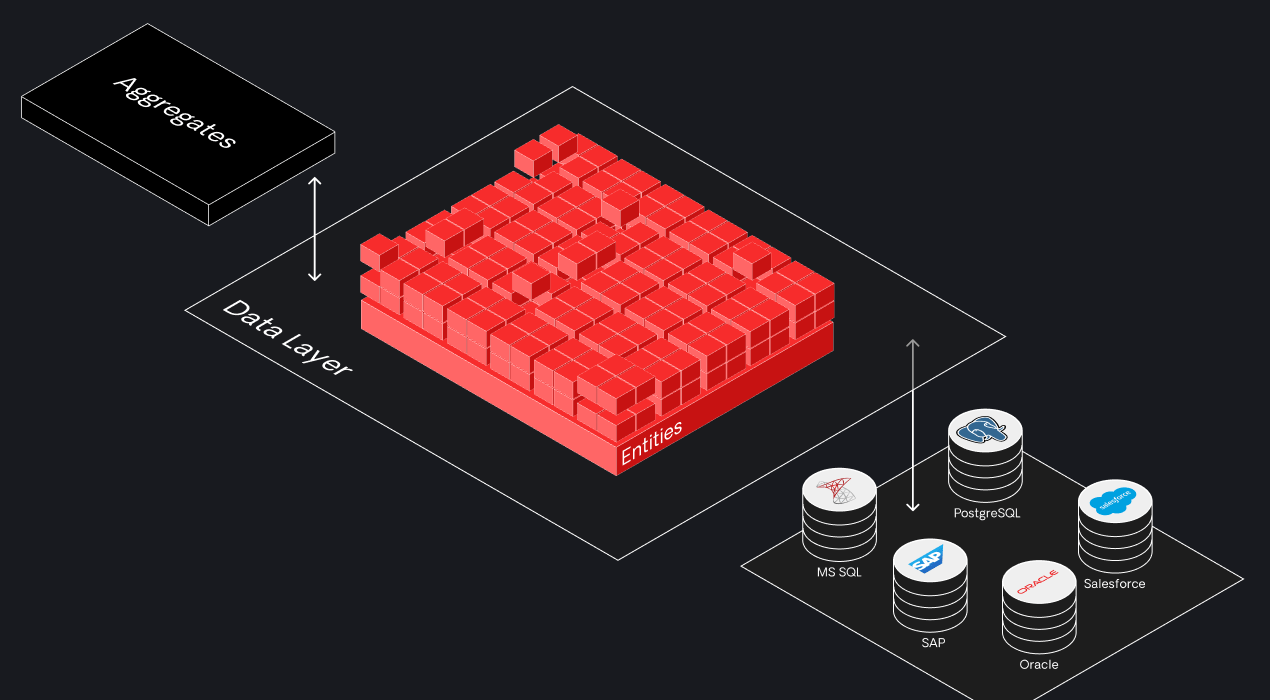
Vorgefertigte Verbindungen zu mehr als 400 Systemen – sofort einsatzbereit
Entwickler können vorgefertigte Konnektoren zu den gängigsten Datensystemen wie SAP, Datenbanken wie MongoDB und PostgreSQL und SaaS-Lösungen wie Paypal und Salesforce zu Logik und Workflows hinzufügen. Anschließend können sie diese sicher für die Konnektivität konfigurieren.

SAP
Verbinden Sie Ihre Apps mit SAP-Systemen und teilen Sie Daten, um Geschäftsprozesse zu optimieren und zu automatisieren.

Salesforce
Erstellen Sie strategische Enterprise-Apps, die Ihre Salesforce-Investition noch rentabler machen.

ServiceNow
Nutzen Sie Ihre Ticketdaten in Apps, um Nutzungserlebnisse zu verbessern.
Beschleunigen Sie komplexe Integrationen mit bestehenden Systemen
In der OutSystems-Plattform ist die Integration komplexer Systeme durch Plug-and-Play-Elemente ganz einfach. OutSystems generiert auch für den Aufruf eines externen Systems erforderlichen Code. Wenn sich Geschäftsanforderungen ändern, kann Ihr Team bestehende Integrationen problemlos anpassen.
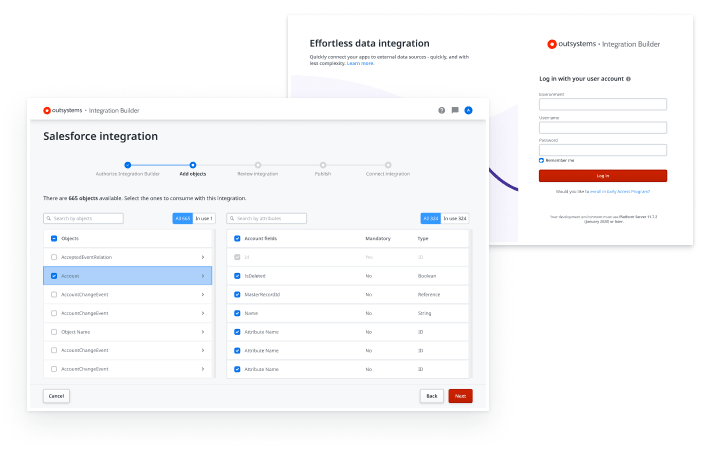
Leistungsstarker Datenzugriff mit wenigen Klicks
Applikationen sind nichts ohne Daten. Die Low-Code-Plattform von OutSystems macht es Entwicklern leicht, skalierbare Backend-Services mit zertifizierter SAP OData- und ABAP-Konnektivität zu erstellen, um die niedrige Latenz zu erreichen, die zur Unterstützung der anspruchsvollsten Verbraucher-Apps erforderlich ist.

„Durch die Kombination von SAP mit Add-ons und eigenen Applikationen, die wir mit OutSystems entwickelt haben, können wir das volle Potenzial von SAP ausschöpfen und zugleich alle unsere Daten für Web und Mobile nutzbar machen.“

Einfache Erstellung benutzerdefinierter Konnektoren
Mit der OutSystems-Plattform können Entwickler wiederverwendbare Konnektoren für das API-Management, Integrationsplattformen und jedes selbst entwickelte System erstellen. Ein einfaches Drag-and-Drop genügt, um einen Webservice oder eine API bereitzustellen oder zu nutzen.
.gif)
Integrations FAQ
OutSystems integrates with existing systems through REST and SOAP APIs, database connections, prebuilt connectors, and custom integration services. Teams can connect to SAP, Salesforce, Oracle, ERP platforms, and legacy systems without replacing their current infrastructure. This helps extend enterprise systems while keeping data and processes connected.
Yes. OutSystems can consume external REST APIs and expose APIs from applications built on the platform. This lets teams connect to existing services, data sources, and third-party applications using standard integration patterns. REST API support is central to building connected enterprise applications across modern and legacy environments.
OutSystems supports common API authentication methods, including OAuth, tokens, API keys, bearer tokens, and custom headers. Teams can configure secure authentication when consuming external APIs or exposing services from OutSystems applications. This helps maintain enterprise security standards while integrating with internal and third-party systems.
Yes. OutSystems can connect to external databases such as SQL Server, Oracle, and other relational databases. Teams can work with existing data sources without migrating all data into OutSystems. This is especially useful for organizations with established database investments, compliance requirements, or large operational systems.
OutSystems can connect cloud applications to on-premises databases through secure network connectivity, such as VPNs, private gateways, or approved enterprise connection patterns. This allows teams to access data that must remain behind the firewall while still building cloud-based applications that interact with on-premises systems securely.
Yes. OutSystems provides prebuilt connectors for major enterprise systems, including Salesforce, SAP, and other widely used platforms. Teams can also use connectors from Forge or create custom integrations when needed. These connectors reduce development effort and help applications connect to business-critical systems faster.
Yes. OutSystems can integrate with ERP systems such as SAP, Oracle ERP, NetSuite, Microsoft Dynamics, and custom ERP platforms. Integration can happen through APIs, database connections, connectors, or custom services. This allows teams to extend ERP workflows, surface data, and build modern applications around core business processes.
Yes. OutSystems integrates with existing SSO and identity providers such as Azure AD, Okta, and SAML-based systems. It can connect to enterprise identity standards so users authenticate through centralized access management. This helps organizations maintain consistent security, governance, and user access policies across applications.
OutSystems can support data migration and ETL-related processes through integrations, APIs, database connections, and external data tools. While it is not positioned as a dedicated ETL platform, teams can connect OutSystems to existing ETL tools or build controlled data movement processes as part of application workflows.
OutSystems can support large data volumes and batch processing through optimized queries, asynchronous processing, timers, integrations, and scalable architecture patterns. For very large datasets, teams should design data access carefully and use appropriate storage, indexing, and processing strategies to maintain performance across enterprise workloads.
Yes. If a prebuilt connector doesn’t exist, developers can build custom connectors using APIs, custom code, and integration services. OutSystems supports extending applications with C#, REST, SOAP, and JavaScript when needed, so teams can connect to proprietary, niche, or legacy systems without waiting for an official connector.


Erstellen Sie, was in Ihrem Backlog ist
Das breiteste Angebot an Anwendungsfällen, Vorlagen und leistungsstarken Partnerlösungen hilft Ihnen, alle Applikationen in Ihrem Backlog zu realisieren.

Sehen Sie, wie OutSystems im Vergleich abschneidet
Erhalten Sie die neuesten Studien über Low-Code-Plattformen von globalen Branchenanalysten und erfahren Sie, warum OutSystems als führende Low-Code-Plattform gilt.

Steigen Sie tiefer in die Plattform ein
Weitere Details über OutSystems finden Sie in unserem Evaluierungsleitfaden.