
Product Releases
and Updates
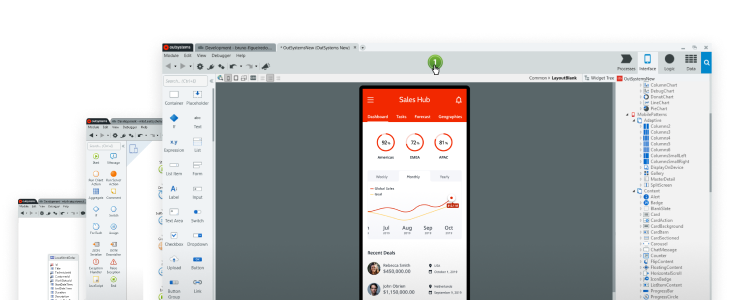
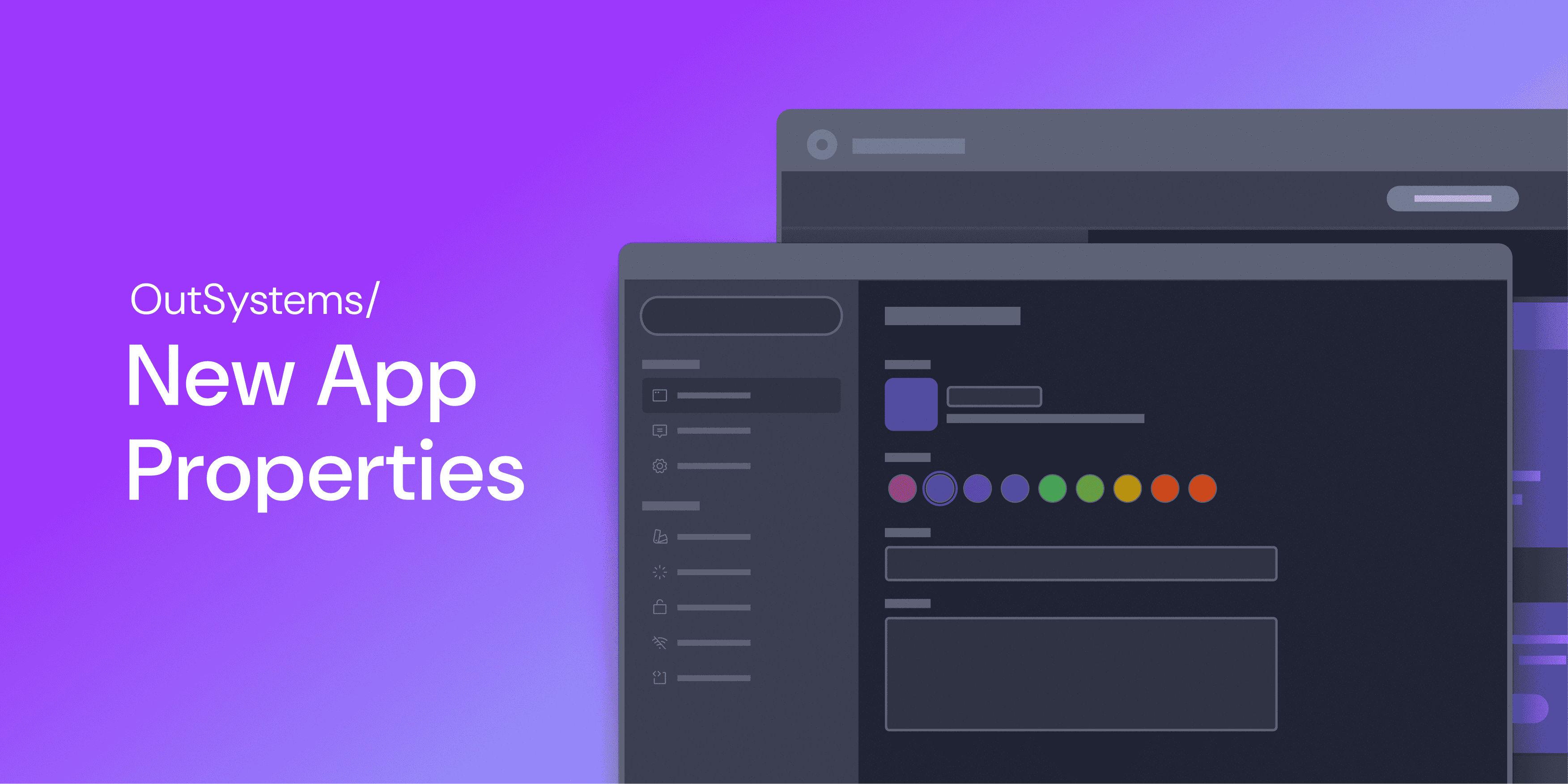
We're pleased to announce a new experience for app properties configuration in ODC Studio. This new experience provides a modern, searchable dialog that surfaces everything in one place, enabling developers to easily configure properties specific to their application.
What’s new?
- Vertical tab navigation with keyword search: A new properties dialog has a scalable, side-navigation layout. Use the built-in search box to instantly filter all available properties by keyword.
- Dedicated mobile space: Mobile properties are now organized into four focused tabs: Appearance, Splash Screen, Permissions, and Offline Data Sync. Each consolidates related options in a logical, easy-to-navigate section.
- Context-aware settings: The dialog automatically shows only the properties relevant to what you’re building. Mobile-only tabs, such as Permissions and Offline Data Sync, are hidden for web apps and low-code libraries.
- Built to grow: The new architecture provides a scalable foundation for surfacing future properties that today require manual configuration.
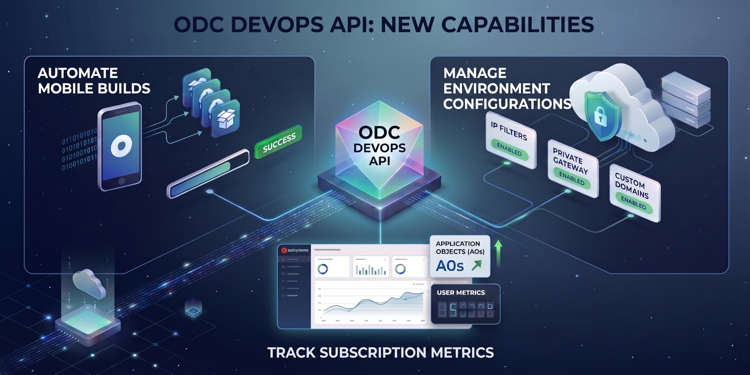
ODC DevOps APIが大幅に拡張されました。これには、モバイルデリバリーと環境構成の自動化や、使用中のツール(CI/CDパイプラインや他の外部ツール)からのサブスクリプションの直接監視を可能にする新しいAPIも含まれています。これにより、アプリケーション開発の自動化をさらに推進することができます。
新たなAPI
- Native Mobile Build APIは、モバイルアプリパッケージの生成を自動化します。サードパーティのCI/CDパイプラインに組み込むと、アプリストアまたは自身の配布プラットフォームを経由したアプリ配布で必要になるモバイルパッケージを生成できます。
- Environment Configurations APIは、IT環境全体で一貫したセキュリティと接続性を確保するうえで役立ちます。このAPIを活用すると、環境の構成を管理して、IPフィルタ、プライベートゲートウェイ、カスタムドメインを自動化することができます。
- Subscription APIを使用すると、サブスクリプション概要に掲載されているアプリケーションオブジェクト(AO)数やユーザー数などのメトリックにアクセスして、アラートシステムをカスタム作成したり、事業部門間の費用振替を自動化したりすることができます。
ODCに新たに登場したネイティブなSnowflake Connectorで、データの力を最大限に引き出しましょう。複雑なミドルウェアや手動でのREST API開発をすることなく、ODCアプリやAIエージェントをSnowflakeデータクラウドに直接接続できます。このビルド済みのコネクタは、データ取得用のカスタムロジックを作成したり、APIのアップデートをリアルタイムで管理したりする手間をなくします。そのため、これまでにない速さでインテリジェントなエージェントを自社のコアデータにグラウンディングすることができます。また、既存のSnowflakeアーキテクチャの高い拡張性とセキュリティを存分に活かすことができます。
ベータ版を提供中
Snowflake Connectorは現在ベータ版でご利用いただけます。ぜひお試しのうえ、ご感想をお寄せください。この新しいコネクタの有効化をご希望の場合は、担当のアカウントチームにご連絡ください。
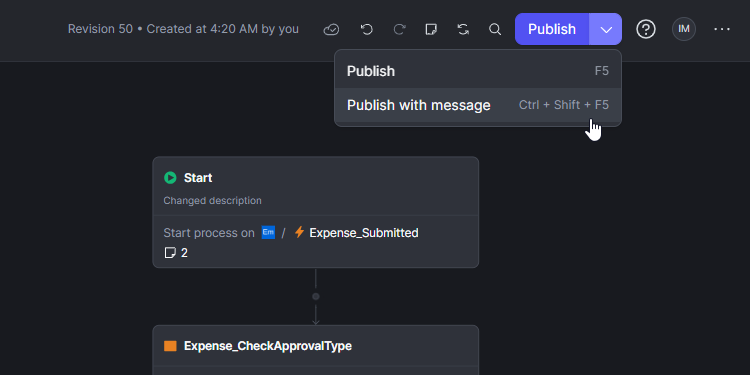
パブリッシュ時に説明的なコンテキストを追加する機能がODC Workflowsに登場しました。このアップデートにより、ワークフローのリビジョンに理由や詳細を追記できるようになるため、チームの連携とガバナンスが効率化されます。
変更の理由を毎回記載して残すことで、ワークフローの履歴を明快な監査証跡として活用することができます。こうしたメッセージは開発において重要なコンテキストとなり、特に、パブリッシュの衝突を解決する際やこれまでの変更を確認する際に大きな価値を発揮します。
この機能の主なメリットは以下のとおりです。
- ワークフローエクスペリエンスの統合: すぐにコンテキストを追加できるよう、Workflow EditorのPublishボタンに「Publish with message」オプションを用意しました。
- キーボード操作の効率化: Ctrl+Shift+F5(Windows/Linux)またはCmd+Shift+F5(Mac)で、メッセージダイアログを直接トリガーできます。
- コンテキストの可視化: メッセージはRevision Historyパネルで確認できます。また、開発者が情報に基づいて変更のマージを行えるよう、Publish Conflictダイアログに自動的に表示されます。
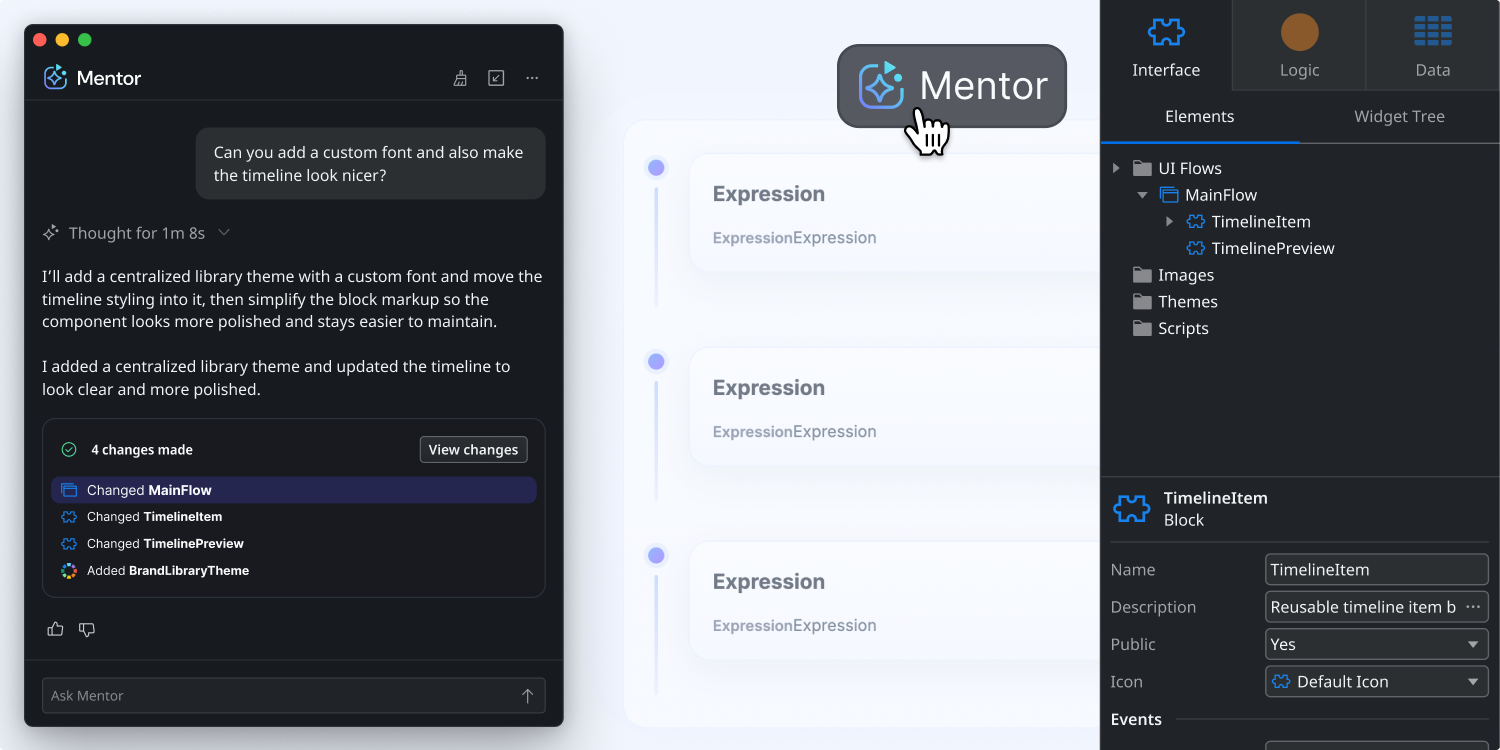
Mentorがライブラリにも対応可能になり、再利用可能なロジックの生成や理解もサポートできるようになりました。これにより、アプリ間で共有できる機能の作成が簡単になります。また、チームが一貫性を保ちながら複数のODCプロジェクにすばやく取り組めるようになります。
- ライブラリでのAI支援 - Webアプリに限らず、ライブラリに関する作業でもMentorを使用できるようになったことで、開発ライフサイクルのより広い範囲でAIによる支援を受けることができます。
- 再利用可能なロジックの作成の迅速化 - チームが共有ロジックを迅速に作成できるようMentorが支援することで、アプリケーション間で再利用可能なモジュール型の機能を作成しやすくなります。
- 複雑な機能に関する支援 - ODC StudioでMentorを使用することで、ロジックを生成したり、既存のロジックについて説明したり、複雑な機能の理解を深めたりすることが可能になります。
本機能は現在ベータ版として稼働中ですが、近日中に一般公開を迎える予定です。
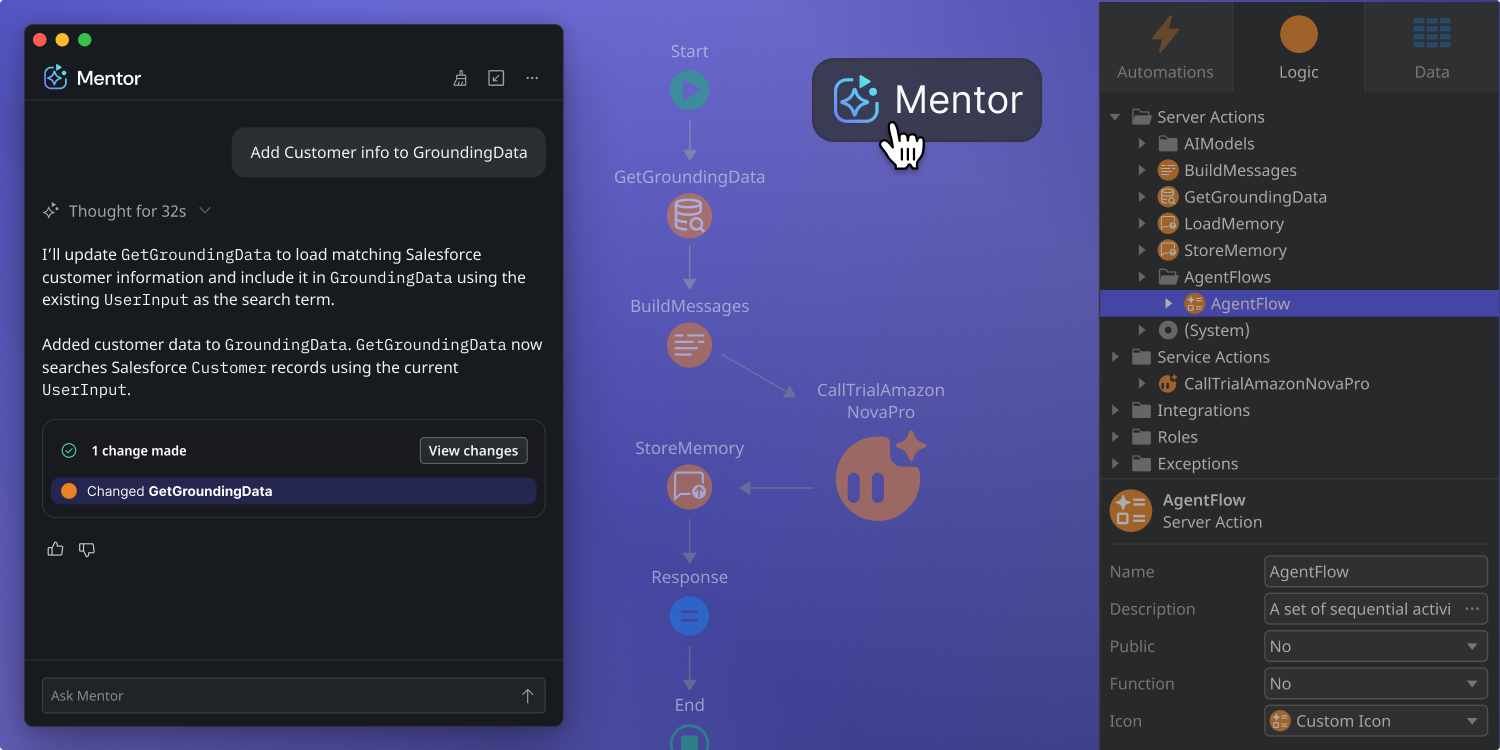
このたび、ODC StudioのMentorが、ODCでの自然言語による説明でエージェントの構成を生成・改良できるようになりました。
エージェントに実行してほしいことを記述すると、Mentorが作成中のアプリケーションのコンテキストに踏まえたうえで、プロンプト、ツール、モデル設定などの構成を支援します。これにより手動での設定が減り、開発者がより迅速にアイデアをエージェント化できるようになります。
この機能を使用すると、チームはODCでアプリを作成するのに近い感覚でエージェントを作成できるようになります。現在ベータ版ですが、近日中に一般公開となる予定です。
- 自然言語でのエージェント作成 - エージェントに平易な言葉で指示を出すと、MentorがODCでその意図をエージェントの構成に変換します。
- 対話による改良 - 自然な対話を通じてエージェントを改良していくことができます。トーンの調整、指示の更新、新たな動作の追加などをMentorに依頼すると、それに応じて構成がされます。
- ツールの構成 - エージェントがツールとして使用できるアクションを、Agent Workbenchに手動で移すことなくMentorで直接追加、削除、更新できます。
- ガイド付きのパラメータ調整 - シンプルな自然言語の指示により、temperature、最大トークン、呼び出し条件などのモデル設定を微調整できます。
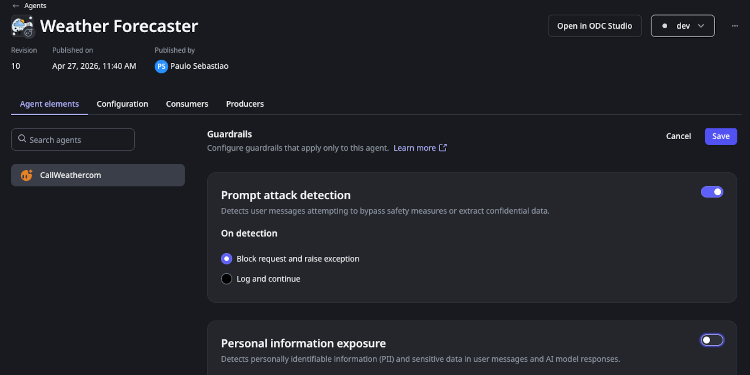
AI Guardrailsは、試用に最適なオプトイン機能としてリリースされました。その一方で、各企業でフルスケールの本番稼働を迎えるにあたり、一貫した全社的な標準の必要性が高まってきています。そこで、管理者がユニバーサルな安全基盤を簡単に設定して、自社のコンプライアンス目標に合わせてすべてのエージェントを動かせるようにしました。
AI Guardrailsの強制適用
システム管理者は、各開発ステージのMandatory AI Guardrails構成を定義できます。対象となるステージは、Development、Test、Productionです。定義すると、そのステージでのすべてのエージェント実行に構成が適用されます。開発者がこれを無効にしたり回避したりすることはできません。
エージェントレベルでの制御は認められていますが、あくまで一方向となります。システムがセキュリティに下限を設けているため、開発者は有効になっているカテゴリを厳格化することはできますが(PIIフィルタリングをLogからMaskやBlockに変更するなど)、組織で定められている基準以下にすることはできません。これにより、管理者の設定した下限を下回ることなく、機密性の高いユースケースについて安全性を向上させることができます。実行診断には効果的にマージされた構成が反映されるため、いずれのレイヤーでもガードレールの挙動のテストやトラブルシューティングを簡単に行えます。AI Guardrailsは一般提供が開始されています。構成は、エージェントから直接行うことができます。
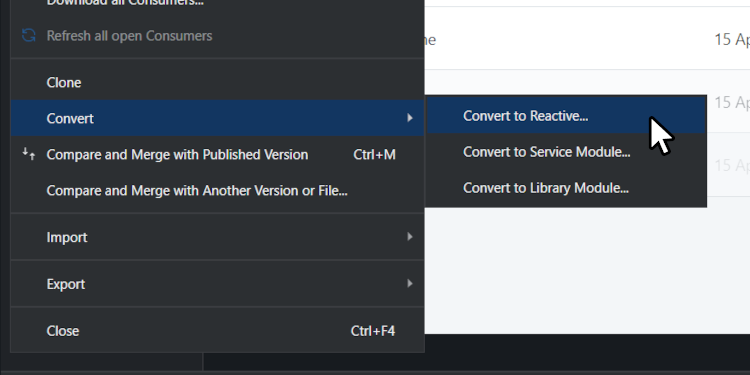
このたび、従来のアプリからリアクティブアプリへの変換アクセラレータが、Service Studioで一般提供を開始しました。これにより、レガシーアプリケーションのポートフォリオ刷新にかかる時間が大幅に削減されます。
フロントエンドアーキテクチャを別々に維持することが求められる「モダナイゼーションギャップ」を解消するために今回導入されたのが、アプリの移行に伴う機械的な処理を自動化する「Convert to Reactive」メニューオプションです。
主なメリット:
- 労力の軽減: UI、ロジック、データストラクチャの再作成が自動化されることで、手動での変換作業が30~60%削減されます。
- 業務の集約: ポートフォリオを標準化して1つの最新スタックにすることで、リソースの割り当てやトレーニングが簡素化されます。
- UXの刷新: 並行データ取得やページの即時翻訳といった高パフォーマンスの機能を利用できるようになります。
利用方法:
最新のService Studioにアップデートして、Module > Convert to Reactiveを選択すると、モジュールを複製して変換することができます。最適な結果を得るには、プロデューサ、コンシューマの順で作業してください。
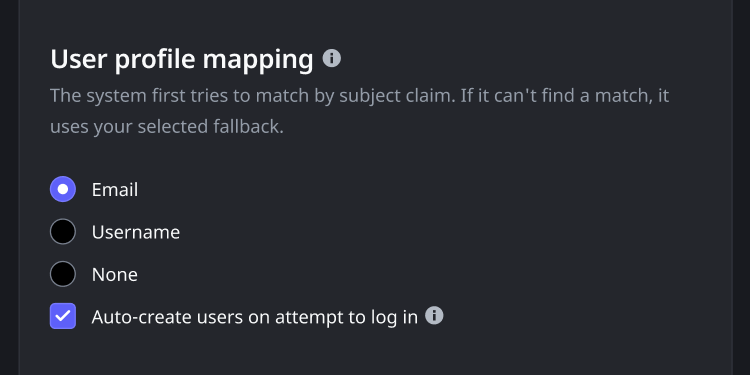
ユーザーアクセスとセキュリティの管理をより柔軟に行えるようになりました。外部IDプロバイダ(IdP)を構成する際に、外部ユーザーをODCのユーザープロファイルにマッチングさせる方法のオプションを増やしています。
ODCは、まず一意の識別子に基づいた一致を試みます。一致するものがない場合、メールアドレスやユーザー名による一致などのフォールバック戦略を設定したり、フォールバック一致をすべて無効にしたりすることができます。
新たに登場した「Auto-create users on login」トグルも、プロビジョニングの効率化に役立ちます。このトグルを無効にすると、新規ユーザーの自動作成を防ぐことができます。これにより、テナントにアクセスできるユーザーを、あらかじめ明示的に権限を与えられているユーザーに限定することができます。今回のアップデートは、O11からODCへの移行をはじめとする複雑な移行シナリオへの対応や、厳格なセキュリティガバナンスの維持に欠かせないものになります。
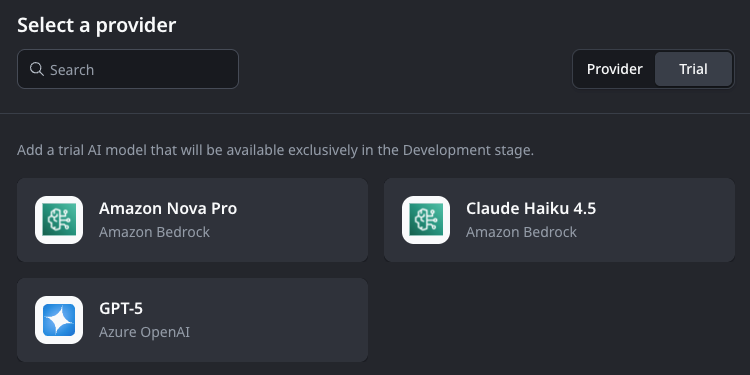
AIモデルの勢力図は目まぐるしく変化しており、1年前には最先端だったモデルも、より高速で高機能な別のモデルに取って代わられています。この状況をトライアルにも反映したいというのがOutSystemsの考えです。古いモデルでトライアルを始めても、最新のAIがアプリケーションにもたらすメリットを享受することはできません。
そこで、ODCで利用可能なモデルを更新し、トライアルでの提供内容の最新化を図りました。
トライアルモデルにClaude Haiku 4.5とGPT-5を導入
トライアル用に導入された新たなモデルは、 Claude Haiku 4.5((Anthropic)とGPT-5(OpenAI)の2つです。それぞれがclaude-sonnet-3-7とgpt-4o(現在非推奨)を置き換える形となり、旧モデルでの新規トライアル開始は終了しています。
すでに非推奨モデルでトライアルを開始している場合は、引き続きご利用いただけます。新たなモデルを試用したい場合は、ODC Portalから直接Claude Haiku 4.5とGPT-5のトライアルを開始できます。