



Omnichannel definition: What is an omnichannel customer experience?
Omnichannel refers to the practice of delivering seamless, integrated experiences across all customer interaction channels, both digital and physical. These channels can include mobile apps, websites, email, social media, contact centers, in-store systems, and self-service portals.
Omnichannel customer experience takes this concept further by focusing on how customers move between those channels. It ensures context, data, and intent follow the customer, so every interaction feels connected rather than fragmented.
When omnichannel breaks down, the experience often looks like this:
- A customer sees a product promotion on their Instagram feed
- They click through to the company website to review features and pricing
- They start a purchase but abandon it before checkout
- Later, they contact customer support for help, only to be asked to repeat information already shared online
- The support agent has no visibility into the customer’s prior interactions or intent
From the customer’s perspective, these are separate, disconnected experiences, even though they all happen with the same brand. Omnichannel customer experience is about eliminating those gaps.
Omnichannel vs. multichannel: How do these strategies differ?
Both omnichannel and multichannel strategies involve engaging customers across multiple channels. The difference lies in how those areas work together.
- Multichannel strategies operate channels in parallel. Each channel exists independently, often with its own data, workflows, and systems.
- Omnichannel strategies connect channels through shared data, logic, and orchestration, creating a unified experience across the customer journey.
In a multichannel model, a mobile app, website, and contact center may all function well on their own, but lack awareness of one another. In an omnichannel model, those same channels are designed to work together.

Benefits of delivering an omnichannel customer experience
An effective omnichannel customer experience strategy connects interactions across touchpoints into a single, coherent journey. Rather than optimizing channels in isolation, it aligns systems, data, and workflows around how customers actually move between them.
Below are some of the most impactful benefits:
Higher customer satisfaction and loyalty
When customers can move effortlessly between channels without repeating themselves, satisfaction increases. Consistency builds trust, and trust drives loyalty. It also cuts the “death by a thousand annoyances” moments: re-entering info, re-explaining issues, or getting different answers depending on the channel.
Improved engagement across digital touchpoints
Connected experiences make it easier to personalize interactions in real time, increasing relevance and engagement across apps, websites, and support channels. You can also guide customers to the next best step based on what they’ve already done, instead of making them start fresh on every channel.
Faster issue resolution and better support outcomes
With shared customer context, support teams resolve issues more quickly and accurately, reducing handle times and improving first-contact resolution. Omnichannel also improves handoffs, like chatbot to agent, because conversation history and intent carry over.
Better use of customer data
Omnichannel strategies break down data silos, enabling teams to act on a complete view of customer behavior rather than isolated interactions. That makes journey-level optimization possible, because you can see where customers drop off and what’s actually driving repeat contacts or churn.
Increased operational efficiency
Shared services, reusable components, and centralized governance reduce duplication across teams and channels. Instead of building the same workflows multiple times, teams can standardize core logic and reuse integrations across experiences.
Greater agility as customer expectations evolve
As new channels emerge, omnichannel foundations make it easier to extend experiences without re-architecting everything from scratch. That agility also helps you iterate faster on what customers are actually responding to while keeping experiences consistent across channels.
Enhanced visibility across journeys and operations
Omnichannel customer experience strategies improve visibility into how journeys perform across touchpoints, including where friction, delays, or repeat contacts show up. With that end-to-end view, teams can prioritize fixes based on real journey impact, not isolated channel metrics.
"OutSystems provides the innovation and agility to accelerate the digital transformation of Western Union. In just 11 months, we delivered a full-service digital banking experience that expands our relationship with customers."
Tom Mazzaferro then Chief Data and Innovation Officer Western Union

Organizations using OutSystems have applied these principles to modernize customer-facing systems at scale. For example, Western Union used OutSystems to accelerate digital banking transformation across regions while improving customer experience consistency.
Dive deeper into how Western Union modernized its customer platforms
How to deliver an omnichannel customer experience strategy
Delivering an omnichannel customer experience is not about adding more channels. Rather, it’s about designing how those channels work together, from data and workflows to governance and delivery models.
An effective omnichannel strategy includes shared foundations, connected systems, and the ability to evolve experiences quickly as customer needs change.
Below are the core steps involved:
- Start with a unified customer view
Omnichannel experiences depend on shared context. That means integrating customer data across systems (like CRM, ERP, support platforms, and digital channels), so every interaction reflects the full journey. This often means aligning identifiers and making key customer history accessible where it matters most, like portals and support tools. - Design experiences across journeys, not channels
Rather than optimizing individual touchpoints, focus on end-to-end customer journeys. Map how customers move between channels and identify where handoffs or friction occur. Then design continuity so customers can pick up where they left off, whether they move from self-service to assisted support or from mobile to web. - Build reusable services and components
Reusable APIs, business logic, and UI components help teams deliver consistent experiences faster while reducing duplicated effort across channels. Build core capabilities once (like authentication, profile management, case creation, and notifications), then reuse them across touchpoints to reduce rework and simplify maintenance. - Enable cross-team collaboration
IT and line-of-business teams need shared visibility into priorities, delivery progress, and outcomes. Collaboration reduces bottlenecks and improves speed to market. Clear ownership and shared standards also prevent fragmented experiences created by parallel builds across teams. - Govern without slowing down innovation
As omnichannel environments scale, governance becomes critical. Security, compliance, and performance standards must apply consistently and not interrupt delivery. The goal is to create guardrails teams can reuse, so every new experience starts with proven patterns instead of one-off decisions.
OutSystems supports this approach by enabling teams to build, run, and govern customer-facing applications on a single platform. Organizations such as Oceaneering have used OutSystems to modernize complex operational systems while improving usability and visibility for end users.
Dive deeper into how Oceaneering streamlined inventory management and digital workflows
The role of AI in omnichannel customer experiences
AI plays a central role in how organizations design, deliver, and scale omnichannel customer experiences. When applied thoughtfully, AI helps teams move faster while improving personalization and responsiveness.
Key AI use cases in omnichannel CX include:
- Personalized experiences at scale: AI analyzes customer behavior across channels to tailor content, recommendations, and interactions in real time.
- Intelligent customer support: AI-powered assistants help resolve common issues, route requests, and support agents with contextual insights.
- Predictive insights: Machine learning models anticipate customer needs, helping teams act proactively rather than reactively.
- Automation across journeys: AI automates repetitive tasks while maintaining consistency across channels.
OutSystems brings AI directly into the application lifecycle, helping teams build and manage AI-driven experiences with enterprise-grade governance.
Learn how AI is transforming customer service experiences across industries
Omnichannel customer experience examples
Leading organizations across industries are using omnichannel strategies to improve customer engagement and operational performance.
Digital financial services
Financial institutions unify mobile apps, online banking, and support channels to deliver secure, consistent experiences while meeting regulatory requirements. Omnichannel continuity helps reduce drop-off in high-intent journeys like account opening, loan applications, and dispute resolution.
Retail and commerce
Retailers connect e-commerce platforms, in-store systems, and customer support to create seamless buying journeys across digital and physical environments. This often includes consistent pricing and promotions, real-time inventory visibility, and smoother fulfillment and returns across channels.
For example, PLUS built a robust e-commerce platform to support a high-volume digital experience, with an expected 25 million visitors per year and approximately €180 million in sales.
Travel and hospitality
Travel brands integrate booking systems, mobile apps, and service touchpoints to personalize experiences before, during, and after each trip or event. Keeping itinerary changes, loyalty data, and service requests in sync across channels reduces friction when plans change.
Ahead of Pokémon Day, The Pokémon Company International needed a digital event locator that could handle global demand, so it pivoted quickly to a specialized solution that helped connect users to events and increased attendance by 70%.
Utilities and public services
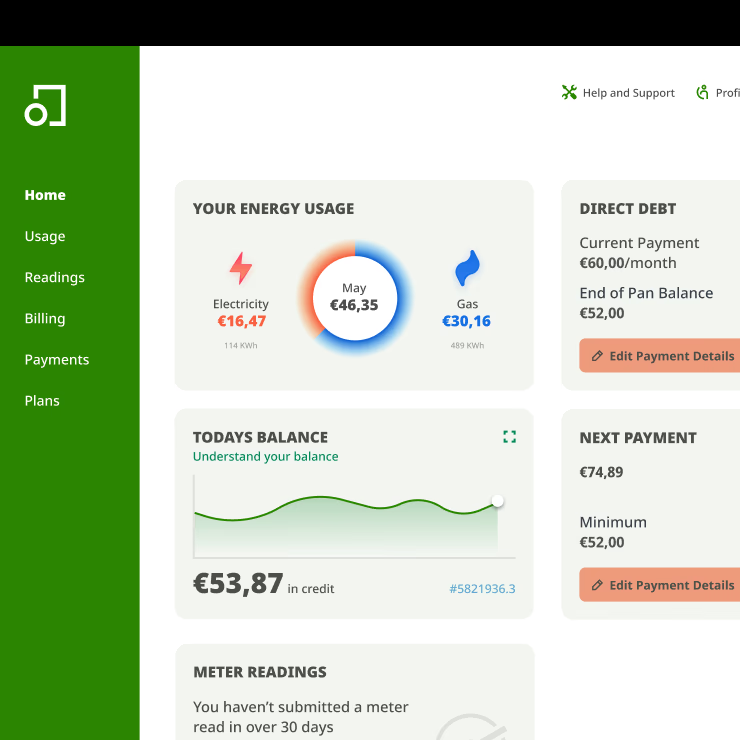
Organizations modernize customer portals and service workflows to improve accessibility, transparency, and response times. Omnichannel strategies can also unify service updates and request status across web, mobile, and phone so customers aren’t forced to chase information.
Sarawak Energy built its electricity supply customer portal and accelerated modernization by delivering 16 apps in 16 weeks while moving away from legacy Notes Domino systems.
Many of these scenarios rely on flexible platforms that support rapid change without sacrificing reliability, especially as customer expectations continue to rise.
Implement effective omnichannel customer experiences with OutSystems AI-powered platform
Delivering omnichannel customer experience at scale takes more than stitching channels together with point tools. You need a way to build, deploy, and continuously improve the applications and AI-powered workflows behind every customer interaction, while keeping sprawl, governance gaps, and technical debt in check.
OutSystems is a unified, agile, enterprise-proven AI development platform that helps teams build, run, and govern apps and AI agents on one platform. This makes it easier to modernize and extend customer journeys, connect to existing systems and data, and apply consistent guardrails across the full lifecycle—from development to release to ongoing change.
Whether you’re modernizing legacy customer experiences or launching new external applications, OutSystems helps teams deliver connected omnichannel experiences at enterprise scale. It’s how you innovate at the speed of AI without compromising quality or control.

Learn the fundamentals of modern development


Omnichannel frequently asked questions
Omnichannel distribution refers to delivering products or services across multiple connected channels, allowing customers to engage, purchase, or receive support through whichever channel they prefer. In industries like retail and wholesale, omnichannel distribution helps unify supply chain operations, inventory visibility, and customer touchpoints.
Omnichannel performance is typically measured using metrics such as customer satisfaction, engagement across channels, conversion rates, time to resolution, and retention. Tracking journey-level metrics, rather than channel-specific KPIs, provides a clearer view of overall experience quality.
Perceived omnichannel customer experience reflects how customers feel about the consistency and continuity of their interactions across channels. Even if systems are technically connected, gaps in usability or communication can negatively impact perception.
While models vary, omnichannel strategies often rest on four core pillars: unified data, connected systems, consistent experience design, and scalable governance. Together, these pillars enable seamless customer journeys across channels.